South Korea domestic violence law revision pledged by Lee

Synopsis
South Korean President Lee Jae Myung has pledged to seek a legal change allowing domestic violence perpetrators to be punished even when victims object. The announcement follows a police review of 44,540 relationship-based crime cases.
Key Takeaways
President Lee Jae Myung pledged on 25 November to seek a revision to South Korea's domestic violence law.
The proposed change would allow perpetrators to be punished even if victims do not want them punished.
The Korean National Police Agency said its 12-day review covered 44,540 relationship-based crime cases.
Police classified 5,068 of 15,840 cases under investigation as high-risk.
Courts issued 80 of the 376 arrest warrants police requested for high-risk offenders.
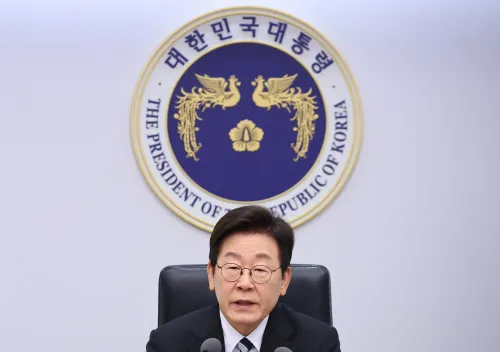
South Korean President Lee Jae Myung said on 25 November that his government would seek to revise the country's domestic violence law so perpetrators can be punished even when victims do not want them punished. Lee made the pledge in a post on X marking the International Day for the Elimination of Violence against Women, saying the state had a duty to create a society where women can live without fear.
The proposed change follows criticism that the existing law can allow perpetrators to avoid punishment when victims express opposition to it. Critics have raised concerns that victims may be pressured and that a lack of punishment could expose them to further violence.
Lee's pledge on domestic violence law
Citing a recent series of crimes involving domestic violence, stalking and dating abuse, Lee said the government had failed to “safeguard precious lives despite warning signs and calls for help”. He said the law would be revised to make it possible to hold domestic violence perpetrators accountable even if victims did not want them punished.
“Failure to safeguard victims from violence should not be repeated,” the president said, adding that the government would soon announce related measures. The presidential office had earlier said the Cabinet broadly agreed on the need to punish domestic violence offenders regardless of victims' wishes.
The source does not specify when a legal revision would be introduced or take effect. Lee's announcement concerns a proposed change, rather than a change already in force.
Police review of relationship-based crime
On 4 November, police said they had conducted a comprehensive review of about 44,000 cases involving relationship-based crime, including stalking and domestic violence. They said 80 people identified as high-risk offenders had been placed in custody.
The Korean National Police Agency said the 12-day review began on 19 October and covered 44,540 cases. These included 43,712 existing cases, among them investigations in progress, people under high-risk monitoring, stalking reports previously closed at the scene and cases with continuing safety measures.
Police classified 5,068, or 32 per cent, of the 15,840 cases under investigation as high-risk. They requested 376 arrest warrants for high-risk offenders, of which courts issued 80, or 21.3 per cent.
Police also requested 321 orders for electronic monitoring devices, with courts approving 104, or 32.4 per cent. The figures distinguish police requests from orders granted by courts.
Cases highlighted by police
In southeastern North Gyeongsang Province, police identified an additional offence after a man visited his wife in breach of a restraining order and threatened her with a weapon. Although she did not want him punished, police sought an arrest warrant, which was issued.
In Seoul, a suspect who visited a stalking victim was caught in the act and additionally charged with attempted murder after a weapon and work gloves were found in his vehicle. In southeastern South Gyeongsang Province, a domestic violence offender whose arrest warrant had twice been rejected was arrested after police found additional crimes.
What happens next
Lee said the government would announce a series of relevant measures soon, but provided no timetable in the source for the legal revision. The proposed change and the forthcoming measures will determine how the government seeks to address cases in which a victim does not want punishment pursued.
Frequently Asked Questions
What domestic violence law change did Lee Jae Myung announce?
Lee said his government would seek to allow domestic violence perpetrators to be punished even when victims do not want them punished. He made the pledge in an X post on 25 November.
Why is South Korea considering the change?
The existing law has been criticised over concerns that perpetrators may pressure victims into opposing punishment. Critics also warn that a lack of punishment could lead to more serious violence.
When will the proposed domestic violence law take effect?
No date for the proposed revision to take effect was specified in the source. Lee said the government would soon announce related measures.
How many cases did South Korean police review?
The Korean National Police Agency said it reviewed 44,540 relationship-based crime cases over 12 days beginning on 19 October. Police classified 5,068 of the 15,840 cases under investigation as high-risk.
What is the current rule on victims' wishes in domestic violence cases?
Under the current South Korean law described in the source, perpetrators can avoid punishment if victims express a wish that they not be punished.