What Challenges Does the Left Face in West Bengal Ahead of the Assembly Elections?
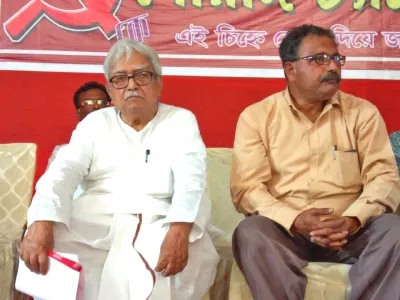
Synopsis
As West Bengal gears up for Assembly elections, the Left, once a formidable political force, finds itself marginalized. With internal struggles and a need for alliances, the future of the CPI(M) and its partners hangs in the balance. Can they reclaim their influence?
Key Takeaways
The Left's struggle for relevance is evident as they seek new alliances.
Internal dissent within the CPI(M) poses a challenge.
Recent electoral failures have disheartened party supporters.
Seat allocation demands from partners complicate negotiations.
The upcoming elections will be a crucial test for the Left's future.
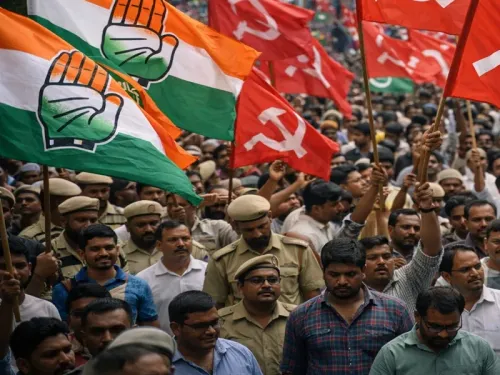
New Delhi, Feb 10 (NationPress) Once perceived as unbeatable in West Bengal, the Communist Party of India (Marxist) along with its Left allies has found itself diminished in the state's political landscape. With the upcoming Assembly elections looming, they are once again at a pivotal moment.
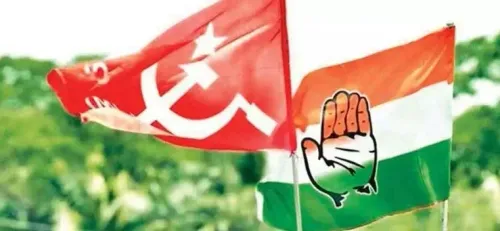
The Left's need for support is clear, as highlighted by CPI(M) state committee secretary Mohd. Salim's persistent attempts to rekindle ties with the Congress, despite previous collaborations resulting in electoral failures.
In the 2021 elections, the alliance between the Left parties and Congress was largely ineffective, resulting in their near disappearance from the Assembly which comprises 294 seats.
In 2024, the Left failed to secure any Parliamentary seats, while Congress managed to win one.
West Bengal is represented by 42 Lok Sabha members, and the Left is currently in disarray, particularly following the Congress's recent decision to sever ties.
This discontent among Congress workers in West Bengal stems from a series of electoral losses.
Local leaders have expressed to the national leadership that the Pradesh Committee has struggled to strengthen itself over the last twenty years, largely due to its reliance on coalitions.
Now, they aim to inspire optimism and confidence among grassroots workers independently.
Conversely, political analysts point to the recent shift in state leadership as a significant change in political strategy.
Former state party president Adhir Ranjan Chowdhury, known for his opposition to Mamata Banerjee, had set aside his rivalry with the Communists during the 34 years of Left governance to target a common adversary.
In contrast, the current leader Subhankar Sarkar is perceived as more congenial and tends to align with central party policies, unlike Chowdhury, who wielded considerable local influence.
Sarkar is generally regarded as the party's 'soft face.' Following the Congress's decision, internal dissent within the CPI(M) and its Left allies has emerged regarding potential alliances with Islamic parties like the Janata Unnayan Party (JUP) or Indian Secular Front (ISF).
These parties were previously part of the Left-Congress coalition. Salim's recent engagement with Humayun Kabir, a former Trinamool Congress MLA currently constructing a replica of the Babri Masjid in the Muslim-majority district of Murshidabad, raised eyebrows within the party.
This meeting has sparked speculation about potential alliances ahead of the elections.
Salim's cautious approach failed to assuage concerns from his peers in the CPI(M) and fellow Left Front members such as the Forward Bloc and Revolutionary Socialist Party.
He clarified that his discussion with Kabir does not indicate an impending political partnership with the JUP founder.
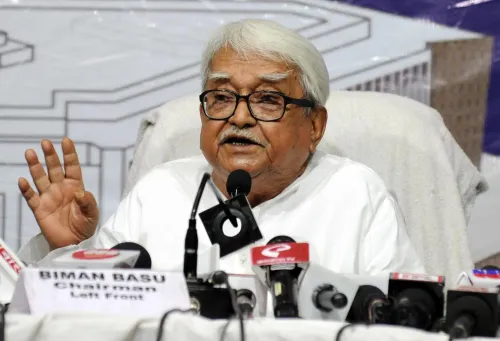
Reports indicate that senior CPI(M) figure Biman Basu is set to address the situation as the Left Front chairman. He is expected to conduct bilateral discussions with partners before a joint meeting to reach a consensus.
Some Left leaders anticipate that the bloc will finalize official and unofficial 'tactical' political agreements by the end of the third week of this month.
This timeline will allow them to negotiate a definitive list of candidates with all coalition partners later. Meanwhile, the Furfura Sharif shrine's Pirzada Naushad Siddiqui, founder of ISF, is reportedly vying for 50-60 seats, particularly in West Bengal's Muslim-majority constituencies.
This demand has left the CPI(M) anxious about subsequent pressures from other partners regarding seat allocations. These matters are slated for discussion in the upcoming CPI(M) state committee meeting next week.
Although Basu no longer holds a committee seat due to his advanced age, he remains a special invitee with limited rights and responsibilities. Nonetheless, he will need to persuade other Left Front partners to adhere to the state committee's decisions.
Point of View
The Left's current predicament in West Bengal underscores the complexities of coalition politics. As they navigate internal dissent and seek new partnerships, their ability to adapt to the evolving political landscape will be crucial for their survival. The upcoming elections will serve as a litmus test for their future viability.
NationPress
13 Oct 2026
Frequently Asked Questions
What is the current political situation of the Left in West Bengal?
The Left, once a dominant force in West Bengal, is now facing marginalization and internal strife as they prepare for the upcoming Assembly elections.
Are the Left parties considering alliances with other political groups?
Yes, the CPI(M) has been reaching out to the Congress for potential alliances, despite past failures.
What challenges do the Left parties face in the upcoming elections?
The Left is struggling with internal dissent, loss of grassroots support, and competition for seat allocations from coalition partners.