Are the Communists in West Bengal Facing Political Marginalization?
Synopsis
The decline of the Communist Party's representation in West Bengal's politics signifies a significant shift in the state's political landscape. As the CPI-M loses its last MP, this article explores the implications of such a transition and the larger narrative of the Left's diminishing power in Indian politics.
Key Takeaways
West Bengal's CPI-M to have zero representation in Parliament by April 2024.
Historical decline observed since the 2010s.
Current CPI-M strength in Lok Sabha is four MPs.
Significant shifts in political alliances may affect future elections.
Need for the Left to adapt to changing voter sentiments.
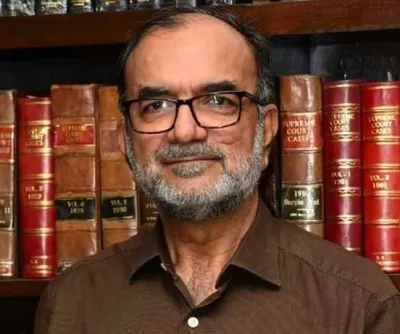
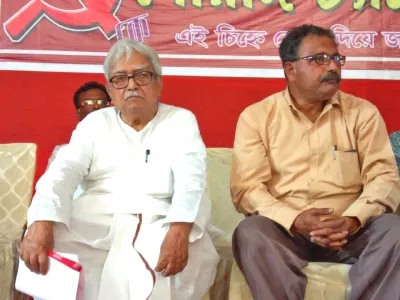
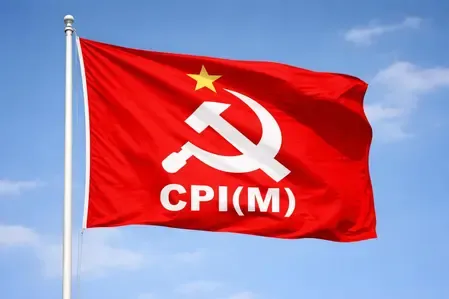
New Delhi, Feb 19 (NationPress) Once deemed a stronghold of the red ideology, the representation of Communists in West Bengal's Parliament is on a continual downward trend, leading to a situation where the state's Marxists will have no representation by April this year, coinciding with the retirement of Communist Party of India-Marxist leader Bikash Ranjan Bhattacharyya.
Currently, there are no members from the Left Front in either the Lok Sabha or the West Bengal Assembly.
As a result, starting April, West Bengal will not have a CPI-M MP in the Parliament, following the departure of its sole representative.
Meanwhile, there will be three CPI-M leaders from Kerala in the Upper House and four in the Lok Sabha.
In the Lower House, representation includes one CPI-M member each from Kerala and Rajasthan, along with two from Tamil Nadu.
This is the current standing of the CPI-M, which once led the Left alliance, regarded as a powerful opponent and a desirable political partner in national affairs.
Historically, from 1952 to the 1980s, the Communist Party of India (CPI) and later the CPI-M sustained a consistent presence in the Rajya Sabha, often maintaining a combined strength of 15-25 members.
Their influence peaked during the 1990s and 2000s, where they held approximately 25 to 30 seats, a reflection of their strong bases in West Bengal, Kerala, and Tripura.
However, from the 2010s onward, a decline began as the Left lost footholds in state Assemblies, leading to a drop in representation to single digits by the mid-2020s.
The Left parties achieved their best performance in the Lok Sabha elections of 1971, collectively winning over 50 seats, with CPI-M securing nearly half of that total.
This success was replicated again in 1980 and 1989, with their highest count reaching over 60 seats in 1996 and 2004.
In contrast, the 2024 Parliamentary elections saw the CPI-M winning four seats, while the CPI claimed two; other alliance members did not secure any.
Bikash Ranjan Bhattacharyya, who represents West Bengal in the Rajya Sabha, was elected in April 2020 and has been the party's Parliamentary leader since July 2024.
Additionally, four MPs from the Trinamool Congress are also set to retire from the Rajya Sabha this year, with Mausam Noor recently returning to Congress and vacating her seat.
Reports indicate that Subrata Bakshi from the Trinamool Congress may be re-nominated, while confirmations for Saket Gokhale and Ritabrata Banerjee are still pending.
For Bakshi and Gokhale, this will mark the end of their first term, whereas Banerjee is concluding his second term after previously representing the CPI-M in the Upper House.
The BJP currently has two MPs in the Rajya Sabha from West Bengal: State party President Samik Bhattacharya and Nagendra Ray, who claims descent from the former ruler of Cooch Behar.
Given the present strength in the West Bengal Assembly, the Trinamool Congress is likely to retain all four MPs, while the BJP can elect one.
This leaves the CPI-M and Congress, which have no MLAs in the Assembly, without any representation in the Upper House from West Bengal.
Nonetheless, Congress did manage to win one Lok Sabha seat from West Bengal in the 2024 general elections.
Point of View
The decline of the Communist influence in West Bengal serves as a crucial case study of the changing political dynamics in India. The historical context and current electoral outcomes highlight the evolving landscape, suggesting a critical moment for not just the Left but for the entire spectrum of Indian politics. The nation must observe how these shifts impact governance, representation, and voter sentiment moving forward.
NationPress
3 Oct 2026
Frequently Asked Questions
What led to the decline of the Communist Party in West Bengal?
The decline is attributed to multiple factors, including the loss of footholds in state Assemblies and changing voter sentiments that have moved away from traditional Left ideologies.
Who is Bikash Ranjan Bhattacharyya?
Bikash Ranjan Bhattacharyya is a leader of the Communist Party of India-Marxist and serves as the party's representative in the Rajya Sabha for West Bengal, set to retire in April 2024.
How many MPs does the CPI-M currently have in the Lok Sabha?
As of the latest elections, CPI-M has four MPs in the Lok Sabha.
What was the peak representation of the Left in Indian Parliament?
The Left parties reached their peak representation in the Lok Sabha during the 1990s and 2000s, holding 60-plus seats.
What does the future look like for the Left in India?
The future of the Left in India appears challenging, with decreasing representation and shifting political allegiances among voters.