Maharashtra Assembly Approves Bill to Eliminate 80 Outdated Laws

Synopsis
In a landmark decision, the Maharashtra Legislative Assembly has passed a Bill to repeal 80 outdated laws, a vital move to enhance governance. This initiative, led by Minister Ashish Shelar, aims to clear confusion caused by obsolete statutes, streamlining administrative processes.
Key Takeaways
Maharashtra Legislative Assembly passes Bill to repeal 80 outdated laws.
The Maharashtra Repealing Bill, 2026 aims to enhance governance.
Minister Ashish Shelar stresses the need for modern legislation.
A comprehensive review led to the identification of obsolete laws.
Plans for an online portal to track human rights recommendations are underway.
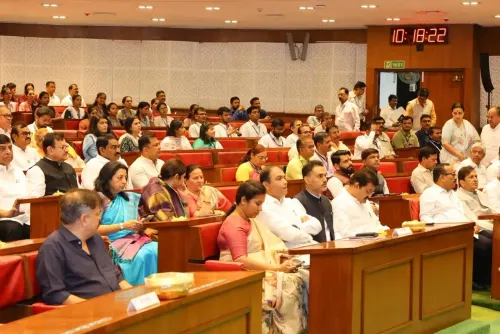
Mumbai, March 17 (NationPress) The Maharashtra Legislative Assembly has successfully passed a Bill aimed at abolishing 80 outdated Acts and laws, a pivotal move towards enhancing good governance and improving administrative efficiency.
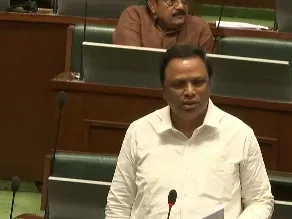
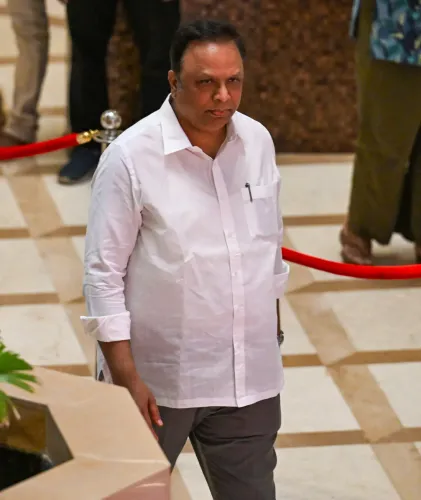
The Maharashtra Repealing Bill, 2026 (Assembly Bill No. 17), which targets the elimination of antiquated laws within the state, was presented by Ashish Shelar, the Minister of General Administration.
After extensive deliberations, the Bill received approval from the Assembly.
Minister Shelar emphasized that the evolution of the constitution, state reorganization, and the introduction of new legislation had rendered many of Maharashtra's laws obsolete.
He noted that keeping references to these outdated statutes was leading to confusion in governance.
In response, the state government conducted a thorough evaluation of all existing laws and decided to repeal those that are no longer applicable, including Acts and Regulations from the Bombay, Bengal, Central Provinces & Berar, Hyderabad, and Madhya Pradesh regions.
According to Minister Shelar, the repealed laws comprise 24 Bombay Acts, 8 Central Provinces & Berar Acts, 18 Hyderabad Acts, 3 Madhya Pradesh Acts, and 24 Appropriation Acts.
Among the abolished laws are several antiquated legislations such as The Bengal Alluvion and Diluvion Regulation, 1825; The Acknowledgements of Debts, Interest, Mortgages Regulation, 1827; The Broach and Kaira Encumbered Estates Act, 1877; The Bombay Abkari Act, 1878; The Borstal Schools Act, 1929; The Maharashtra Opium Smoking Act; The Bombay Fodder and Grain Control Act, 1939; The Bombay Cotton Control Act, 1942; and The Bombay Abolition of Whipping Act, 1957.
In related news, during the Question Hour, Yogesh Kadam, the Minister of State for Home, informed the Assembly that the government is making strides towards the timely execution of the State Human Rights Commission’s (SHRC) recommendations by appointing a Nodal Officer.
He expressed optimism about creating a specific budget line and an online platform to ensure transparency in the process.
This issue was highlighted by MLA Atul Bhatkhalkar.
Minister Kadam stated that a Nodal Officer at the Deputy Secretary level has been assigned, and actions will be initiated on 30 pending cases with the Commission.
He mentioned that a separate budget line could be established to implement these recommendations under the Chief Minister's guidance.
Furthermore, there are plans for a dedicated online portal to enable complainants to track the status of their applications and recommendations, aiming to enhance clarity in administrative operations.
Point of View
The repeal of these outdated laws in Maharashtra signifies a proactive approach towards governance reform. It highlights the importance of maintaining a relevant legal framework that aligns with contemporary needs and reduces ambiguity in administration.
NationPress
23 Sept 2026
Frequently Asked Questions
What does the Maharashtra Repealing Bill entail?
The Maharashtra Repealing Bill aims to abolish 80 obsolete Acts and laws that have become irrelevant over time, enhancing governance and administrative efficiency.
Who introduced the Maharashtra Repealing Bill?
The Bill was introduced by Ashish Shelar, the Minister of General Administration.
How many laws were repealed in total?
A total of 80 laws were repealed, including Acts from various regions such as Bombay and Central Provinces.
Why were these laws considered obsolete?
These laws were deemed obsolete due to constitutional changes and the introduction of modern legislation, creating confusion in governance.
What are some examples of the repealed laws?
Examples include The Bengal Alluvion and Diluvion Regulation, 1825, and The Bombay Abkari Act, 1878.