Maharashtra Single Women Policy 2026: Tatkare announces rollout, 23.95 lakh women covered
Synopsis
Maharashtra is about to roll out a landmark Single Women Policy 2026 covering financial self-reliance, housing, legal rights, and more — and the numbers are striking: 23.95 lakh single women are already on record in rural areas alone, with the urban tally expected to be far higher. The policy's simultaneous push on drought-linked child marriage prevention adds a sharp urgency to the announcement.
Key Takeaways
Maharashtra will soon implement the Single Women Empowerment, Protection and Overall Development Policy 2026 , announced by Minister Aditi Tatkare on 5 October 2026 .
The policy spans 10 strategic focus areas , including economic empowerment, housing, legal protection, and data systems.
Zilla Parishad records currently identify 23.95 lakh single women in rural Maharashtra; the urban figure is expected to be significantly higher.
Six specialised committees under the policy will include civil society and non-official members for accountability.
Officials directed to extend drought preparedness planning to all 358 talukas , beyond the 265 officially declared drought-hit ones.
Child Care Institutions must maintain food stocks for up to 40 days ; District Collectors asked to convene planning committees.
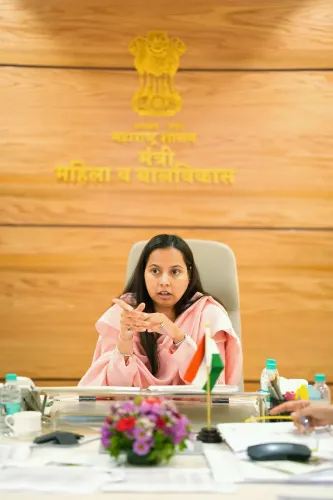
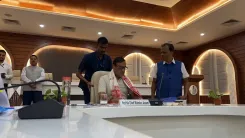
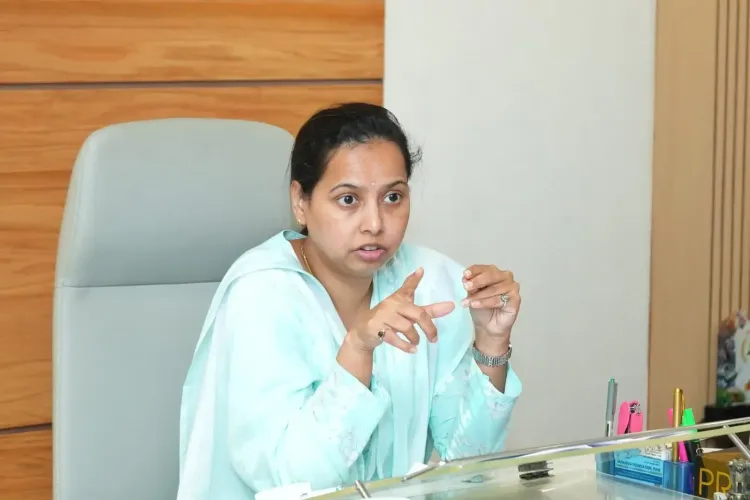
Maharashtra Women & Child Development Minister Aditi Tatkare on Monday, 5 October 2026, announced that the state government will soon implement the Single Women Empowerment, Protection and Overall Development Policy 2026, a comprehensive framework built around dignity, equality, autonomy, safety, and financial self-reliance. The announcement came during a high-level review meeting in Mumbai that also covered child welfare, the Pink E-Rickshaw initiative, and drought preparedness.
What the Policy Covers
The policy is structured around 10 key strategic focus areas: Social Security and Fundamental Civic Rights; Economic Empowerment; Education and Child Protection; Physical and Mental Health; Shelter and Housing; Property and Inheritance Rights; Legal Protection; Support for Women in Special Circumstances; Governance and Administrative Support; and Data and Digital Systems.
Notably, the policy explicitly extends coverage to women living independently without any dependency — broadening its scope beyond widows and divorcees to include all single women choosing to live on their own terms.
Scale of the Problem: Data Gap in Urban Areas
Current Zilla Parishad records identify 23.95 lakh single women in rural Maharashtra alone. Minister Tatkare underscored that this figure is expected to rise significantly once urban centres — Municipal Corporations, Municipal Councils, and Nagar Panchayats — are factored in. She directed officials to compile updated data across all these urban bodies to ensure no segment is left unaddressed in the final policy framework.
The six specialised committees constituted under the policy framework have been directed to include non-official and civil society members, adding an accountability layer to the implementation structure.
Drought Preparedness and Child Protection
The review meeting also addressed pressing child welfare concerns tied to drought conditions. Minister Tatkare directed that planning extend beyond the 265 officially declared drought-hit talukas to cover all 358 talukas in the state, citing unsatisfactory conditions even in non-declared areas.
Officials were instructed to ensure uninterrupted food supply at Anganwadi centres, adequate water allocation — including in tanker-dependent areas — and safe shelter for children of migrant workers. Regional government hostels and child-care homes are to be readied for children of migrant families.
Child Care Institutions and hostels under the Social Justice Department have been asked to maintain food stocks sufficient for up to 40 days, with additional support to be arranged through NGOs and CSR funding where needed.
Child Marriage Alert During Drought
Tatkare warned that the risk of child marriages rises during drought periods, when economic distress pushes families toward early marriage of underage girls. She directed government officials to directly engage with women and families in drought-affected and migration-prone areas, spreading awareness about existing child-protection systems and government schemes. District Collectors have been asked to convene District-Level Committee meetings to plan proactively for potential drought situations, while taluka administrations are to hold Food Committee meetings to track taluka-wise conditions.
What Comes Next
The Aadishakti Abhiyan is set for aggressive urban expansion through ward committees, and mobile protection units are already being monitored for progress. The Pink E-Rickshaw initiative also came up for review, signalling the government's intent to push economic mobility alongside protective policy. All eyes will now be on when the state officially notifies the Single Women Policy and releases its implementation guidelines.
Point of View
Six committees, civil society inclusion — but the data gap it has itself identified is the first test of its seriousness. With urban figures not yet compiled and 23.95 lakh rural women already on record, the policy risks being calibrated to an undercount. The drought-child marriage linkage is the most politically consequential element here: it acknowledges that economic stress directly accelerates a rights violation, which demands a faster implementation timeline than a standard welfare rollout. Whether the government treats this as a flagship scheme or a routine notification will be visible within the next 60 days.
NationPress
6 Oct 2026
Frequently Asked Questions
What is the Maharashtra Single Women Empowerment Policy 2026?
It is a comprehensive state government policy designed to address the needs of single women across Maharashtra, covering dignity, equality, autonomy, safety, and financial self-reliance. The policy is structured around 10 strategic focus areas including economic empowerment, housing, legal protection, and data systems, and extends to women living independently without any dependency.
How many single women does the policy aim to cover?
Zilla Parishad records currently identify 23.95 lakh single women in rural Maharashtra alone. The total figure is expected to rise significantly once urban bodies — Municipal Corporations, Municipal Councils, and Nagar Panchayats — are included in the data compilation ordered by Minister Tatkare.
Why is child marriage being linked to drought preparedness in this policy?
Minister Tatkare noted that the risk of child marriages increases during drought periods, as economic distress pushes families toward early marriage of underage girls. She directed officials to engage directly with families in drought-affected and migration-prone areas to spread awareness about child-protection systems and government schemes.
What are the 10 focus areas of the Single Women Policy 2026?
The 10 focus areas are: Social Security and Fundamental Civic Rights; Economic Empowerment; Education and Child Protection; Physical and Mental Health; Shelter and Housing; Property and Inheritance Rights; Legal Protection; Support for Women in Special Circumstances; Governance and Administrative Support; and Data and Digital Systems.
When will the Maharashtra Single Women Policy 2026 be implemented?
Minister Aditi Tatkare said the policy will be implemented 'soon', without specifying a formal notification date. Officials have been directed to compile urban data and prepare implementation groundwork, with six specialised committees already constituted under the policy framework.