Will Maharashtra's Winter Session Be a Turbulent One?
Synopsis
As Maharashtra braces for a tumultuous winter session from December 8 to 14 in Nagpur, the ruling Mahayuti and the opposing MVA are set for a showdown. With the spotlight on farmer issues, corruption, and electoral integrity, the session promises to be a battleground of political rhetoric and strategy.
Key Takeaways
Mahayuti and MVA are poised for a significant political clash.
The session will address critical issues like the farmer crisis and corruption .
Short session duration may limit the opposition's effectiveness.
Government aims to project good governance amidst controversies.
Expect heightened political drama and media scrutiny.
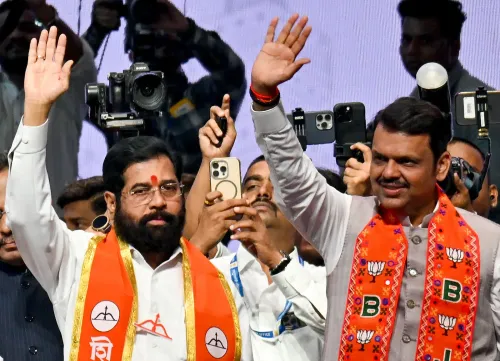
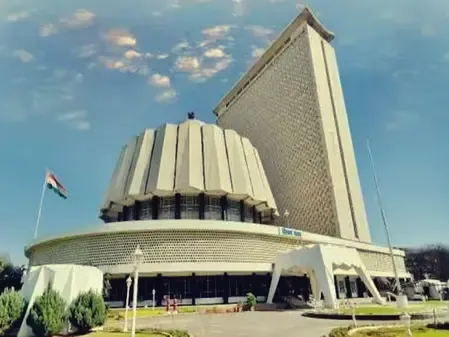
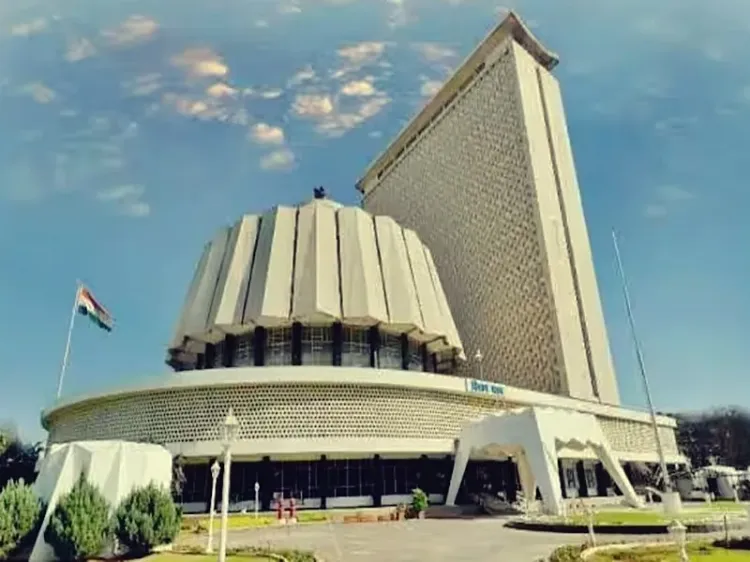
Mumbai, Dec 6 (NationPress) The Mahayuti and Maha Vikas Aghadi (MVA) are preparing for a week-long winter session of the Maharashtra Legislature in the vibrant city of Nagpur, scheduled from December 8 to 14, which is anticipated to be a "stormy affair". The Mahayuti coalition, consisting of the BJP, Shiv Sena, and NCP, is focused on showcasing its accomplishments and outlining its vision for Viksit Maharashtra 2047, particularly following a year in office that concluded on December 5.
The ruling alliance aims to highlight new development benchmarks achieved in various sectors over the past year, striving to enhance the quality of life for citizens through digital services and transparency.
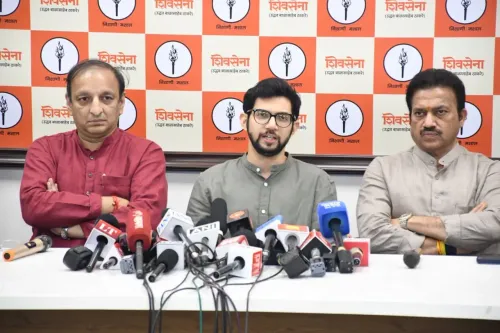
Conversely, the MVA, comprising Shiv Sena UBT, Congress, and NCP SP, is ready to confront the Mahayuti government, particularly on issues like the farmer crisis, allegations of corruption, electoral mismanagement, and social tensions related to the Maratha and OBC quota protests, alongside fragile state finances.
Their tactic is to capitalize on the government's perceived shortcomings and the short session duration to amplify political drama and public pressure. The MVA is also set to advocate for the appointment of opposition leaders in the state assembly and council, especially as the Mahayuti government and presiding officers have indicated this matter is under review.
The opposition's strategy includes targeting the government regarding the severe agrarian distress caused by unseasonal rains and floods.
They will call for the declaration of a "wet drought" and demand a comprehensive farm loan waiver, criticizing the government's existing relief package of approximately Rs 32,000 crore as inadequate. The opposition plans to challenge the government over delays in formally submitting the detailed damage assessment memorandum to the Centre, framing this procrastination as neglect of farmers' welfare.
Additionally, the opposition will highlight the recent turmoil surrounding local body elections, questioning the integrity of the administration. They have already claimed that the delay in municipal elections across 12 districts was a "planned mess" and have accused the government, particularly the BJP, of manipulating the situation to gain an advantage.
Shiv Sena UBT has specifically accused the government of rendering the State Election Commission a "joker" in the electoral process.
The opposition is poised to scrutinize the government over the costly and corrupt local body elections, citing the blatant use of "Lakshmi Darshan" (cash distribution to voters) and the recovery of large sums of money from ruling party officials. Moreover, they intend to raise concerns about potential "EVM scams".
They will question the security of the Electronic Voting Machines that have been stored for 19 days post-voting before the rescheduled counting on December 21, raising suspicions of tampering.
The opposition has accused the government of "weakening the social fabric" by instigating conflict between the Maratha and OBC communities through its mishandling of the Kunbi certificate Government Resolution (GR).
They are expected to push for a more transparent, permanent, and constitutionally sound solution, possibly advocating for a caste-based census, while blaming the government for exploiting these communities for political leverage.
However, the Mahayuti's primary advantage is the short session duration, which limits the opposition's time for debate, compelling them to prioritize their critiques and ultimately minimizing the session's overall impact.
The government is focusing on passing crucial bills and supplementary demands (additional funds), allowing them to frame their narrative around "good governance" and "development", while diverting attention from pressing social and political issues.
Ministers are prepared to issue prompt clarifications and statements to counter opposition claims, as evidenced by the submission of the flood relief memo.
The government will emphasize the timely announcement and distribution of the Rs 32,000 crore relief package for flood-affected farmers as a testament to their commitment.
They will reference the November 2025 submission of the flood loss assessment memorandum to the Centre to deflect accusations of failing to seek central aid in a timely manner.
Additionally, the government will point to the establishment of a high-level committee to examine crop loan waivers and propose measures to alleviate farmers' debts.
Chief Minister Devendra Fadnavis has already declared that the government will not evade responsibility but will make a decision on the crop loan waiver by June 2026.
The government will defend the Kunbi-certificate GR (which permits Marathas with proof to access OBC benefits) while also emphasizing the safeguarding of the existing OBC quota. Two distinct cabinet sub-committees have been set up to address the concerns of both Marathas and OBCs, aiming to appear equitable to both factions.
The government is poised to counter all allegations of corruption as "politically motivated" and unsupported by evidence, asserting that their responses will be based on facts rather than political grandstanding. They may attempt to highlight past corruption cases involving MVA leaders to shift focus and undermine the moral high ground.
Regarding the turmoil in local body elections, the government may cite the High Court ruling and the extended election code of conduct as justifications for the session's limitations and the postponements of polling. CM Fadnavis has already publicly expressed his "dissatisfaction" with the State Election Commission's management, distancing the government from the electoral chaos.
In this context, the winter session is expected to prioritize political theatre and brinkmanship over legislative achievements.
The opposition's strength lies in its unified response to current public dissatisfaction concerning farmer issues, social tensions, and corruption.
The government's approach will depend on its legislative majority to navigate through business and utilize the session's brevity as a protective measure, ensuring that few substantial, long-term policy decisions emerge from this seven-day assembly.
(Sanjay Jog can be contacted at sanjay.j@ians.in)
Point of View
It's crucial to recognize the implications of Maharashtra's winter session. With both the ruling Mahayuti and the MVA preparing for a politically charged atmosphere, the outcomes could have far-reaching consequences for governance and citizen welfare. Our commitment remains to provide fair and factual reporting that holds all parties accountable while advocating for the people's interests.
NationPress
4 Oct 2026
Frequently Asked Questions
What are the main issues being addressed in the Maharashtra winter session?
The session will focus on the farmer crisis, corruption, electoral integrity, and social tensions related to the Maratha and OBC communities.
What is the duration of the Maharashtra winter session?
The winter session is scheduled from December 8 to 14, lasting a week.
What strategies are the Mahayuti and MVA employing?
The Mahayuti is showcasing its achievements, while the MVA plans to challenge the government on various pressing issues, aiming to maximize political pressure during the brief session.
How is the opposition planning to tackle the government's performance?
The opposition intends to highlight perceived failures, particularly regarding the agrarian crisis and electoral processes, to garner public support.
What does the government aim to achieve during this session?
The government aims to pass essential bills and present its narrative of good governance while diverting attention from contentious issues.