Will the Next Mayor of Mumbai Be from MahaYuti, Identifying as Hindu and Marathi?
Synopsis
Maharashtra's Chief Minister has declared that Mumbai's next mayor will represent the MahaYuti alliance, underscoring a dual identity of Hinduism and Marathi culture. This move aims to consolidate support against rival political factions while addressing pressing issues like housing and illegal immigration.
Key Takeaways
The next mayor will represent MahaYuti, identifying as Hindu and Marathi.
Deportation of illegal immigrants is framed as a security imperative.
New housing framework for mill workers promises to resolve long-standing issues.
Infrastructure projects are a focal point, with claims of credit disputes.
Green initiatives aim for a sustainable future for Mumbai.
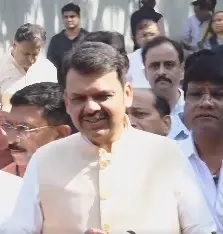
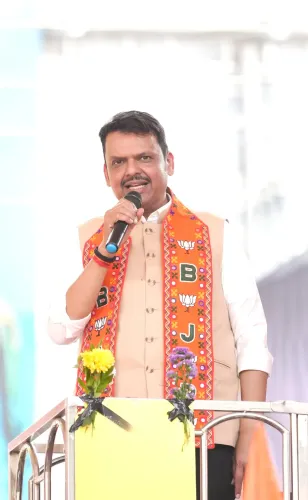
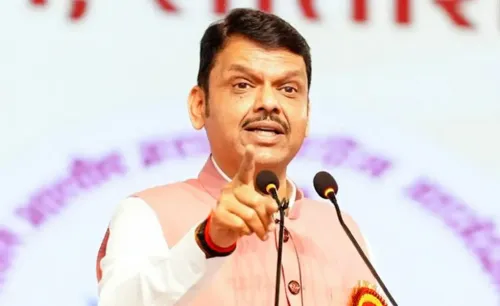
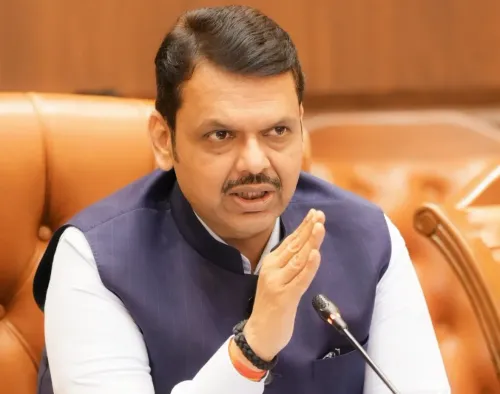
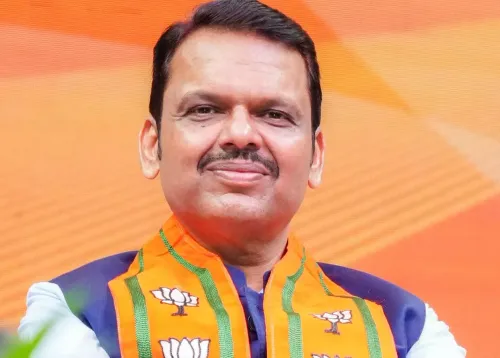
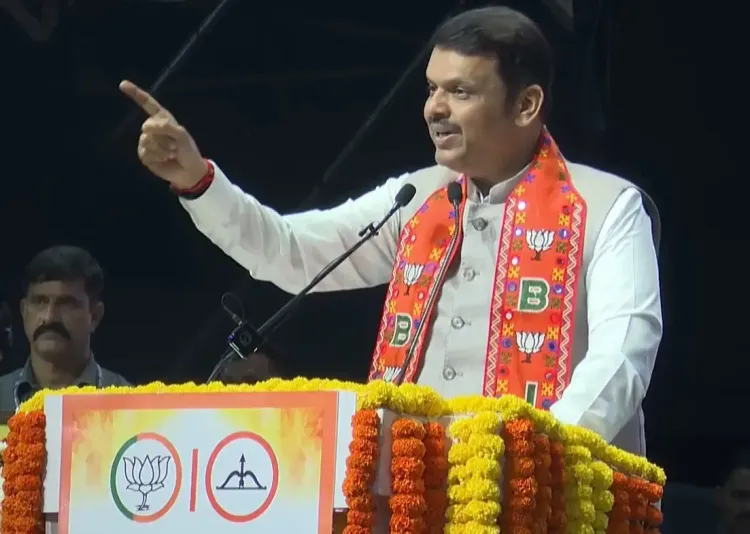
Mumbai, Jan 3 (NationPress) Maharashtra's Chief Minister Devendra Fadnavis confirmed on Saturday that the next Mayor of Mumbai will emerge from the MahaYuti coalition and will embody the identity of being both Hindu and Marathi.
In a direct challenge to the Uddhav-Raj Thackeray alliance, Fadnavis promised a Marathi-Hindu Mayor to counter the emotional resonance of the Shiv Sena (UBT) and MNS, ensuring the BJP's core Hindutva voters remain engaged. He dismissed the notion of the Thackeray brand, stating that its legacy ended with Balasaheb Thackeray, as today's electorate prioritizes development and security over familial heritage.
Speaking at the joint rally of MahaYuti to launch the campaign for the BMC elections, Fadnavis linked the deportation of illegal immigrants directly to the safety of Mumbai. He emphasized the need for the 'cleansing' of unauthorized residents to ensure that the city's resources—such as housing and water—are preserved for legitimate citizens and mill workers.
Fadnavis asserted that identifying and deporting illegal Bangladeshi nationals is not merely a political commitment but a security necessity. He mentioned that the government has enhanced AI-based tracking systems to efficiently identify and remove individuals lacking valid documentation, specifically asserting that Mumbai will be safe for its original residents.
Addressing the enduring housing crisis, he announced a shift from mere lotteries. He proposed a new framework where the state will guarantee housing loans for mill workers, effectively ensuring that every eligible worker secures their home.
He explicitly stated that the decades-long waiting period is nearing its end. He criticized Uddhav Thackeray for not utilizing the BMC deposits in banks to provide housing for textile workers.
Fadnavis criticized Uddhav and Aaditya Thackeray for attempting to take credit for Mumbai’s significant infrastructure initiatives, such as the Coastal Road and Atal Setu. He accused Uddhav Thackeray of hindering several essential infrastructure projects initiated by the BJP-led government, which were ultimately completed in the last two and a half years.
Fadnavis reiterated his ambitious vision to transform Mumbai into a '59-minute city' by 2029. He pointed out that with the Aqua Line (Metro 3) and upcoming phases of the 411 km network, commuters will soon traverse the city in under an hour.
He officially shifted the focus towards sustainable development with the Green Mumbai initiative.
“Mumbai has emerged as the first city in South Asia to institutionalize climate budgeting,” he noted, adding that he is committing Rs 17,000 crore (38% of the BMC’s capital expenditure) specifically for green projects.
To combat pollution, the government is now monitoring over 1,000 construction sites in real-time to ensure compliance with dust and air quality standards.
He framed these initiatives as a tangible strategy for making Mumbai Net Zero by 2050.
Fadnavis indicated that MahaYuti is promoting a platform of “Development + Security + Identity”. By correlating the deportation of illegal immigrants with housing availability for mill workers, he aims to create a unified narrative of 'Justice for Mumbai's original residents'.
Point of View
It is crucial to highlight the political maneuvering evident in Chief Minister Fadnavis's statements. The emphasis on a Hindu-Marathi identity for the mayoral candidate suggests an attempt to consolidate support among core constituencies, while addressing pressing urban issues like housing and security. This reflects a strategic narrative aimed at resonating with voters in the upcoming elections.
NationPress
11 Oct 2026
Frequently Asked Questions
Who will be the next Mayor of Mumbai?
The next Mayor of Mumbai will be from the MahaYuti alliance and will identify as both Hindu and Marathi.
What are the key promises made by Devendra Fadnavis?
Fadnavis promised to focus on deporting illegal immigrants, addressing housing issues for mill workers, and enhancing Mumbai's infrastructure.
How does Fadnavis plan to improve housing for mill workers?
The government intends to act as a guarantor for housing loans, ensuring that eligible mill workers can secure homes.
What initiatives are being taken to combat pollution in Mumbai?
The government is monitoring over 1,000 construction sites in real-time to ensure compliance with air quality standards.
What is the 'Green Mumbai' initiative?
The 'Green Mumbai' initiative aims to institutionalize climate budgeting and allocate funding for sustainable projects in the city.