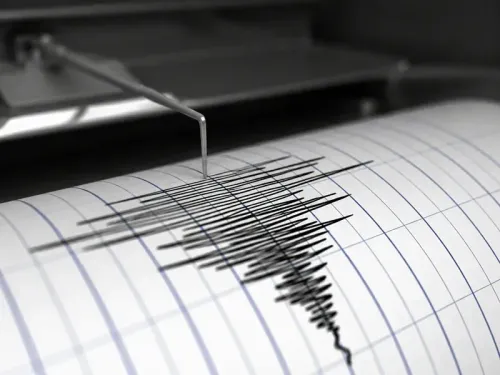
Did a 5.1 Magnitude Earthquake Shake Assam?

Synopsis
A 5.1 magnitude earthquake has struck Assam's Morigaon district, highlighting the region's seismic vulnerability. No damage has been reported, but the event raises important questions about preparedness in this earthquake-prone area. Discover the details of this seismic event and its implications for residents.
Key Takeaways
Magnitude: The earthquake measured 5.1 on the Richter scale.
Location: The epicenter was in Morigaon district, Assam.
No reported damage: Authorities confirmed no injuries or property damage.
Seismic activity: Assam is a region with a history of significant earthquakes.
Preparedness: Importance of disaster preparedness and resilient infrastructure is emphasized.
Guwahati, Jan 5 (NationPress) A 5.1 magnitude earthquake hit Assam's Morigaon district early on Monday, highlighting the ongoing seismic risks faced by the northeastern area and prompting a renewed emphasis on preparedness in light of recent quakes, officials reported.
The earthquake struck at 4:17 a.m. on January 5, with an epicenter at latitude 26.37° N and longitude 92.29° E, occurring at a depth of 50 km, as per the National Centre for Seismology (NCS).
Officials indicated no immediate reports of injuries or property damage.
The tremor was felt across various parts of central Assam and even in adjacent regions, causing momentary distress among residents who experienced the early-morning vibrations.
The NCS confirmed the occurrence, noting it in a zone recognized for its frequent seismic activity due to underlying tectonic forces. Assam and the larger Northeast are within one of India's most earthquake-prone areas, characterized by a high seismic risk due to the collision of the Indian Plate with the Eurasian and Burmese plates.
Research indicates that this tectonic framework leads to frequent seismic incidents, rendering cities like Guwahati and other regions of the Brahmaputra valley particularly susceptible to earthquakes of various magnitudes.
In September of the previous year, a 5.8 magnitude quake affected parts of Assam, including Guwahati, with tremors felt in surrounding areas, although no significant damage was recorded.
Historical accounts also highlight major seismic events in the region, such as the catastrophic 1897 Assam earthquake, which exceeded a magnitude of 8 and caused extensive destruction throughout the Brahmaputra valley.
Experts stress that the regular occurrence of earthquakes, even those of moderate strength, underscores the necessity for earthquake-resistant infrastructure and effective disaster preparedness strategies across Assam and the Northeast.
Ongoing public education and the enhancement of building codes, early-warning systems, and community readiness are vital components in mitigating risks in this seismically active locale.
Point of View
It is imperative to recognize the ongoing seismic threats in Assam, a region deeply affected by tectonic forces. The recent 5.1 magnitude earthquake serves as a vital reminder of the need for enhanced disaster preparedness. Educating the public and strengthening infrastructure will be crucial in mitigating the effects of future seismic events.
NationPress
3 Oct 2026
Frequently Asked Questions
What was the magnitude of the earthquake in Assam?
The earthquake that struck Assam was measured at a magnitude of 5.1.
Where was the epicenter of the earthquake located?
The epicenter of the earthquake was located in Morigaon district at latitude 26.37° N and longitude 92.29° E.
Was there any damage reported from the earthquake?
No immediate reports of injuries or damage to property have been reported following the earthquake.
How deep was the earthquake?
The earthquake occurred at a depth of 50 km.
What is the historical significance of earthquakes in Assam?
Assam is known for its seismic activity, with historical records including the devastating 1897 Assam earthquake, which had a magnitude of over 8.