Two earthquakes hit Assam's Cachar district within an hour, no casualties
Synopsis
Two earthquakes rattled Assam's Cachar district within a single hour on Thursday night — the stronger at magnitude 4.7, the second at 3.3 — pushing Barak Valley residents outdoors in panic. No damage was reported, but the back-to-back tremors in one of India's most seismically active zones have put authorities on alert for possible further activity.
Key Takeaways
A magnitude 4.7 earthquake struck Cachar district, Assam at approximately 9:10 pm IST on 12 June , at a depth of 39 km .
A second quake of magnitude 3.3 followed at 10:02 pm IST , with a focal depth of 30 km , near the same epicentre.
Both tremors were felt across Barak Valley , triggering brief panic; residents moved outdoors as a precaution.
No casualties, injuries, or property damage were reported as of filing.
Authorities are assessing whether the second event was an aftershock of the first.
Northeast India falls in Seismic Zone V , the country's highest seismic hazard category.
Two earthquakes struck Assam's Cachar district within less than an hour on the night of Thursday, 12 June, sending residents in parts of the Barak Valley region rushing outdoors in brief panic. No casualties or property damage were reported, according to officials.
The Two Tremors: What Seismic Data Shows
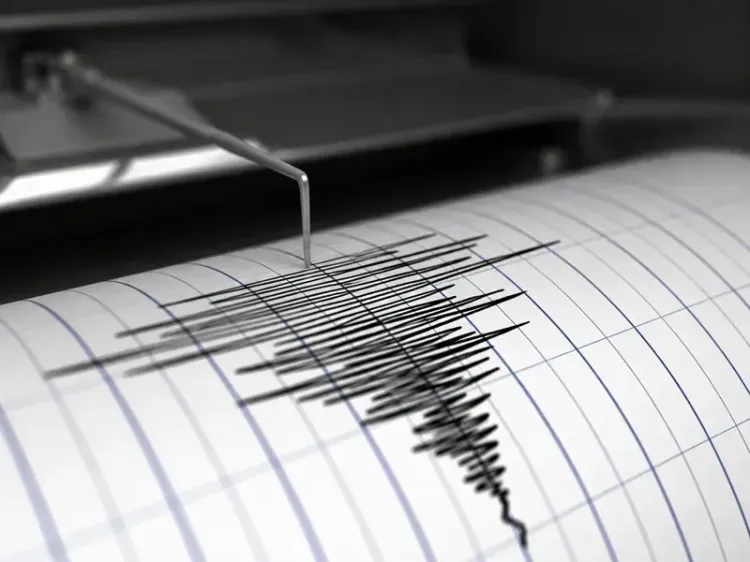
The first earthquake, measuring magnitude 4.7 on the Richter scale, struck at approximately 9:10 pm IST. Its epicentre was recorded at latitude 24.941°N and longitude 93.007°E in Cachar district, with a focal depth of 39 kilometres. The tremor was felt across several parts of southern Assam, with residents describing moderate shaking that prompted many to step outside as a precaution.
Less than an hour later, a second quake of magnitude 3.3 hit at 10:02 pm IST, with its epicentre near latitude 24.964°N and longitude 93.003°E — close to the site of the earlier tremor. This second event originated at a shallower depth of 30 kilometres and was felt in localities near the epicentral zone, though it was comparatively weaker.
Official Response and Situation Assessment
Authorities confirmed there were no immediate reports of casualties, injuries, or damage to property or infrastructure. Disaster management officials said there was no cause for alarm but advised residents to remain vigilant and follow standard safety protocols should further seismic activity occur. No disruption to essential services or transportation networks was reported.
Officials are currently monitoring the situation and assessing whether the second tremor constitutes an aftershock of the earlier 4.7-magnitude event.
Why Assam Is Especially Vulnerable
The North East India region, including Assam, sits within one of the country's most seismically active zones, classified under Zone V — the highest seismic hazard category in India's zoning map. The region has historically recorded frequent earthquakes of varying magnitudes, including the devastating 1950 Assam earthquake of magnitude 8.6, one of the largest ever recorded globally.
Experts have repeatedly stressed the urgent need for public preparedness and strict adherence to earthquake-resistant construction norms across the region. Critics argue that enforcement of building codes in rural and semi-urban areas of northeastern states remains inconsistent, leaving large populations exposed.
What Residents and Authorities Should Watch
Seismologists note that a cluster of tremors within a short window can sometimes precede further activity, though this is not always the case. Disaster management officials have urged residents in Cachar and adjoining districts to stay alert, keep emergency kits ready, and avoid structurally weak buildings in the immediate aftermath. The situation is being closely monitored by state and district-level authorities.
Point of View
Not episodic — yet building-code enforcement in the region's rural and semi-urban belts remains patchy at best. The absence of damage this time is fortunate, not a sign of resilience. With Zone V covering most of Assam, the real question is not whether a larger event will occur but whether the state's disaster preparedness infrastructure — early-warning systems, retrofitting programmes, public drills — is anywhere near adequate. Thursday's twin tremors should prompt that audit, not just a 'no damage' headline.
NationPress
26 Oct 2026
Frequently Asked Questions
What earthquakes struck Assam's Cachar district on 12 June?
Two earthquakes hit Cachar district in Assam on the night of 12 June — the first of magnitude 4.7 at around 9:10 pm IST and a second of magnitude 3.3 at 10:02 pm IST. Both were felt across the Barak Valley region, though no casualties or damage were reported.
Were there any casualties or damage from the Cachar earthquakes?
No casualties, injuries, or property damage were reported following either tremor, according to officials. Essential services and transportation networks also remained unaffected.
Was the second earthquake an aftershock of the first?
Authorities are currently assessing whether the magnitude 3.3 tremor at 10:02 pm was an aftershock of the earlier magnitude 4.7 quake. No official determination had been made at the time of reporting.
Why does Northeast India experience frequent earthquakes?
Northeast India, including Assam, lies within Seismic Zone V — the highest seismic hazard category in India — due to the active tectonic boundary between the Indian and Eurasian plates. The region has a long history of significant seismic events, including the 1950 Assam earthquake of magnitude 8.6.
What precautions have authorities advised after the Cachar tremors?
Disaster management officials said there is no cause for immediate alarm but have advised residents to remain vigilant, follow standard earthquake safety protocols, and be prepared for possible further seismic activity. Authorities continue to monitor the situation.