Assam CM Office: Trauma Block Coming to Silchar Medical College
Synopsis
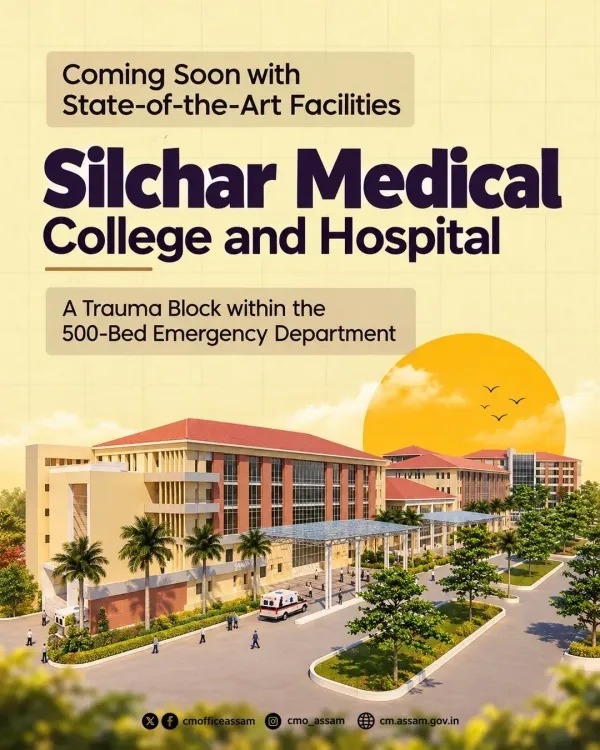
The Chief Minister's Office of Assam has announced a dedicated Trauma Block for Silchar Medical College and Hospital's 500-bed Emergency Department, marking a significant step in addressing critical-care shortfalls across the historically underserved Barak Valley region.
Key Takeaways
Silchar Medical College and Hospital (SMCH) will receive a new state-of-the-art Trauma Block within its 500-bed Emergency Department .
The announcement was made by the Chief Minister's Office of Assam on 22 October 2026 .
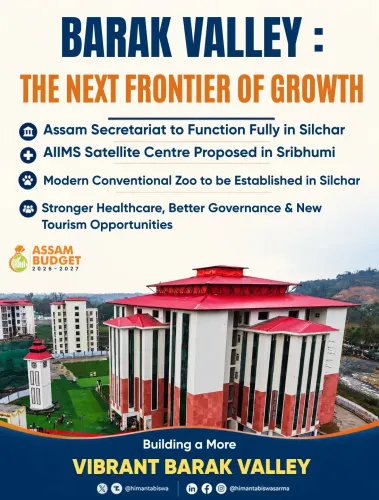
Barak Valley — comprising Cachar, Karimganj, and Hailakandi districts — has historically had limited access to specialised tertiary healthcare.
SMCH is the primary referral centre for advanced medical services across all of southern Assam.
The upgrade forms part of Assam's broader state strategy to reduce regional disparities in critical and emergency care.
Construction timeline, funding details, and the operational launch date have not yet been announced.
A region long underserved in critical care is about to get a significant upgrade. The Chief Minister's Office of Assam announced on Thursday, 22 October 2026, that Silchar Medical College and Hospital (SMCH) will soon receive a state-of-the-art Trauma Block within its 500-bed Emergency Department — a move that directly addresses one of the most persistent healthcare gaps in southern Assam.
Why Barak Valley's emergency care gap made this urgent
Barak Valley — spanning the districts of Cachar, Karimganj, and Hailakandi — has historically lagged behind the Brahmaputra Valley in access to specialised, tertiary-level healthcare. For millions of residents across this linguistically and geographically distinct region of southern Assam, SMCH in Silchar is the single primary referral centre for advanced medical services. A trauma unit here is not a luxury. It is a lifeline.
Road accidents, industrial injuries, and obstetric emergencies that currently overwhelm the hospital's general emergency infrastructure will now have a dedicated, equipped pathway for care. The Trauma Block is designed to sit within SMCH's existing 500-bed Emergency Department, concentrating critical intervention capacity in one purpose-built space.
SMCH's role as Barak Valley's last line of tertiary care
Silchar Medical College and Hospital is the anchor of healthcare delivery across southern Assam — often the last stop before patients must travel hundreds of kilometres to Guwahati or beyond. Strengthening its emergency and trauma infrastructure does not just serve Silchar city; it effectively upgrades the ceiling of care available across three entire districts.
Assam's state government has in recent years pursued a broader strategy of upgrading existing medical colleges to reduce regional disparities, with similar infrastructure expansions reported at institutions in the Brahmaputra Valley. The SMCH Trauma Block fits squarely into that pattern — but carries particular weight given Barak Valley's comparatively lower baseline of specialist services.
What still needs to be confirmed
The announcement establishes intent clearly. The construction timeline, the funding source, and the operational launch date for the Trauma Block have not yet been detailed publicly. Equally important will be follow-up commitments on staffing — trauma specialists, trained paramedics, and critical-care nurses — and on the procurement of imaging and surgical equipment the block will require to function at the level the announcement implies.
Infrastructure alone does not save lives. But getting this foundation right in Barak Valley is a prerequisite for everything that follows.
Point of View
And a dedicated trauma facility at the region's only major tertiary hospital directly addresses that gap. It also fits a recognisable pattern in Assam's healthcare strategy: rather than building new greenfield hospitals, the state is upgrading existing institutions to raise the ceiling of available care. The real test, however, will come after the sod-turning — trauma blocks require specialist manpower, sustained equipment budgets, and operational protocols that hardware alone cannot guarantee. If the Assam government follows through with staffing and procurement announcements, this becomes a meaningful policy win; without them, it remains a promising blueprint.
NationPress
22 Oct 2026
Frequently Asked Questions
What is the new Trauma Block at Silchar Medical College?
It is a state-of-the-art dedicated trauma facility being set up within the existing 500-bed Emergency Department of Silchar Medical College and Hospital (SMCH), designed to significantly improve critical emergency care in Barak Valley, southern Assam.
Which districts will benefit from the SMCH Trauma Block?
The Trauma Block will primarily benefit residents of the three Barak Valley districts — Cachar, Karimganj, and Hailakandi — which currently rely on SMCH as their sole major tertiary referral hospital.
When will the Silchar Medical College Trauma Block be operational?
The Chief Minister's Office of Assam announced the project on 22 October 2026, but a specific construction timeline or operational launch date has not yet been disclosed publicly.
Why does Barak Valley need better trauma and emergency care?
Barak Valley has historically had comparatively limited access to specialised healthcare relative to the rest of Assam. SMCH is the only major tertiary referral centre for millions of residents across three districts, making robust trauma infrastructure critically important.
What is the current Emergency Department capacity at Silchar Medical College?
According to the announcement by the Chief Minister's Office of Assam, SMCH has a 500-bed Emergency Department, within which the new Trauma Block will be established.