CM Himanta Reviews Barak Valley Infrastructure Push in Silchar
Synopsis
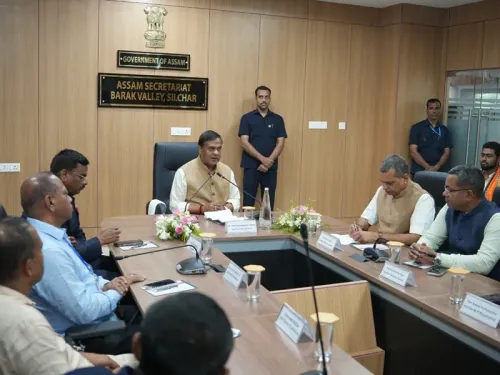
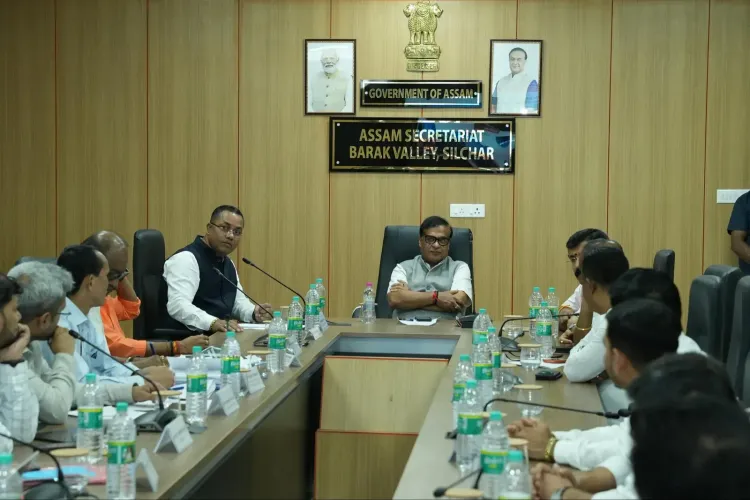
Chief Minister Himanta Biswa Sarma held a major project-progress review in Silchar on 30 September 2026, pressing for timely, high-quality delivery of National Highways, four-lane roads, elevated corridors, Assam Mala stretches, hospitals, and schools across Barak Valley's three districts.
Key Takeaways
CM Himanta Biswa Sarma chaired an infrastructure review in Silchar on 30 September 2026 , covering Cachar, Sribhumi, and Hailakandi districts.
Projects under scrutiny include National Highways, four-lane roads, elevated corridors, Assam Mala, new hospitals, educational institutions, and government buildings .
The Chief Minister emphasised timely completion and high construction quality as core benchmarks for all listed projects.
Assam Mala is the state's flagship road-upgradation scheme targeting district roads and state highways for improved intra-state connectivity.
Barak Valley has historically faced an infrastructure gap compared to the Brahmaputra Valley, with high-level reviews in Silchar reflecting sustained political focus on closing it.
The next indicators to watch are PWD quarterly progress reports and any revised completion schedules on the National Highway and Assam Mala stretches.
Barak Valley — long seen as the neglected southern flank of Assam — moved to the top of the state's infrastructure agenda on Wednesday, 30 September 2026, as Chief Minister Dr Himanta Biswa Sarma chaired a comprehensive project-progress review in Silchar, covering all three districts of the valley: Cachar, Sribhumi, and Hailakandi.
What was on the table in Silchar
The review was wide in scope. National Highways, four-lane road corridors, elevated corridors, the Assam Mala scheme, new hospitals, educational institutions, and government buildings all came under the Chief Minister's scrutiny. According to the Chief Minister's Office, Dr Sarma stressed two non-negotiables: timely delivery and high construction quality. The signal was clear — progress on paper is not progress on the ground.
Assam Mala, the state's flagship road-upgradation programme, targets major district roads and state highways to stitch together intra-state connectivity. In Barak Valley, where geography and the absence of rail alternatives make roads the economic lifeline, the scheme carries outsized importance.
The long infrastructure gap Barak Valley is still closing
Barak Valley — a distinct linguistic and geographic pocket in southern Assam, separated from the Brahmaputra Valley by forested hill ranges — has historically lagged in public infrastructure investment. Successive Assam governments have tried to narrow that gap through highway corridors and new public buildings, but execution has repeatedly slipped. High-level reviews held in Silchar have become a recurring administrative reflex — a sign of both political intent and the persistent challenge of getting complex multi-agency projects across the finish line in a remote region.
The central government's Bharatmala Pariyojana and state-level schemes have together pushed phased four-laning and National Highway expansion in the valley since the mid-2010s. The elevated corridor projects, now under review, represent the more ambitious next generation of that push — engineering over terrain that has historically made road-building slow and expensive.
Why this review matters for residents
For the roughly three million people of Cachar, Sribhumi, and Hailakandi, these are not abstract policy line items. Better highways cut travel times to hospitals, markets, and administrative centres. New hospitals and schools determine whether families stay or migrate. An elevated corridor through Silchar can transform daily commutes and reduce flood-season disruption in a district that regularly faces inundation.
Dr Sarma's on-site review format — rather than a Guwahati secretariat meeting — underscores the political weight being placed on visible delivery. The next concrete test will be the Public Works Department's quarterly progress reports on the National Highway and Assam Mala stretches, and whether any revised completion schedules emerge in the weeks ahead.
Point of View
Visible engagement with Barak Valley's infrastructure deficit is also smart electoral geography in a region with a distinct cultural identity and voter base. The breadth of sectors covered — from highways to hospitals to schools — suggests the review is as much about reasserting political ownership over the development narrative as it is about project management. Whether the review translates into accelerated timelines or remains a recurring ritual will determine its real policy value.
NationPress
1 Oct 2026
Frequently Asked Questions
What infrastructure projects did CM Himanta review in Silchar?
CM Himanta Biswa Sarma reviewed the progress of National Highways, four-lane roads, elevated corridors, Assam Mala stretches, new hospitals, educational institutions, and government buildings across Cachar, Sribhumi, and Hailakandi districts.
Which districts make up Barak Valley?
Barak Valley in southern Assam comprises Cachar, Hailakandi, and Karimganj (referred to in this review as Sribhumi) districts, and has a distinct linguistic and geographic profile from the Brahmaputra Valley.
Why is infrastructure development important for Barak Valley?
Barak Valley has historically lagged in public infrastructure compared to the Brahmaputra Valley. Better roads, hospitals, and schools reduce travel times, improve access to services, and support economic activity for roughly three million residents in a geographically remote region.
What is the Bharatmala scheme's role in Assam's highway expansion?
The central government's Bharatmala Pariyojana has funded phased four-laning and National Highway expansion in Assam, including Barak Valley, since the mid-2010s, complementing state-level schemes like Assam Mala.