CM Himanta says Barak Valley rejected INDI Alliance
Synopsis
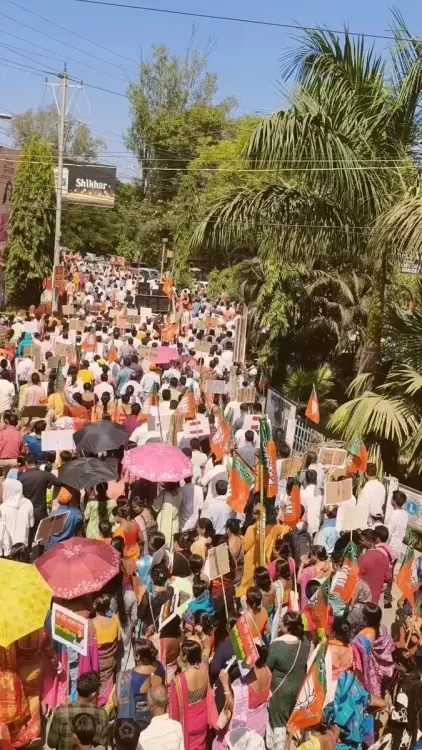
Assam CM Himanta Biswa Sarma declared from Silchar that Barak Valley has firmly rejected the INDI Alliance, backing constitutional processes and clean voter rolls — sharpening the BJP's institutional-credibility narrative ahead of future polls in the region.
Key Takeaways
Himanta Biswa Sarma posted from Silchar on October 14, 2026 , claiming Barak Valley voters rejected the INDI Alliance.
Sarma accused the INDI Alliance of 'nefarious designs to discredit our institutions and erode their credibility.' He framed the regional verdict as an endorsement of 'constitutional processes' and 'clean voter rolls.' Barak Valley , anchored by Silchar in Cachar district , has a largely Bengali-speaking electorate with distinct political patterns in Assam.
The BJP's voter-roll and citizenship narrative in Assam traces back to the Assam Accord of 1985 and the 2019 NRC final list.
The post signals the BJP intends to use Barak Valley sentiment as a template for its institutional-integrity messaging ahead of upcoming electoral cycles.
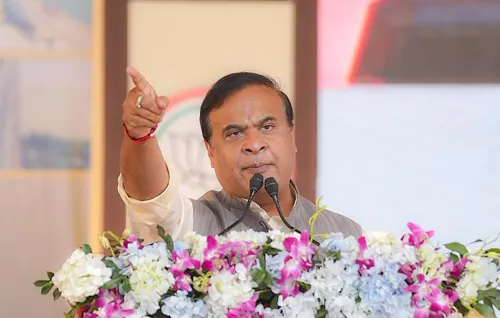
Barak Valley, the Bengali-speaking southern belt of Assam, has delivered a political verdict that Assam Chief Minister Himanta Biswa Sarma is calling a firm endorsement of constitutional processes and clean electoral rolls — and a pointed rebuff of the opposition. Posting from Silchar on Wednesday, October 14, 2026, Sarma declared that the region's people had 'strongly rejected' the INDI Alliance and what he described as its 'nefarious designs to discredit our institutions.'
What Sarma said — and what it signals
The Chief Minister's post drew a direct line between Barak Valley's political mood and the broader national debate over voter-roll integrity. 'They firmly stood for constitutional processes and the need for clean voter rolls in securing our country,' Sarma wrote, framing local sentiment as a mandate for institutional credibility rather than mere partisan preference.
The language is deliberate. By tying the region's response to 'constitutional processes,' Sarma plants the vote-roll question squarely in the domain of governance, not just politics — a framing the BJP has consistently used to insulate its citizenship and electoral exercises from opposition attack.
Barak Valley's distinct political weight
Barak Valley — anchored by Silchar, the headquarters of Cachar district — carries outsized significance in Assam's political arithmetic. Its predominantly Bengali-speaking electorate has historically responded differently to state and national campaigns compared with the Brahmaputra Valley, making any decisive shift here a genuine data point for both ruling and opposition strategists.
The region's demographic profile also places it at the intersection of Assam's longest-running political fault line: the question of illegal immigration and electoral-roll accuracy. The Assam Accord of 1985 first codified the framework for detecting undocumented residents, and the National Register of Citizens final list — published in 2019 after a Supreme Court-supervised exercise — kept that debate alive and electorally charged.
The INDI Alliance in Assam's crosshairs
Sarma's attack on the INDI Alliance — the multi-party opposition bloc assembled to contest BJP dominance nationally — centres on a specific charge: that the coalition is working to 'erode the credibility' of institutions. It is a line the BJP has pressed in several states, arguing that opposition criticism of the NRC process and voter-list revision drives amounts to protecting illegitimate entries on the rolls.
The opposition, for its part, has consistently countered that such exercises disproportionately affect linguistic and religious minorities and serve as tools of political exclusion. Neither claim is resolvable in a single post — but the fact that Sarma is anchoring it in Barak Valley, a region with a large Bengali Hindu population that strongly backed citizenship protections, is a pointed strategic choice.
What Assam's electoral calendar means next
With state and national polling cycles never far from view in Assam, any fresh push on voter-roll revision or citizenship verification will land against this backdrop. Sarma's framing — that Barak Valley has already chosen institutional integrity over opposition pressure — sets up a narrative the BJP will likely deploy in any upcoming electoral exercise in the region.
Clean rolls, constitutional process, rejected opposition: the message from Silchar, as Sarma tells it, is unambiguous.
Point of View
The BJP frames any future opposition challenge to voter-roll processes as already repudiated by the electorate. The choice of Barak Valley — a Bengali-majority region where citizenship anxieties run deep — is not incidental; it is where the NRC debate cuts most directly into lived experience. For the INDI Alliance, the charge that they are 'discrediting institutions' is a recurring BJP rhetorical device that forces opponents to defend procedural criticism rather than prosecute policy failures. The exchange signals that electoral-roll integrity, not development alone, will be a central mobilising axis in Assam's next electoral cycle.
NationPress
14 Oct 2026
Frequently Asked Questions
What did Himanta Biswa Sarma say about Barak Valley and the INDI Alliance?
Sarma declared on October 14, 2026 that the people of Barak Valley had 'strongly rejected' the INDI Alliance and its alleged efforts to discredit Indian institutions, while backing constitutional processes and clean voter rolls.
Where is Barak Valley and why does it matter politically?
Barak Valley is a Bengali-speaking southern Assam region whose main city is Silchar in Cachar district. Its distinct linguistic and demographic profile makes it a key variable in Assam's electoral arithmetic, particularly in debates over citizenship and voter-roll integrity.
What is the INDI Alliance and what is its position in Assam?
The INDI Alliance is a multi-party opposition bloc formed to contest the BJP-led NDA. In Assam, it has criticised citizenship and voter-roll exercises, arguing these processes can harm minority communities — a position the BJP counters as undermining institutional credibility.
What is the background to Assam's voter-roll and citizenship debates?
Assam's citizenship and electoral-roll debates stem from the Assam Accord of 1985, which established a framework for detecting illegal immigrants. The National Register of Citizens final list was published in 2019 following a Supreme Court-supervised exercise, keeping the issue politically alive.
What is NEDA and what role does Himanta Biswa Sarma play in it?
NEDA — the North-East Democratic Alliance — is a BJP-led alliance of regional parties in northeast India. Himanta Biswa Sarma serves as its convenor in addition to his role as Chief Minister of Assam.