Malaysia-India ties: Anwar Ibrahim vows to deepen $18.59 bn partnership
Synopsis
Malaysian PM Anwar Ibrahim used the farewell meeting of India's High Commissioner to restate Kuala Lumpur's strategic commitment to New Delhi — citing USD 18.59 billion in bilateral trade, a new Digital Council, and an AI Conclave. With Modi having visited Malaysia in February, the relationship is clearly being upgraded from a trading partnership into a full-spectrum technology and security corridor.
Key Takeaways
Malaysian PM Anwar Ibrahim reaffirmed commitment to the India-Malaysia Comprehensive Strategic Cooperation framework on 18 May .
Bilateral trade reached USD 18.59 billion in 2025 , with India remaining Malaysia's largest trading partner in South Asia .
The First Malaysia–India Digital Council (MIDC) Meeting and the MY–India AI Conclave were recently held in Kuala Lumpur .
PM Narendra Modi visited Malaysia in February 2025 , where both sides agreed to deepen cooperation in semiconductors, AI, defence, and digital technologies .
The remarks came during a farewell meeting with India's High Commissioner BN Reddy , who is concluding his tenure in Kuala Lumpur.
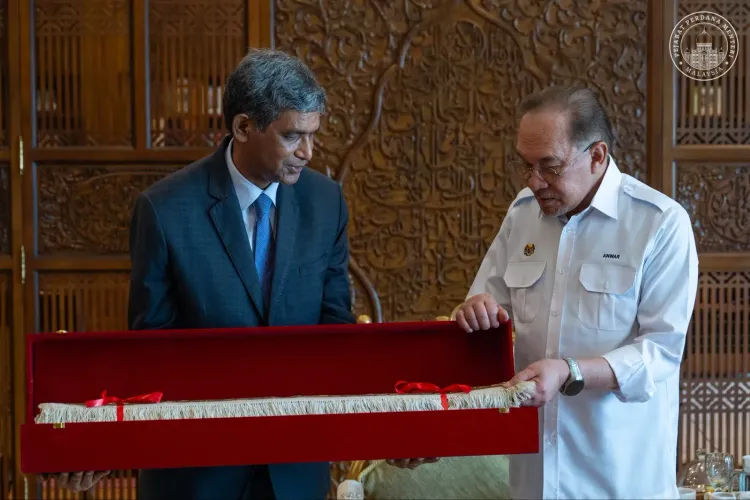
Malaysian Prime Minister Anwar Ibrahim on Monday, 18 May reaffirmed Kuala Lumpur's commitment to deepening its relationship with India, calling for greater cooperation across trade, technology, and food security to deliver 'more inclusive prosperity' for both nations. The pledge came during a courtesy farewell meeting with India's High Commissioner to Malaysia, BN Reddy, who is set to conclude his tenure in Kuala Lumpur.
What Ibrahim Said
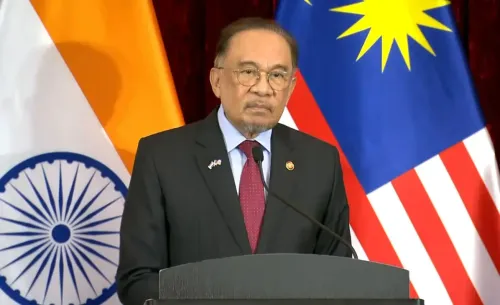
In a post on X following the meeting, Ibrahim described the bilateral relationship as currently standing at the level of Comprehensive Strategic Cooperation — a designation that reflects, in diplomatic terms, one of the higher tiers of bilateral engagement. 'This meeting was also utilised to strengthen bilateral relations between Malaysia and India, which are currently at the level of Comprehensive Strategic Cooperation, thereby reflecting our shared commitment to expanding cooperation across various fields, including trade, digital, artificial intelligence (AI), food security, education, and people-to-people relations,' Ibrahim wrote.
He also drew attention to the trajectory of bilateral trade, which reached USD 18.59 billion in 2025, with Ibrahim noting that this figure cements India's position as Malaysia's largest trading partner in South Asia.
Digital and AI Cooperation
Ibrahim highlighted momentum in the technology space, pointing to the convening of the First Malaysia–India Digital Council (MIDC) Meeting and the MY–India AI Conclave, both held recently in Kuala Lumpur. He described progress in the digital and emerging technology sectors as showing 'remarkable progress' — language that signals Kuala Lumpur's intent to position the Malaysia-India corridor as a serious AI and digital partnership, not merely a trade relationship.
Modi-Ibrahim Meeting in February
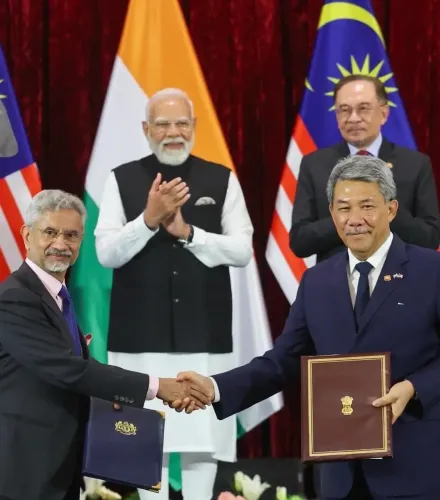
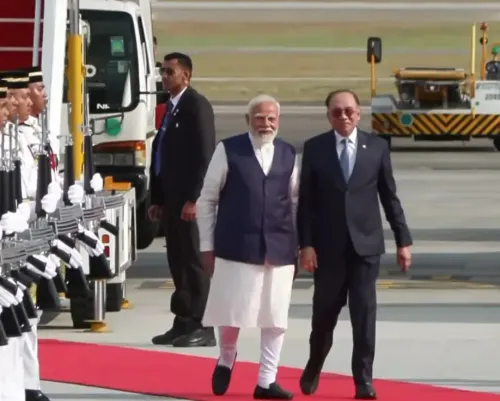
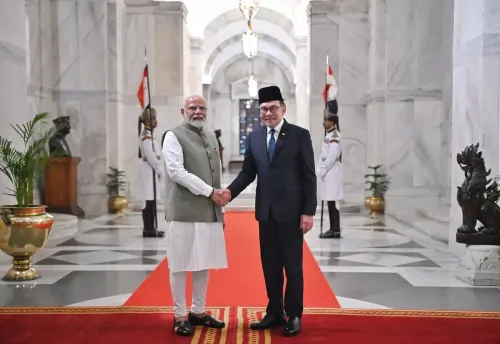
The latest reaffirmation builds on the momentum from Prime Minister Narendra Modi's visit to Malaysia earlier this year, during which both leaders reviewed the implementation of the India-Malaysia Comprehensive Strategic Partnership. Modi, in his own post on X after meeting Ibrahim in February, wrote: 'India and Malaysia are maritime neighbours who have always enjoyed a close friendship. We reviewed developmental cooperation in sectors like trade, infrastructure, energy, IT, biotechnology and more. We also agreed to strengthen cooperation in the field of security, defence, AI, digital technologies and semiconductors.'
Ibrahim, for his part, had described Modi's visit as closing 'with an optimistic sense that the friendship between the two countries will continue to flourish, rooted in a long history and driven by a spirit of mutual respect and shared hopes for the future.'
Why This Matters for Regional Stability
The India-Malaysia relationship sits at a strategically significant intersection: both countries are major players in the Indo-Pacific, and their cooperation on semiconductors, AI, and digital infrastructure carries implications beyond bilateral trade. This comes amid broader regional efforts to diversify supply chains away from single-country dependencies — a context in which the Malaysia-India corridor is increasingly relevant. Notably, the farewell meeting of a High Commissioner being used to restate strategic intent at the Prime Ministerial level underscores how institutionalised and high-priority this partnership has become.
With BN Reddy's tenure drawing to a close, both governments are expected to sustain the engagement momentum through the frameworks already established, including the MIDC and the AI Conclave series.
Point of View
A role it is competing for with Singapore and Vietnam. What mainstream coverage misses is the semiconductor angle: both Modi and Ibrahim have flagged semiconductors specifically, and in a world of fractured supply chains, that is the real strategic prize this partnership is quietly building toward.
NationPress
22 Sept 2026
Frequently Asked Questions
What did Malaysian PM Anwar Ibrahim say about India relations?
Anwar Ibrahim reaffirmed that Malaysia will continue to strengthen its relationship with India for mutual benefit, regional stability, and inclusive prosperity. He made the remarks during a farewell meeting with India's outgoing High Commissioner BN Reddy on 18 May, and posted a detailed statement on X outlining cooperation areas including trade, AI, digital technology, food security, and education.
How much is bilateral trade between India and Malaysia?
Bilateral trade between India and Malaysia reached USD 18.59 billion in 2025, according to Ibrahim's post on X. This makes India Malaysia's largest trading partner in South Asia.
What is the Malaysia-India Digital Council?
The Malaysia–India Digital Council (MIDC) is a bilateral mechanism focused on digital and emerging technology cooperation. Its first meeting was recently held in Kuala Lumpur, alongside the MY–India AI Conclave, signalling a deepening of the technology partnership between the two countries.
When did PM Modi visit Malaysia and what was agreed?
Prime Minister Narendra Modi visited Malaysia earlier in 2025, in February, and met PM Anwar Ibrahim. Both leaders reviewed the India-Malaysia Comprehensive Strategic Partnership and agreed to strengthen cooperation in trade, infrastructure, energy, IT, biotechnology, security, defence, AI, digital technologies, and semiconductors.
What level is the India-Malaysia diplomatic relationship at?
The India-Malaysia relationship is currently at the level of Comprehensive Strategic Cooperation, as noted by PM Ibrahim. This is one of the higher formal tiers of bilateral engagement in diplomatic classification.