How Did Malaysian PM Ibrahim Describe PM Modi's Friendship?
Synopsis
In a recent meeting in Kuala Lumpur, Malaysian PM Anwar Ibrahim hailed PM Modi as a 'true friend,' emphasizing the importance of their trustworthy dialogue. The leaders discussed enhancing bilateral cooperation across multiple sectors, marking a significant step in India-Malaysia relations. Their partnership aims to exceed previous trade milestones and strengthen educational ties.
Key Takeaways
Malaysian PM Ibrahim recognizes PM Modi as a “true friend.” Strategic partnership upgraded to Comprehensive Strategic Partnership in 2024.
11 documents signed to enhance cooperation.
Focus on trade surpassing $8.59 billion.
Emphasis on educational collaboration and tourism.
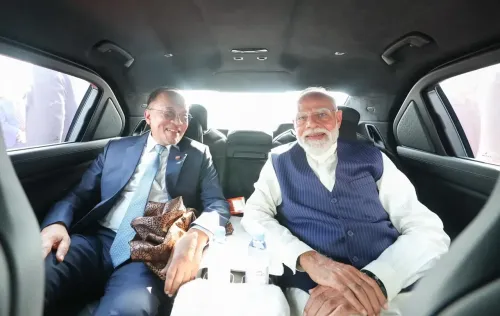
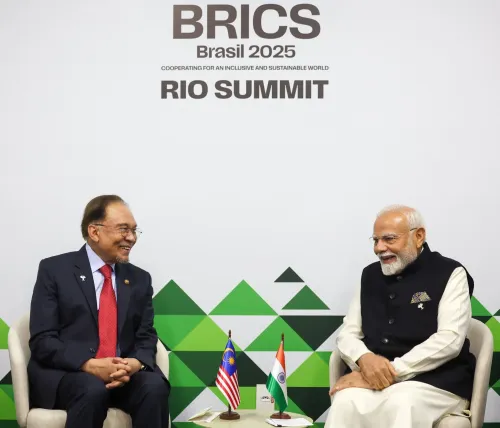
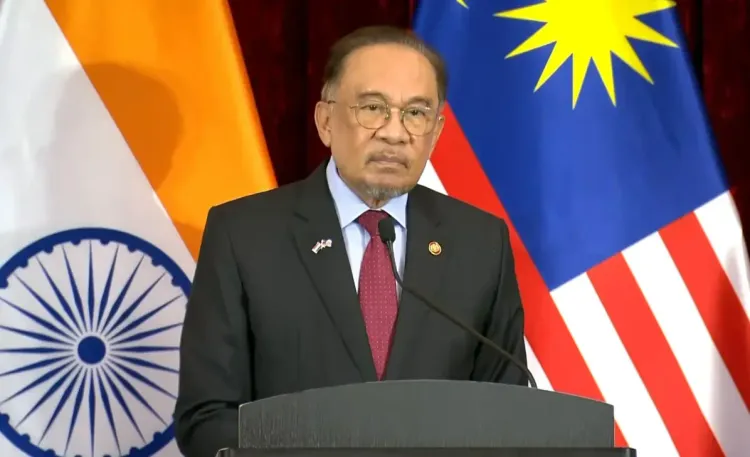
Kuala Lumpur, Feb 8 (NationPress) Malaysian Prime Minister Anwar Ibrahim referred to Prime Minister Narendra Modi as a “true friend” with whom he engaged in a “trustworthy” dialogue on Sunday.
During a joint press conference in Kuala Lumpur, Malaysian PM Ibrahim stated, “This meeting and these exchanges are critical and strategic for strengthening India-Malaysia relations. Our relationship, which dates back to 1957, has now been upgraded to a Comprehensive Strategic Partnership in 2024.” He emphasized the “deep-rooted historical connections, robust people-to-people interactions, and growing economic collaboration.”
He asserted, “We will continue to enhance cooperation in diverse areas such as trade, investment, semiconductor technology, digital economy, local currency trade, connectivity, energy, agriculture, food security, defense, education, healthcare, tourism, culture, and interpersonal relations. This is truly comprehensive, and we are confident in our ability to advance these initiatives swiftly with the commitment of our respective governments and foreign ministers.”
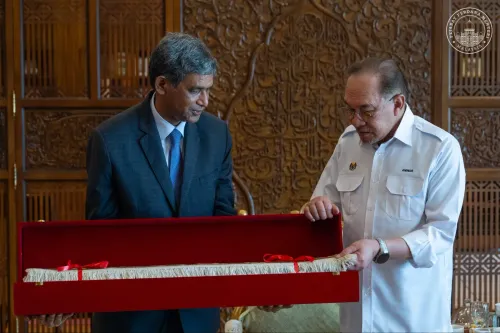
The Malaysian PM noted that both nations signed 11 documents, including MoUs, in an exchange of letters that “transcended typical bilateral arrangements,” covering peacekeeping cooperation in semiconductor technology, healthcare, and security.
PM Ibrahim expressed optimism about expanding trade with India, aiming to surpass the $8.59 billion figure achieved in 2025. He described the use of local currencies—the rupee and Malaysian ringgit—as a “remarkable achievement.”
“India is experiencing remarkable growth, establishing itself as a powerhouse in international trade. Thus, Malaysia, within the ASEAN framework, stands to gain significantly by finding more avenues to collaborate with India, aiming to exceed the $18.59 billion milestone set for 2025,”
he added.
He highlighted the significance of educational ties, noting that many Malaysians have studied in India, with an increasing number of Indian students in Malaysia. “Under the leadership of my esteemed colleague Prime Minister Modi over the past decade, Indian educational institutions have gained exceptional recognition, rivaling even the most renowned establishments in the West. We will actively seek to increase the number of students studying in India across various disciplines,” the Malaysian PM remarked.
He also underscored the importance of tourism and connectivity.
“I must convey my gratitude; my discussions with Prime Minister Modi transcend ordinary diplomatic exchanges, embodying the essence of true friendship marked by trust and understanding. I would like to take this opportunity to thank him for his unwavering commitment to support all peace initiatives, whether in Ukraine-Russia or the Middle East, particularly Gaza. His peacekeeping efforts are commendable,” he stated.
“As a testament to our strong relations, I have swiftly agreed to endorse the Indian government's decision to establish a consulate in Kota Kinabalu, Sabah,” he concluded.
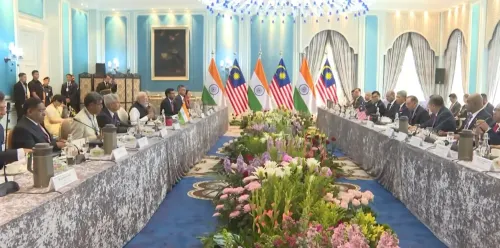
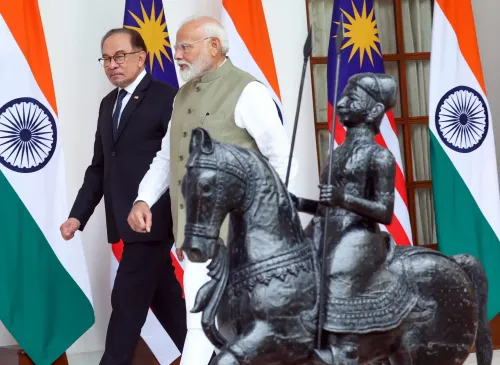
Earlier that day, both leaders engaged in delegation-level discussions, focusing on enhancing bilateral ties across various sectors, including defense and security.
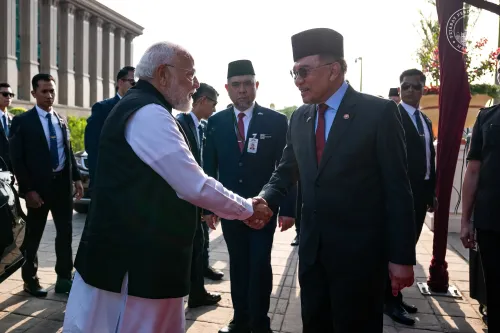
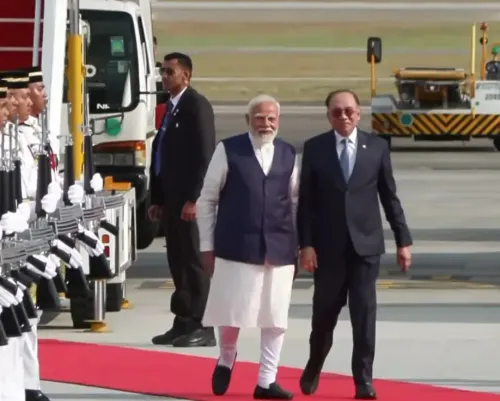
PM Modi received a ceremonial welcome at Perdana Putra in Putrajaya.
PM Modi's visit is viewed as a crucial step towards further solidifying the enduring friendship between India and Malaysia, founded on mutual trust, shared values, and common aspirations for the future.
Point of View
Showcasing mutual respect and commitment to collaboration across various sectors. The remarks made by Malaysian PM Ibrahim highlight the importance of personal rapport in international diplomacy, which can pave the way for stronger bilateral ties and mutual economic benefits.
NationPress
3 Oct 2026
Frequently Asked Questions
What did Malaysian PM Ibrahim say about PM Modi?
Malaysian PM Anwar Ibrahim described PM Modi as a 'true friend' and emphasized the trustworthy nature of their discussions.
What sectors were discussed for collaboration?
The leaders discussed collaboration in trade, investment, semiconductor technology, digital economy, local currency trade, energy, agriculture, and more.
What is the significance of the 11 documents signed?
The 11 documents, including MoUs, signify an enhancement in bilateral ties, extending beyond normal arrangements to areas like peacekeeping and healthcare cooperation.
How does the partnership benefit Malaysia?
The partnership allows Malaysia to leverage India's economic growth and explore new trade opportunities, potentially exceeding previous trade milestones.
What is the future of educational ties between India and Malaysia?
Both leaders expressed a desire to strengthen educational ties, with a focus on increasing the number of Malaysian students studying in India.