How are PM Modi's Peacekeeping Efforts Being Recognized by Malaysian PM Anwar Ibrahim?
Synopsis
Discover how Malaysian Prime Minister Anwar Ibrahim commended PM Narendra Modi for his unwavering dedication to peacekeeping efforts, particularly in the Russia-Ukraine war and Middle Eastern conflicts. This significant meeting highlights the strengthening ties and shared aspirations between India and Malaysia.
Key Takeaways
Recognition of Peacekeeping: PM Modi's efforts in diplomacy are acknowledged globally.
Strengthened Relations: India and Malaysia have elevated their partnership significantly.
Comprehensive Cooperation: Collaboration spans multiple sectors, ensuring mutual growth.
Trade Expansion: Optimism surrounds increasing trade beyond established figures.
Educational Collaboration: Focus on enhancing student exchanges between the two nations.
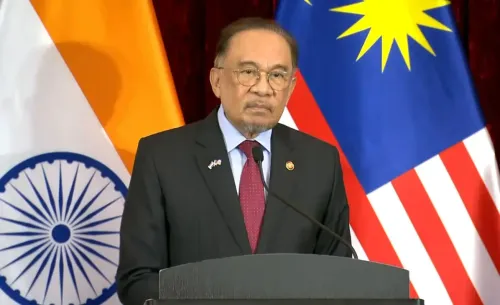
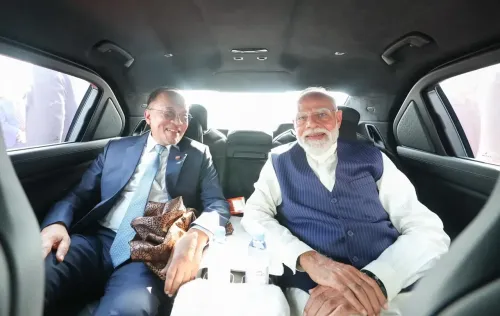
Kuala Lumpur, Feb 8 (NationPress) Malaysian Prime Minister Anwar Ibrahim praised Prime Minister Narendra Modi on Sunday for his unwavering commitment to peacekeeping efforts, expressing gratitude for his dedication to fostering diplomatic discussions related to the ongoing Russia-Ukraine conflict and the situation in the Middle East.
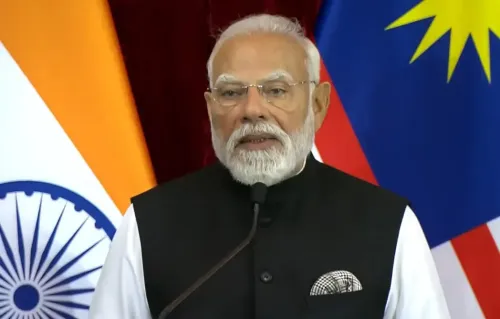
During a joint press conference with Prime Minister Modi in Kuala Lumpur, Malaysian PM Ibrahim remarked, "I want to convey my gratitude, for my conversations with Prime Minister Modi transcend typical diplomatic interactions; they reflect a bond of true friendship, characterized by trust and understanding."
"I would also like to take this moment to extend my appreciation to him for his steadfast support towards all peace initiatives, whether in the context of Ukraine-Russia or in the Middle East, particularly concerning Gaza. His role in peacekeeping is unquestionable," he emphasized.
"We view this meeting and the discussions held as crucial and strategic for strengthening the ties between India and Malaysia. Our relations date back to 1957, but we have upgraded it to a Comprehensive Strategic Partnership in 2024," he noted, underscoring the deep historical connections, robust people-to-people interactions, and growing economic collaboration.
"We will continue to enhance cooperation across various domains—trade, investment, semiconductor technology, digital economy, local currency trade, connectivity, energy, agriculture, food security, defense, education, healthcare, tourism, culture, and interpersonal relations. It is truly comprehensive, and we trust that with the commitment from both our governments and foreign ministers, we can expedite these efforts," he stated.
The Malaysian PM mentioned that the two countries exchanged 11 documents, including MoUs, during their communications, which significantly transcended typical bilateral agreements, covering areas such as peacekeeping cooperation on semiconductors, healthcare, and security.
PM Ibrahim further expressed optimism about expanding trade relations with India, aiming to surpass the $8.59 billion achieved in 2025. He also termed the bilateral trade using local currencies—the rupee and the Malaysian ringgit—as a notable achievement.
"India is progressing remarkably, showcasing an extraordinary rise on the international trade front, and thus, Malaysia, within the ASEAN framework, stands to gain greatly if we can discover more avenues for collaboration with India, aiming to exceed the $18.59 billion reached in 2025," he asserted.
He characterized educational ties as crucial, noting that numerous Malaysians have pursued their education in India, along with an increasing number of Indian students in Malaysia.
"Over the past decade under Prime Minister Modi's leadership, we have witnessed exceptional recognition of Indian educational institutions. Many of them have attained remarkable acclaim beyond traditional Western institutions. Hence, we are keen to explore avenues to increase the number of students studying in India across various disciplines," the Malaysian PM said.
He also emphasized the importance of focusing on tourism and connectivity. "As a testament to our strong relations, I have quickly endorsed the Indian Government's initiative to establish a consulate in Kota Kinabalu, Sabah," he concluded.
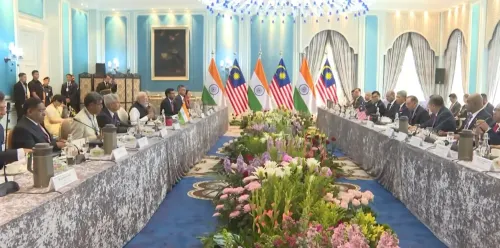
Earlier in the day, both leaders engaged in delegation-level discussions, addressing methods to strengthen bilateral relations across several sectors, including defense and security.
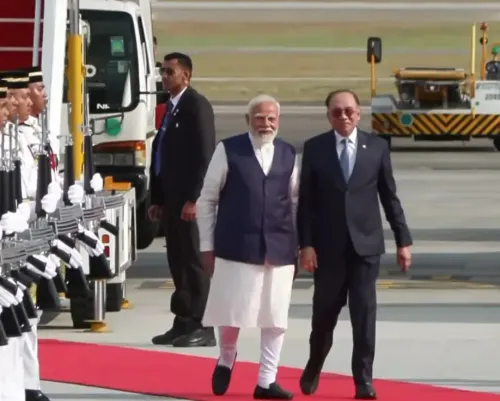
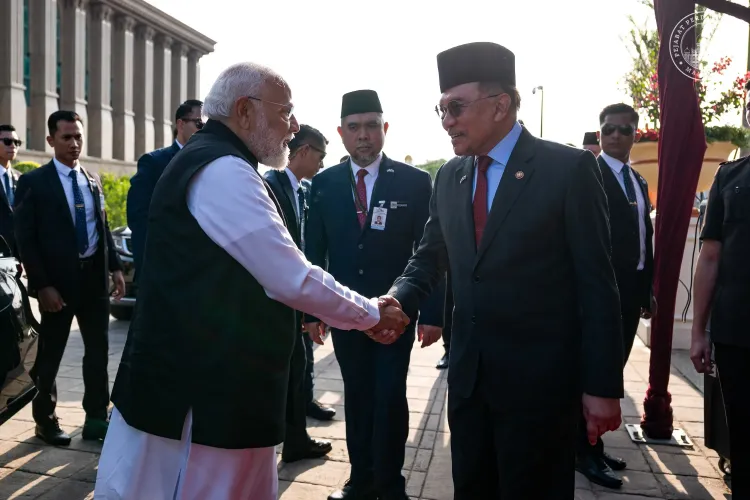
PM Modi received a ceremonial welcome at Perdana Putra in Putrajaya.
This visit by PM Modi is perceived as a pivotal move toward further solidifying the enduring friendship between India and Malaysia, rooted in mutual trust, shared values, and collective aspirations for the future.
Point of View
The discussions between PM Modi and PM Ibrahim signify an important step towards reinforcing bilateral ties. The emphasis on peacekeeping and economic cooperation reflects a shared commitment to stability and growth in the region. This collaboration is crucial for both nations as they navigate complex global challenges.
NationPress
7 Oct 2026
Frequently Asked Questions
What peacekeeping efforts did PM Modi undertake?
PM Modi has actively supported diplomatic discussions related to the Russia-Ukraine conflict and the Middle Eastern crises, particularly in Gaza.
How has the relationship between India and Malaysia evolved?
The relationship has grown significantly since 1957, culminating in the establishment of a Comprehensive Strategic Partnership in 2024.
What areas of cooperation were discussed?
Discussions covered trade, investment, education, healthcare, and security cooperation among others.
What is the significance of using local currencies in trade?
Using local currencies, like the rupee and the Malaysian ringgit, is a notable achievement that can enhance trade relations.
How are educational ties between India and Malaysia important?
Educational ties are pivotal, with many Malaysians studying in India and a growing number of Indian students in Malaysia, fostering cultural exchange.