BJP Leader Amit Malviya Quotes Nehru on Diplomacy Amid Iran Crisis
Synopsis
In a recent social media post, BJP leader Amit Malviya draws parallels between current events in Iran and historical diplomatic caution expressed by Jawaharlal Nehru regarding the execution of Hungarian leader Imre Nagy, highlighting the need for measured responses in international crises.
Key Takeaways
Amit Malviya's post connects historical events to current diplomacy.
Jawaharlal Nehru's cautious approach is highlighted.
The death of Khamenei has triggered political debate in India.
Opposition parties are calling for a stronger stance on Iran.
Historical parallels can inform modern diplomatic strategies.
New Delhi, March 4 (NationPress) Amid the worldwide repercussions following the US-Israeli airstrikes that resulted in the death of Iran's Supreme Leader Ayatollah Ali Khamenei, Amit Malviya, a prominent leader of the Bharatiya Janata Party (BJP), has drawn a historical analogy to emphasize the importance of diplomatic prudence.
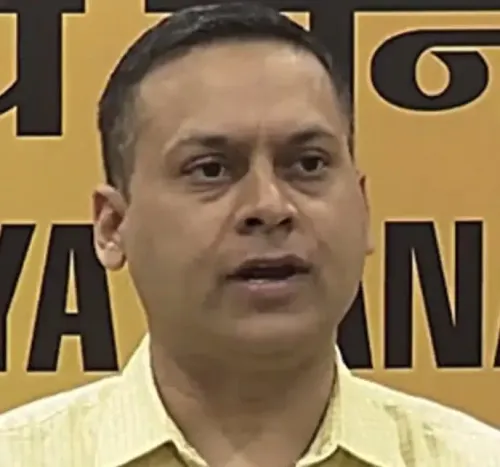
As the head of the BJP's National Information and Technology Department and a key figure in West Bengal operations, Malviya shared a quotation from Jawaharlal Nehru, India's first Prime Minister, regarding the execution of Hungarian revolutionary Imre Nagy in 1958.
The social media post, which attracted over 1,600 views in just a few hours, appears to subtly support the Indian government's cautious approach to the recent developments in Iran.
The quote from Nehru, taken from a letter dated around June 1958, states: "While this is my clear opinion, it will have to be considered in what form and on what occasion I should express it. I agree with you that we need not make any governmental pronouncement on this subject, at this stage at least."
Accompanying the quote was a historical photograph believed to depict Nehru during correspondence, symbolizing the diplomatic considerations of the time.
For context, Imre Nagy, who served as the reformist Prime Minister during Hungary's 1956 uprising against Soviet domination, was executed on June 16, 1958, by the communist regime in Budapest on treason charges.
Nagy's execution, occurring two years after the failed revolution, faced international condemnation but prompted a careful response from Nehru, who was navigating the early stages of the Non-Aligned Movement.
Nehru's hesitation to make an immediate official statement reflected India's dedication to a non-interventionist and balanced foreign policy during the Cold War. Malviya's reference comes at a delicate moment.
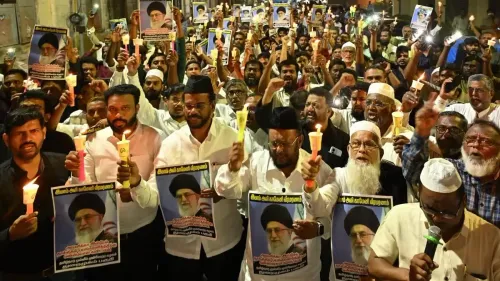
The death of the 86-year-old Khamenei on February 28, due to precision strikes in Tehran, has ignited intense discussions within India.
Opposition parties, including Congress, have criticized the Modi administration for its perceived silence, accusing it of being overly aligned with Israel and the US, especially following Prime Minister Narendra Modi's recent visit.
Some voices have called for a stronger condemnation of the airstrikes, viewing them as an infringement on sovereignty, while others advocate for solidarity with Iran, a crucial oil supplier and strategic ally.
By recalling Nehru's words, Malviya appears to be advocating for patience and strategic timing in official responses, echoing the philosophy of the Congress leader.
"Nehru recognized the risks of hasty declarations during tumultuous international crises," Malviya noted in his post, which, while not directly linking to Iran, refers to ongoing global realignments.
He also included a parenthetical reference to Nagy's fate, emphasizing the Hungarian leader's legacy as a figure of resistance against authoritarian oppression.
Frequently Asked Questions
What historical event does Amit Malviya reference?
Amit Malviya references the execution of Hungarian revolutionary Imre Nagy in 1958 to illustrate the importance of diplomatic restraint.
Why is Nehru's quote significant?
Nehru's quote underscores the need for thoughtful communication in international affairs, particularly during crises.
What has been the reaction to Khamenei's death in India?
The death of Khamenei has sparked significant debate, with opposition parties criticizing the Modi government's response.
What does Malviya suggest regarding official responses?
Malviya advocates for patience and strategic timing in responding to international events, reflecting Nehru's diplomatic approach.
How are the BJP and Congress differing in their responses?
The BJP is portrayed as taking a cautious approach, while Congress has criticized it for being too aligned with Western powers.