Mathura court awards life term in 2017 murder, robbery and attempted rape case
Synopsis
Eight years after a midnight highway assault that killed a 19-year-old and left his cousin sister traumatised, a Mathura fast-track court has handed the perpetrator life imprisonment. The survivor's unbroken testimony and forensic evidence were decisive — a reminder that fast-track courts, when they function, can deliver accountability even in cases from the rural margins.
Key Takeaways
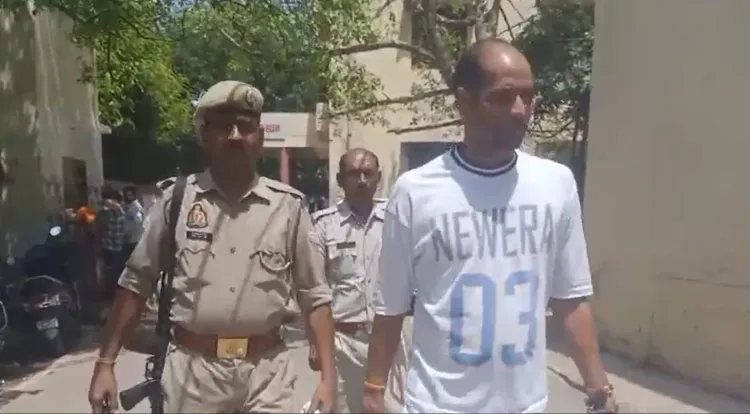
Dilip , son of Bhimsen , was sentenced to life imprisonment by a Mathura special fast-track court on Wednesday .
The crime occurred on 3 May 2017 on a rural route near Govardhan, Uttar Pradesh .
Victim Chandrashekhar , 19 , was shot dead after intervening to protect his cousin sister Khushboo from attempted rape.
The court also imposed a fine of ₹1.30 lakh and convicted the accused under the Arms Act for illegal firearm possession.
Survivor testimony and the FSL forensic report were cited as decisive evidence by government counsel Subhash Chaturvedi .
The accused's custody period will be adjusted against his sentence; he is to be transferred to Mathura district jail .
A special fast-track court in Mathura, Uttar Pradesh, on Wednesday sentenced a man to life imprisonment for murdering a 19-year-old passenger, attempting to rape the victim's cousin sister, and robbing them at gunpoint — crimes committed in May 2017. The verdict, delivered nearly eight years after the incident, marks a significant closure in a case that exposed the vulnerability of interstate travellers on rural routes.
What the Court Decided
Additional Sessions Judge Vijay Kumar Singh of the Special Fast Track Court (Crimes Against Women) convicted the accused, Dilip, son of Bhimsen, under multiple provisions of the Indian Penal Code (IPC) and the Arms Act. The court imposed life imprisonment under Section 302 IPC (murder) along with a fine of ₹1.30 lakh. Additional convictions were recorded under Section 376/511 IPC (attempt to rape), Sections 394 and 411 IPC (robbery and possession of stolen property), and Section 3/25 of the Arms Act for illegal possession of a firearm.
The court further directed that the period already served by the accused in judicial custody be adjusted against his sentence, and ordered his immediate transfer to Mathura district jail upon completion of legal formalities.
How the Crime Unfolded
According to the prosecution, the incident took place on 3 May 2017. Chandrashekhar, a 19-year-old resident of Bharatpur district, Rajasthan, was accompanying his cousin sister Khushboo from Chandauri. While waiting at the Kosi Kalan bus stand to return to Deeg, the two accepted a lift from Dilip, who was driving a Maruti van bearing registration number RJ-27UB-8442.
The accused reportedly assured them he was travelling toward Deeg, but later diverted the vehicle on the pretext of avoiding an RTO checkpoint, steering instead toward the Govardhan route. Around midnight, he allegedly stopped the van in a forested stretch between Jachonda and Junsuti villages.
Dilip then allegedly threatened the passengers with a country-made pistol, robbed them of jewellery and cash, and attempted to sexually assault Khushboo after forcibly removing her clothes. When Chandrashekhar intervened — reportedly breaking the vehicle's window glass to confront the accused — a scuffle broke out. During the altercation, the accused allegedly shot Chandrashekhar in the head, killing him on the spot, before fleeing with the looted belongings.
Key Evidence That Secured the Conviction
Police arrested Dilip near Govardhan Mod shortly after the crime. During investigation, authorities allegedly recovered ₹5,200 from the looted amount and found the accused wearing slippers belonging to the deceased. Based on his disclosure, police also recovered the illegal firearm and a spent cartridge allegedly used in the shooting.
Government counsel Subhash Chaturvedi said the eyewitness testimony of survivor Khushboo, combined with forensic evidence and the Forensic Science Laboratory (FSL) report, played a decisive role in securing the conviction. The survivor's account remained consistent throughout the trial, prosecutors noted.
Significance of the Verdict
The case was heard by a fast-track court specifically constituted for crimes against women — a category of court established across Uttar Pradesh following increased focus on expediting such trials. The conviction, coming roughly eight years after the offence, underscores both the persistence of the prosecution and the evidentiary strength of survivor testimony in securing a life sentence. This is among several such fast-track verdicts in Uttar Pradesh in recent months as courts work through pending cases from the 2015–2020 period.
Point of View
Yet a 2017 case reaching verdict in 2025 suggests systemic delays persist even within the expedited framework. The survivor's testimony holding firm across nearly a decade of proceedings is a testament to individual resilience, but the broader question — why rural highway crimes of this nature continue to occur with such frequency — remains unanswered by the verdict alone. Conviction rates in such cases nationally remain low; this outcome, while just, is not yet the norm.
NationPress
26 Oct 2026
Frequently Asked Questions
What was the Mathura court verdict in the 2017 murder and robbery case?
A special fast-track court in Mathura sentenced the accused, Dilip, to life imprisonment on Wednesday for the 2017 murder of 19-year-old Chandrashekhar, attempted rape of his cousin Khushboo, and armed robbery. The court also imposed a fine of ₹1.30 lakh and convicted him under the Arms Act.
Who was the victim in the Mathura 2017 case?
The primary victim was Chandrashekhar, a 19-year-old from Bharatpur district in Rajasthan, who was shot dead after intervening to protect his cousin sister Khushboo from a sexual assault. Khushboo survived and her eyewitness testimony was central to the conviction.
How did the accused lure the victims?
According to the prosecution, the accused Dilip offered a lift to Chandrashekhar and Khushboo from the Kosi Kalan bus stand, claiming he was heading toward Deeg. He later diverted the vehicle toward the Govardhan route on the pretext of avoiding an RTO checkpoint, before stopping in a forested area around midnight.
What evidence led to the conviction?
Government counsel Subhash Chaturvedi cited the consistent eyewitness testimony of survivor Khushboo, forensic evidence, and the Forensic Science Laboratory (FSL) report as decisive. Police also recovered ₹5,200 from the looted amount, the accused's illegal firearm, a spent cartridge, and slippers belonging to the deceased worn by the accused at the time of arrest.
What is a Special Fast Track Court for crimes against women?
Special Fast Track Courts for crimes against women are dedicated judicial bodies established across Uttar Pradesh and other states to expedite trials involving sexual assault, murder linked to gender-based violence, and related offences. They were set up to reduce the backlog of such cases and deliver timely justice to survivors.