Meenakshi Seshadri on saas-bahu portrayals: 'Ghar Ho To Aisa' revisited

Synopsis
Meenakshi Seshadri has revisited her 1990 Bollywood film Ghar Ho To Aisa, where she played a karate-wielding daughter-in-law opposite Bindu, to make a pointed observation: Indian cinema has almost always cast the saas-bahu bond as adversarial. Her personal wish — that the relationship mirror a mother-daughter bond — cuts against decades of popular culture stereotyping.
Key Takeaways
Meenakshi Seshadri commented on the negative portrayal of the mother-in-law and daughter-in-law relationship in Indian cinema.
She referenced her 1990 film Ghar Ho To Aisa , in which she starred alongside Anil Kapoor and Bindu .
Seshadri shared a video recreating the song ‘January February’ , originally sung by Asha Bhosle and Mohammed Aziz , composed by Bappi Lahiri .
Her character Seema Kumar used comedy, melodrama, and karate to confront on-screen domestic mistreatment.
Ghar Ho To Aisa was later remade in Telugu as Attintlo Adde Mogudu .
Veteran actress Meenakshi Seshadri has spoken out about how Indian cinema has long depicted the mother-in-law and daughter-in-law relationship — almost invariably through a negative lens. The actress, best known for her role in Damini, shared her thoughts alongside a nostalgic video recreating a song from her 1990 film Ghar Ho To Aisa.
What Meenakshi Seshadri Said
In a caption accompanying her dance video, Seshadri wrote: “The relationship between a mother-in-law and her daughter-in-law has often been portrayed with a negative flavor in Indian cinema.” She added that she personally wishes married women and their mothers-in-law could develop “a beautiful relationship, just like a real-life mother and daughter.” The remarks have resonated with fans who grew up watching her films.
About Ghar Ho To Aisa and Her Role
In Ghar Ho To Aisa, Seshadri played Seema Kumar, the strong-willed wife of Amar, portrayed by Anil Kapoor. Her character was written as a fearless daughter-in-law who challenged domestic mistreatment head-on. Veteran actress Bindu played the film’s antagonistic mother-in-law — a role that became one of her most memorable. The film blended exaggerated comedy, melodrama, and karate sequences to dramatise the household conflict, making it a distinctive entry in 1990s Bollywood.
The Nostalgic Dance Video
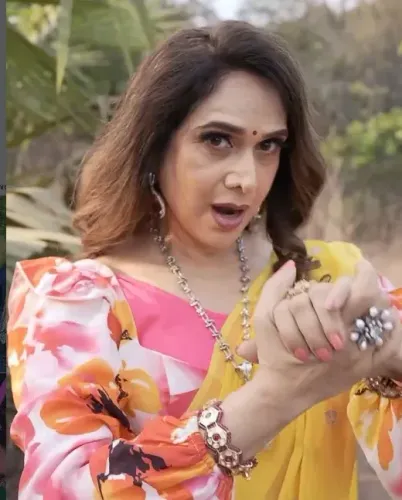
Seshadri shared a video of herself recreating the song ‘January February’ from the film, dressed in a stylish co-ord outfit. The original track was sung by Asha Bhosle and Mohammed Aziz, with music composed by Bappi Lahiri and lyrics penned by Majrooh Sultanpuri. The clip offered fans a nostalgic glimpse of the popular number and quickly drew attention online.
The Broader Saas-Bahu Narrative in Indian Cinema
The saas-bahu dynamic has been one of Indian popular culture’s most enduring — and most contested — tropes, spanning decades of films and television serials. Critics have long argued that such portrayals reinforce stereotypes rather than reflect the diversity of real family relationships. Notably, Ghar Ho To Aisa was later remade in Telugu as Attintlo Adde Mogudu, indicating the story’s cross-regional appeal. Seshadri’s comments invite a fresh conversation about whether mainstream cinema has evolved in its treatment of this subject.
Point of View
Normalising domestic hierarchy as entertainment. That the actress uses a nostalgic dance reel as the vehicle for this critique is itself telling: the medium that built the stereotype is now being used to interrogate it. Whether Bollywood’s current generation of filmmakers takes that cue is the more consequential question.
NationPress
5 Oct 2026
Frequently Asked Questions
What did Meenakshi Seshadri say about the saas-bahu relationship in Indian cinema?
Meenakshi Seshadri said the mother-in-law and daughter-in-law relationship has often been portrayed with a negative flavour in Indian cinema. She expressed a personal wish that after marriage, the two develop a bond as warm as that between a real mother and daughter.
What is Ghar Ho To Aisa and what was Meenakshi Seshadri’s role in it?
Ghar Ho To Aisa is a 1990 Bollywood film in which Meenakshi Seshadri played Seema Kumar, a fearless daughter-in-law opposite Anil Kapoor and veteran actress Bindu. The film used comedy, melodrama, and karate sequences to depict the household conflict.
What song did Meenakshi Seshadri recreate in her recent video?
She recreated the song ‘January February’ from Ghar Ho To Aisa. The original was sung by Asha Bhosle and Mohammed Aziz, with music by Bappi Lahiri and lyrics by Majrooh Sultanpuri.
Was Ghar Ho To Aisa remade in any other language?
Yes, Ghar Ho To Aisa was later remade in Telugu as Attintlo Adde Mogudu, reflecting the story’s popularity beyond Hindi-speaking audiences.
Who played the mother-in-law in Ghar Ho To Aisa?
Veteran actress Bindu played the antagonistic mother-in-law in Ghar Ho To Aisa. The role is considered one of her most memorable performances.