Meerut court sentences Ravita, lover Amardeep to death for snakebite murder
Synopsis
Days after Meerut handed down death sentences in the sensational Blue Drum murder case, the same district's court has sentenced another wife and her lover to death for killing her husband and planting a live snake on his body to fake a snakebite — a plot that collapsed the moment the family demanded a post-mortem.
Key Takeaways
A Meerut court sentenced Ravita and lover Amardeep to death on 16 October 2026 for murdering Amit Kashyap .
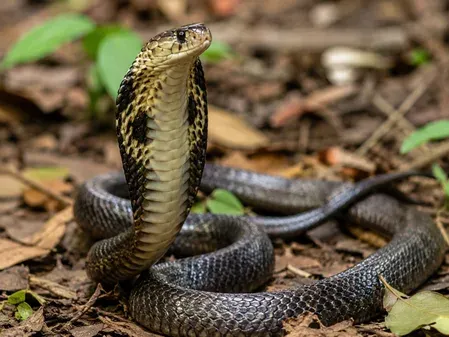
The accused staged the killing as a snakebite, purchasing a snake from a snake charmer for ₹1,000 .
Post-mortem confirmed no snake venom ; Kashyap died of suffocation .
Phone records showed 51 calls between Ravita and Amardeep within 24 hours of the murder.
The trial spanned 551 days and 87 hearings , with more than 12 prosecution witnesses .
The verdict follows the Blue Drum murder case death sentences delivered by a separate Meerut court just days earlier.
A court in Meerut on Friday, 16 October 2026, sentenced Ravita and her lover Amardeep to death for murdering her husband, Amit Kashyap, and staging the killing to look like a snakebite. The verdict arrives just days after another Meerut court handed down death sentences in the high-profile 'Blue Drum' murder case, marking a striking pattern of capital punishment verdicts from the same district.
The Crime and How It Was Uncovered
Kashyap's body was discovered on his bed on the morning of 13 April 2025 at Akbarpur Sadat village, under the jurisdiction of Bahsuma police station in Meerut district. His body bore approximately 10 snakebite marks, and a snake was found trapped beneath his waist, leading his family to initially conclude he had died from a bite.
Suspicion arose when Ravita aggressively opposed a post-mortem examination sought by the family. That examination proved pivotal: the report found no snake venom in Kashyap's body, determining instead that he had died of suffocation. Police subsequently launched a murder investigation.
How Investigators Built the Case
Investigators scrutinised the post-mortem report alongside call detail records (CDRs) from Ravita's mobile phone. The data reportedly showed that Ravita and Amardeep — described as a friend of the deceased — had spoken on the phone 51 times within 24 hours of the incident.
According to investigators, Ravita initially gave misleading answers under questioning but later allegedly confessed to an illicit relationship with Amardeep. Investigators further alleged that Kashyap had repeatedly suspected and confronted Ravita about the relationship before his death, establishing a motive.
Notably, just 24 hours before the murder, Ravita had accompanied her husband and children on a visit to the Maha Shakumbhari Devi Temple in Saharanpur, where she reportedly performed a dandavat parikrama. Investigators allege the couple had resolved to carry out the killing immediately on their return.
The Snake: Purchased for ₹1,000
To execute the deception, the accused allegedly purchased a live snake from a snake charmer for ₹1,000, telling the seller it was needed for a religious ritual. The snake was placed on Kashyap's bed after he was killed, designed to create the impression of a fatal bite. The plan unravelled once the family insisted on a post-mortem.
Trial and Verdict
The complaint was formally lodged by Monu Kashyap, the victim's brother, at Bahsuma police station on 16 April 2025. Police filed a charge sheet within 60 days of the murder. Additional District Judge (ADJ-12) Jaiveer Singh Nagar presided over the proceedings, which spanned 551 days and 87 hearings. More than 12 prosecution witnesses deposed during the trial.
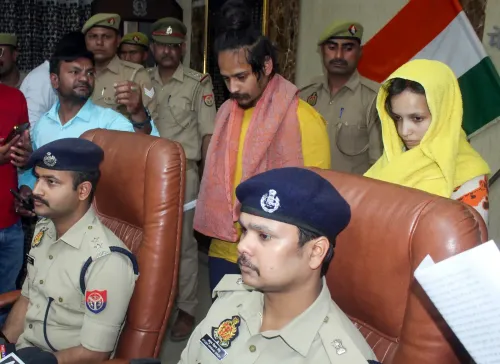
The two convicts were formally convicted on 7 October 2025 and appeared for sentencing via video conferencing from jail on Friday. The court imposed the death penalty on both.
This comes days after Muskan Rastogi and her lover Sahil Shukla were sentenced to death by a separate Meerut court on Wednesday in the Blue Drum murder case, in which Rastogi's husband Saurabh Rajput was killed in 2025 and his dismembered body was sealed inside a drum. The consecutive capital verdicts from Meerut's courts are expected to draw attention to the district's judicial handling of spousal homicide cases.
Point of View
The deception might have held. The 51-call CDR finding and the Rs 1,000 snake purchase suggest investigators built a circumstantial chain rather than direct forensic evidence — a reminder that the strength of the prosecution's case rested heavily on witness testimony across 87 hearings. Defence appeals to the High Court and, potentially, the Supreme Court are almost certain, making this conviction far from the final word.
NationPress
16 Oct 2026
Frequently Asked Questions
What happened in the Meerut snakebite murder case?
Ravita and her lover Amardeep were sentenced to death by a Meerut court on 16 October 2026 for murdering Ravita's husband Amit Kashyap and staging his death as a snakebite. A post-mortem examination found no snake venom and determined the cause of death as suffocation, triggering the murder investigation.
How did police uncover the conspiracy?
Investigators found that Ravita had objected to a post-mortem, which itself raised suspicion. Phone records showed 51 calls between Ravita and Amardeep within 24 hours of the murder. Ravita later allegedly confessed to an illicit relationship with Amardeep, and the pair were found to have purchased a live snake for ₹1,000 to plant on the victim's body.
What is the connection to the Blue Drum murder case?
Just days before this verdict, a separate Meerut court sentenced Muskan Rastogi and her lover Sahil Shukla to death for killing Rastogi's husband Saurabh Rajput in 2025 and concealing his dismembered body in a drum. Both cases involve a wife and a lover convicted of spousal murder, and both resulted in death sentences from Meerut courts within the same week.
How long did the trial last?
The court examined the case over 551 days, conducting 87 hearings and recording testimony from more than 12 prosecution witnesses. The convicts were convicted on 7 October 2025 and sentenced on 16 October 2026.
Who can the convicts appeal to?
Death sentences in India are subject to mandatory confirmation by the High Court before execution. The convicts can also appeal to the Supreme Court and file mercy petitions, meaning the legal process is far from concluded.