Meerut Blue Drum murder: Muskan Rastogi, Sahil Shukla sentenced to death
Synopsis
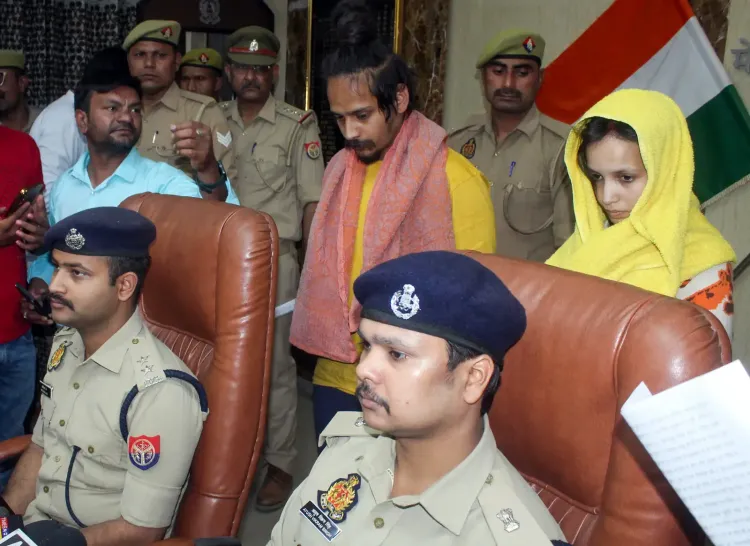
A Meerut district court has sentenced Muskan Rastogi and her lover Sahil Shukla to death for sedating, stabbing, and dismembering her husband Saurabh Rajput — then sealing his remains in a cement-filled blue drum. After 126 hearings and 22 prosecution testimonies built on CDR data, shopkeeper accounts, and forensic evidence, the court found the circumstantial chain complete. The case now moves to the Allahabad High Court for mandatory confirmation.
Key Takeaways
Meerut District Court sentenced Muskan Rastogi and Sahil Shukla to death on 14 October 2026 for the murder of Saurabh Rajput .
The crime occurred on 3 March 2025 : Rajput was sedated, stabbed, dismembered, and his remains sealed in a cement-filled blue drum .
Both convicts were found guilty on 30 September 2025 after 126 hearings and 22 prosecution testimonies .
Evidence included call detail records , mobile tower data, and shopkeeper testimony about purchases of the drum, cement, and weapons.
The death sentence requires mandatory confirmation by the Allahabad High Court before it can be executed.
A district court in Meerut, Uttar Pradesh, on Wednesday, 14 October 2026, handed down the death penalty to Muskan Rastogi and her lover Sahil Shukla for the premeditated murder of her husband Saurabh Rajput — a case that gripped the nation after investigators found Rajput's dismembered remains sealed inside a blue plastic drum filled with cement. The verdict follows a conviction handed down by the Meerut District Court on 30 September 2025.
How the Crime Unfolded
According to the police investigation, on 3 March 2025, Rastogi allegedly sedated Rajput by lacing his food at their shared residence. Shukla arrived shortly thereafter, and the two stabbed Rajput to death before dismembering his body in the bathroom. To suppress the odour of decomposition, they reportedly packed the remains into a large blue plastic drum, poured in a freshly mixed compound of sand, water, and cement, and sealed it shut.
The grim discovery set off what would become one of Uttar Pradesh's most closely watched criminal trials in recent years.
Evidence That Built the Prosecution's Case
The case rested substantially on circumstantial evidence, which the prosecution assembled into a sequential chain over 126 hearings. Local shopkeepers testified to selling the blue plastic drum, cement bags, sand, cleavers, and razors to Rastogi and Shukla ahead of the murder. Call detail records (CDR) and mobile signal tower data placed Shukla at the couple's residence at the time of the crime, and the same records traced the pair's subsequent movements to hotel stays in Shimla and Manali in Himachal Pradesh.
The prosecution presented 22 testimonies across multiple hearings. 'The case was based on circumstantial evidence. We had presented the circumstances in a sequence. All the testimonies corroborated the prosecution's case,' said Prosecutor Vijay Bahadur after the conviction ruling.
From Conviction to Capital Punishment
The case was first brought before the court on 17 March 2025 and was transferred to the district judge's court in July 2025. Arguments continued for approximately 13 months before the conviction verdict was announced on 30 September 2025. The sentencing phase concluded Wednesday with the court imposing the death penalty on both convicts.
Bahadur had previously stated: 'Generally, in cases like these, the minimum punishment is a life sentence, and the maximum punishment is death,' signalling the prosecution's intent to seek capital punishment given the nature of the offence.
Family's Demand for Justice
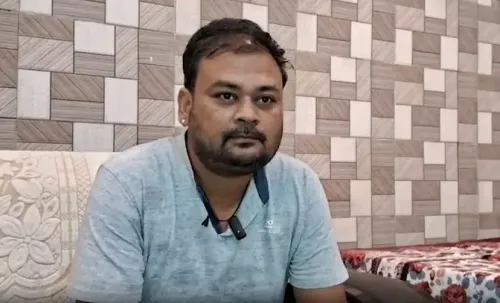
Rajput's elder brother Rahul had earlier expressed the family's singular demand. 'We just want one thing: whatever they did to my brother, the same should happen to them,' he said. Wednesday's death sentence appears to have delivered precisely what the family sought.
What Happens Next
Under Indian law, a sessions court death sentence must be confirmed by the relevant High Court — in this case, the Allahabad High Court — before it can be executed. The convicts also retain the right to appeal. Legal observers will watch whether the Allahabad High Court upholds, commutes, or modifies the sentence, a process that could take months to years.
Point of View
And in practice it frequently results in commutation. The prosecution's reliance on a meticulous chain of circumstantial evidence — CDR data, shopkeeper testimonies, hotel records — is textbook in design but inherently vulnerable to appellate scrutiny. Whether this sentence survives that scrutiny will determine whether the family's demand for equal retribution is ever fulfilled.
NationPress
14 Oct 2026
Frequently Asked Questions
What is the Meerut Blue Drum murder case?
The Blue Drum murder case involves the killing of Saurabh Rajput by his wife Muskan Rastogi and her lover Sahil Shukla on 3 March 2025 in Meerut, Uttar Pradesh. After stabbing and dismembering Rajput, the pair sealed his remains in a cement-filled blue plastic drum to conceal the crime.
What sentence did the court hand down to Muskan Rastogi and Sahil Shukla?
The Meerut District Court sentenced both Muskan Rastogi and Sahil Shukla to death on 14 October 2026 , after convicting them of murder and concealment of a body on 30 September 2025 . The prosecution had specifically sought the death penalty given the premeditated and brutal nature of the crime.
What evidence was used to convict Muskan Rastogi and Sahil Shukla?
The prosecution built its case on circumstantial evidence across 22 testimonies and 126 hearings . Key evidence included shopkeeper accounts of selling the drum, cement, sand, cleavers and razors to the accused, call detail records placing Shukla at the crime scene, and mobile tower data tracing the pair to hotel stays in Shimla and Manali.
Will the death sentence be automatically carried out?
No. Under Indian law, any death sentence awarded by a sessions court must be confirmed by the relevant High Court — here, the Allahabad High Court — before it can be executed. The convicts also retain the right to appeal, meaning the sentence could be upheld, commuted, or modified.
How long did the Blue Drum murder trial last?
The case was registered before the court on 17 March 2025 , transferred to the district judge's court in July 2025 , and concluded with the conviction on 30 September 2025 after approximately 13 months of arguments and 126 hearings .