Meghalaya-Bangladesh border fencing 90% done: CM Conrad Sangma

Synopsis
Meghalaya has fenced roughly 400 of its 440-kilometre border with Bangladesh, but the final 40-45 kilometres remain stalled — not by policy or funds, but by the awkward reality that the fencing alignment bisects villages and cuts through private land. CM Conrad Sangma says community talks are the only way through, making this as much a social challenge as a security one.
Key Takeaways
Meghalaya CM Conrad K.
Sangma confirmed on 27 May that 90 per cent of the India-Bangladesh border fencing in the state is complete.
Of the 440-kilometre shared border, approximately 400 kilometres have been fenced; 40 to 45 kilometres remain pending.
Delays are caused by fencing alignments that fall on privately owned land and, in some cases, would divide villages into two parts.
The state government is engaging local communities and village leaders to resolve the outstanding issues.
Meghalaya is coordinating with the Centre to complete the project at the earliest, with Sangma expressing confidence in a near-term resolution.
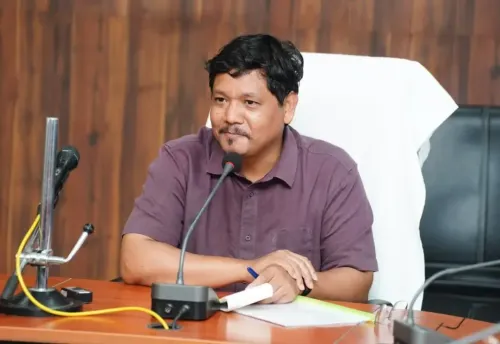
Meghalaya Chief Minister Conrad K. Sangma on Wednesday, 27 May said that nearly 90 per cent of the border fencing work along the India-Bangladesh international border in the state has been completed, with the remaining stretches expected to be finished once a set of localised issues are resolved. The announcement came after a Cabinet meeting in Shillong.
State of the Fencing Work
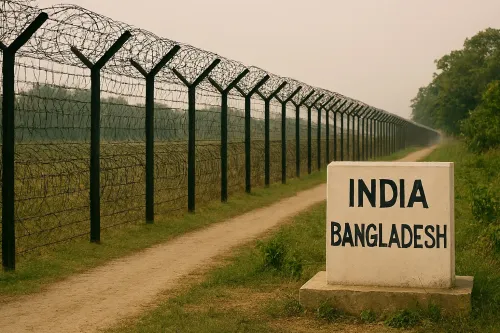
Meghalaya shares an international border of approximately 440 kilometres with Bangladesh. Of this, fencing has already been erected along roughly 400 kilometres, leaving only 40 to 45 kilometres pending. Sangma described the remaining stretch as manageable, expressing confidence that the project would reach full completion in the near term.
Why the Remaining Stretch Is Delayed
According to Sangma, the holdups in the outstanding sections stem from ground-level challenges rather than any policy or funding bottleneck. In several locations, the proposed fencing alignment falls within Indian territory, encroaching on privately owned land belonging to local communities. In a few villages, the alignment would effectively divide a settlement into two parts, creating practical and social disruptions for residents.
'These are sensitive local issues involving people's land and habitation patterns. We are engaging with the local communities and village leaders to arrive at practical solutions,' Sangma said.
Balancing Security and Local Interests
The Chief Minister stressed that the state government is working to reconcile national security imperatives with the legitimate concerns of citizens living in border areas. He said discussions are ongoing with stakeholders and village leaders, and that resolutions are expected shortly. 'We expect the pending concerns to be sorted out shortly, after which the fencing work can be completed 100 per cent,' he said.
This comes amid heightened attention to India's eastern borders, where irregular crossings and smuggling networks have long posed security challenges. The India-Bangladesh border in Meghalaya passes through several remote and densely populated areas where land ownership disputes and traditional village boundaries have historically complicated infrastructure projects.
Centre-State Coordination
Sangma noted that the Meghalaya government is working in close coordination with the Centre and relevant agencies to ensure the fencing project is completed at the earliest. He underscored that border fencing remains a crucial measure for strengthening security and improving surveillance along the international boundary. The project's completion would mark a significant milestone in securing one of India's more complex and porous border stretches.
Point of View
But the remaining 10 per cent is where the real story lies. Border fencing in Meghalaya has always been complicated by the fact that communities straddle the boundary — families, farmlands, and traditional territories do not conform to surveyed lines. The state's acknowledgement that alignment issues are dividing villages is a rare moment of candour in border security discourse, which tends to flatten local complexity into a logistics problem. The Centre's push to seal the eastern border must eventually reckon with the reality that in Meghalaya, the last kilometre is the hardest — and the most politically sensitive.
NationPress
22 Sept 2026
Frequently Asked Questions
How much of the Meghalaya-Bangladesh border fencing has been completed?
As of 27 May 2025, approximately 90 per cent of the border fencing along Meghalaya's 440-kilometre boundary with Bangladesh has been completed, covering around 400 kilometres. Around 40 to 45 kilometres remain pending.
Why is the remaining border fencing in Meghalaya delayed?
The delays are due to ground-level challenges, including fencing alignments that fall on privately owned land within Indian territory and, in some villages, alignments that would split a settlement into two parts. The state government is in discussions with local communities and village leaders to resolve these issues.
What did CM Conrad Sangma say about completing the fencing?
Sangma expressed confidence that the pending concerns would be resolved shortly, after which the fencing work could be completed 100 per cent. He said the government is balancing national security needs with the interests of border-area residents.
Who is coordinating the border fencing project in Meghalaya?
The Meghalaya state government is working in close coordination with the Central government and relevant agencies to ensure the border fencing project is completed at the earliest.
Why is border fencing along Meghalaya's boundary with Bangladesh significant?
The India-Bangladesh border in Meghalaya passes through remote and densely populated areas where irregular crossings and smuggling have long posed security challenges. Completing the fencing is considered a key measure for strengthening surveillance and security along this stretch of India's eastern border.