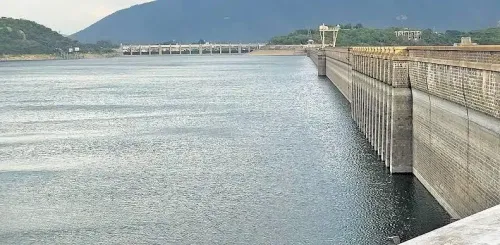
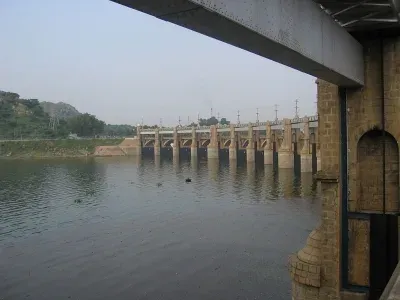
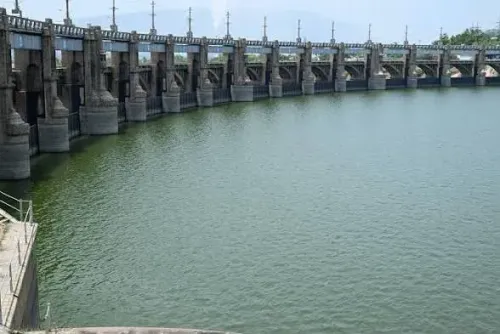
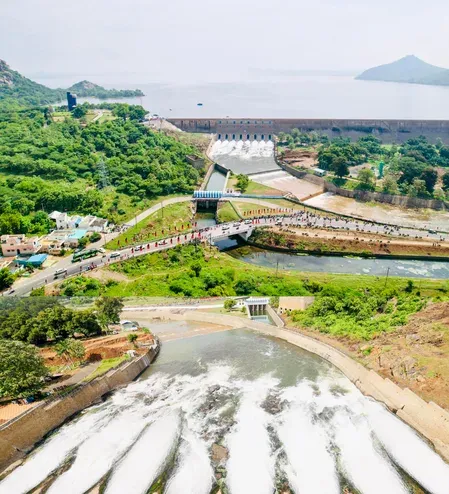
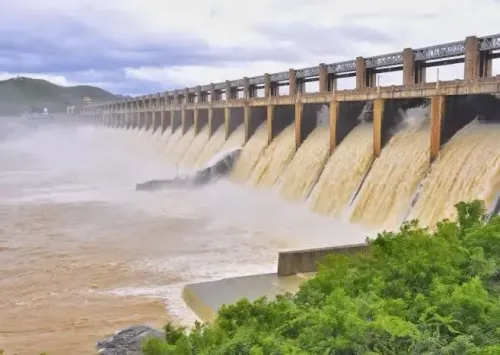
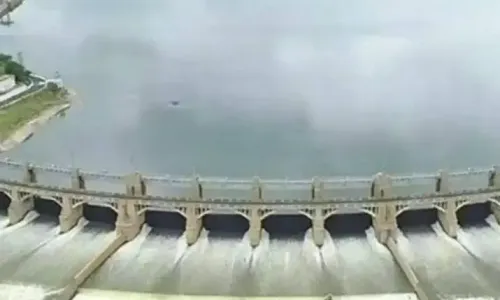
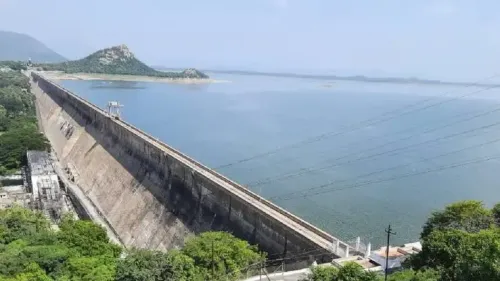
Mettur Dam inflow rises to 6,250 cusecs but reservoir level drops as releases hit 12,000 cusecs
Synopsis
Mettur Dam's inflow jumped to 6,250 cusecs on Wednesday — nearly double Tuesday's reading — yet the reservoir kept falling because irrigation releases for the Cauvery delta stood at 12,000 cusecs. With a 5,750-cusecs outflow surplus and storage at 45.72 tmcft, the dam serving 16.05 lakh acres across 12 Tamil Nadu districts faces a critical balance test as the cultivation season continues.
Key Takeaways
Mettur Dam inflow rose to 6,250 cusecs on Wednesday, 23 September , up from 3,867 cusecs on Tuesday morning.
Releases for Cauvery delta irrigation stood at 12,000 cusecs , creating a net outflow surplus of 5,750 cusecs .
The reservoir water level fell to 83.67 feet , with storage at 45.72 tmcft .
Mettur Dam is Tamil Nadu's largest reservoir, irrigating an estimated 16.05 lakh acres across 12 districts .
A sustained rise in inflow from the Cauvery catchment is needed to arrest the decline in storage.
Mettur Dam in Salem district, Tamil Nadu, recorded a notable rise in inflow on Wednesday, 23 September, yet the reservoir's water level continued to fall as discharge for Cauvery delta irrigation ran nearly double the volume of water entering the dam. The gap between inflow and outflow underscores a persistent stress on the region's water supply even as the monsoon season advances.
Key Figures for Wednesday
Inflow into Mettur Dam climbed to 6,250 cusecs on Wednesday morning, a significant jump from 3,867 cusecs recorded on Tuesday morning. Despite this improvement, water was being released at 12,000 cusecs to support cultivation across the Cauvery delta districts — leaving an outflow surplus of 5,750 cusecs. As a result, the water level stood at 83.67 feet, with storage recorded at 45.72 thousand million cubic feet (tmcft).
Why the Level Is Still Falling
The water level and storage volume are two distinct measures of the dam's condition. The 83.67 feet figure reflects the height of water within the reservoir, while the 45.72 tmcft figure represents the total quantity held in storage — both are critical indicators when assessing the dam's capacity to sustain ongoing irrigation releases. So long as outflow exceeds inflow by nearly 5,750 cusecs, the reservoir will continue to draw down its reserves regardless of day-to-day improvements in water arrival. Any reversal in the level would require either a substantial increase in inflow or a reduction in the rate of discharge.
Why Mettur Matters Beyond Irrigation
Located across the Cauvery river in Salem district, Mettur is Tamil Nadu's largest dam and the primary irrigation lifeline for an estimated 16.05 lakh acres across 12 districts. Releases from the dam not only determine water availability for delta farmers but also support power generation, making its water position a concern that reaches well beyond agricultural communities. For cultivators, the rate of discharge governs downstream water supply, while the storage volume dictates how long those releases can be sustained.
The Broader Cauvery Context
Mettur's water levels are closely monitored throughout the Cauvery irrigation belt, where cropping schedules are calibrated to the dam's release programme. The current situation — where inflow is rising but still insufficient to offset a large irrigation discharge — reflects the broader seasonal tension between replenishment from upstream catchments and the demands of an active cultivation cycle. This is not an isolated reading; Mettur's storage trajectory has been tracked with concern by farmers and officials across the delta region in recent weeks. Notably, any sustained shortfall in inflow could prompt authorities to review release schedules to protect the reservoir's long-term storage position.
What to Watch Next
The key variable in the coming days is whether Wednesday's inflow improvement continues or accelerates. If upstream rainfall in the Cauvery catchment intensifies, arrivals at Mettur could narrow the gap with releases and arrest the decline. Conversely, if inflow plateaus or drops again, storage will erode further, potentially complicating the irrigation schedule for delta districts. Officials and farmers across the 12 dependent districts will be watching subsequent daily readings closely as the critical irrigation window continues.
Point of View
But they mask a structural tension: Tamil Nadu's irrigation calendar obliges large releases even when the reservoir is not being adequately replenished. The current 5,750-cusecs deficit is not alarming in isolation, but if upstream catchment rainfall does not intensify soon, authorities will face a difficult choice between protecting storage for the long irrigation season and meeting the immediate water needs of delta farmers. That trade-off — rarely discussed in daily bulletins — is the real story behind Wednesday's figures.
NationPress
23 Sept 2026
Frequently Asked Questions
What is the current water level at Mettur Dam?
As of Wednesday, 23 September, the water level at Mettur Dam stood at 83.67 feet, with storage recorded at 45.72 tmcft. The level fell despite a rise in inflow because releases for Cauvery delta irrigation significantly exceeded arrivals.
Why is Mettur Dam's water level falling even though inflow increased?
Inflow rose to 6,250 cusecs on Wednesday, but the dam was releasing water at 12,000 cusecs for delta irrigation — creating a net surplus outflow of 5,750 cusecs. Until inflow matches or exceeds the release rate, the reservoir level will continue to decline.
How much water is being released from Mettur Dam and why?
Mettur Dam is discharging 12,000 cusecs to support active cultivation across the Cauvery delta districts. Scheduled irrigation releases are a standard feature of Tamil Nadu's cropping calendar and are managed to meet the water needs of farmers across 12 districts covering an estimated 16.05 lakh acres.
What areas depend on Mettur Dam for irrigation?
Mettur Dam serves approximately 16.05 lakh acres across 12 districts in Tamil Nadu, primarily in the Cauvery delta region. Its releases also support hydroelectric power generation, making it critical beyond agriculture.
What needs to happen for the reservoir level to recover?
A sustained increase in inflow from the Cauvery catchment — driven by upstream rainfall — would be needed to narrow the gap with the 12,000-cusecs release rate. Alternatively, a reduction in the discharge volume could slow the depletion, though that would affect downstream irrigation supply.