Mission Vatsalya: 134 CWC members begin 13-day training in Bhopal
Synopsis
The Centre's Mission Vatsalya is getting a boots-on-ground push in Madhya Pradesh — 134 CWC members from 19 districts are undergoing structured, 13-day residential training in Bhopal to standardise child protection decision-making at the district level. With four batches running through October, this is one of the largest state-level CWC capacity-building exercises under the scheme.
Key Takeaways
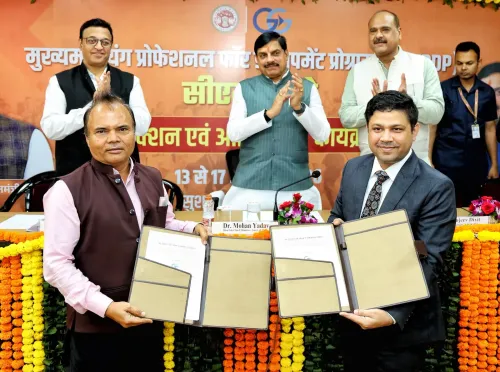
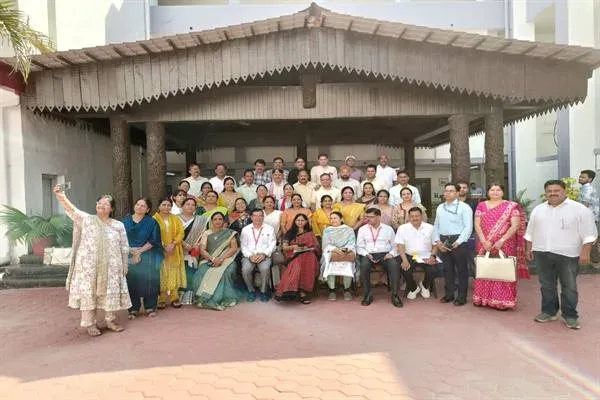
134 CWC Chairpersons and members from Madhya Pradesh began a 13-day residential training in Bhopal on 1 June 2026 .
The programme is organised by the Savitribai Phule National Institute of Training and Research in Women and Child Development, New Delhi at the RCVP Noronha Academy, Bhopal .
Training runs across 4 batches , with the final batch concluding on 17 October 2026 .
The first batch covers CWC members from 19 districts , including Bhopal, Indore, and Mandla.
Curriculum includes the Juvenile Justice Act , Adoption Act , vulnerability mapping, and practical case-handling under Mission Vatsalya .
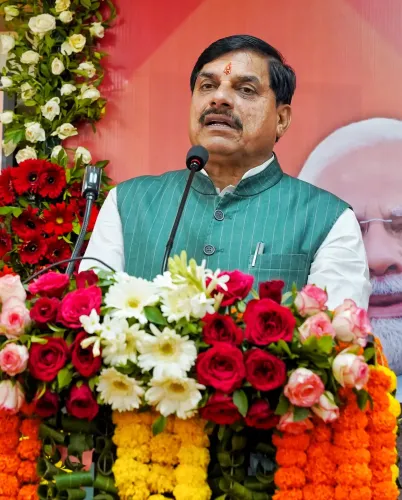
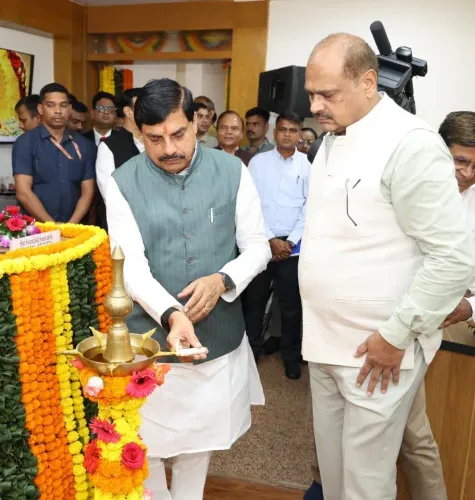
134 Child Welfare Committee (CWC) Chairpersons and members from across Madhya Pradesh began a 13-day intensive residential training in Bhopal on 1 June 2026, under the Centre's flagship Mission Vatsalya scheme administered by the Ministry of Women and Child Development. The Madhya Pradesh government has described the programme as a 'milestone for protection of child rights' in the state.
Programme Structure and Batches
The national-level foundational training is being conducted at the RCVP Noronha Academy of Administration and Management, Bhopal, and organised by the Savitribai Phule National Institute of Training and Research in Women and Child Development, New Delhi — the Union government's premier training body in this domain. The programme runs across four batches: the first batch of 36 participants commenced on 1 June 2026; the second batch of 33 members is scheduled from 29 June to 11 July; the third from 20 July to 1 August; and the final batch of 32 participants from 5 to 17 October.
Districts Covered in the First Batch
CWC members from 19 districts are attending the first batch, including Anuppur, Ashoknagar, Barwani, Bhopal, Burhanpur, Damoh, Datia, Dewas, Dindori, Guna, Harda, Narmadapuram, Indore, Khandwa, Mandla, Balaghat, Raisen, Sehore, and Vidisha. The training is being conducted under the supervision of Navida Khatoon, Deputy Director and Course Director at the New Delhi institute.
What the Curriculum Covers
The 13-day curriculum is designed to build district-level capacity for child-centric decision-making. Modules cover the constitutional framework for child empowerment, vulnerability mapping to identify children in distress, and critical legislation including the Juvenile Justice Act and the Adoption Act. Participants are also trained in government policies and schemes related to children, as well as the practical mechanics of case handling by CWCs — the statutory bodies mandated for care, protection, and rehabilitation of children in need.
Broader Goal: A Responsive Child Protection Ecosystem
According to the state government, the Centre's initiative aims to build uniform, child-centric decision-making capacity at the district level. Notably, CWCs operate as quasi-judicial bodies under the Juvenile Justice framework, and their effectiveness directly determines outcomes for vulnerable children across India's districts. Madhya Pradesh has stated its commitment to working with the Centre for effective on-ground implementation of Mission Vatsalya and to strengthen institutional mechanisms for child welfare across all districts. This training push comes amid a broader national effort to professionalise grassroots child protection structures, which critics and civil society groups have long flagged as under-resourced and inconsistently trained.
Point of View
But its real test lies in whether standardised training translates to consistent outcomes at the district level. CWCs across India have historically suffered from uneven quality, under-staffing, and inadequate understanding of the Juvenile Justice framework — problems that a 13-day module cannot fully resolve. Madhya Pradesh's participation across 19 districts in the first batch is a positive signal, but the state has over 50 districts; the pace of rollout matters. Without robust post-training monitoring and accountability mechanisms, this risks becoming a compliance exercise rather than a genuine transformation of child protection capacity.
NationPress
20 Oct 2026
Frequently Asked Questions
What is Mission Vatsalya and what does the Bhopal training aim to achieve?
Mission Vatsalya is the Centre's flagship child protection and welfare scheme under the Ministry of Women and Child Development. The Bhopal training aims to build uniform, child-centric decision-making capacity among CWC members at the district level across Madhya Pradesh.
How many people are being trained and from which districts?
A total of 134 CWC Chairpersons and members are being trained across four batches. The first batch of 36 participants includes members from 19 districts, including Bhopal, Indore, Damoh, Mandla, and Vidisha, among others.
What does the 13-day curriculum cover?
The curriculum covers the constitutional framework for child empowerment, vulnerability mapping, the Juvenile Justice Act, the Adoption Act, government schemes for children, and practical case-handling procedures followed by Child Welfare Committees.
When will all four batches of the training be completed?
The four batches run from June to October 2026. The final batch of 32 participants is scheduled from 5 to 17 October 2026, concluding the full training programme.
Who is overseeing the training programme?
The training is being conducted under the supervision of Navida Khatoon, Deputy Director and Course Director at the Savitribai Phule National Institute of Training and Research in Women and Child Development, New Delhi.