Strengthening Ties: PM Modi and Netanyahu Enhance India-Israel Strategic Partnership
Synopsis
Prime Ministers Modi and Netanyahu convene in Jerusalem, advancing the India-Israel Special Strategic Partnership. The leaders discuss key areas of collaboration including technology, defense, and agriculture, while signing multiple MoUs that promise expanded cooperation.
Key Takeaways
Strengthened partnerships in technology, defense, and agriculture.
Establishment of the 'India-Israel Special Strategic Partnership for Peace, Innovation, and Prosperity.' Signed multiple MoUs to enhance bilateral cooperation.
Increased labor mobility, targeting up to 50,000 Indian workers.
PM Modi's significant visit to Yad Vashem, honoring Holocaust victims.
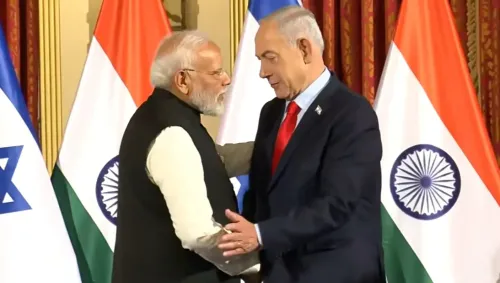
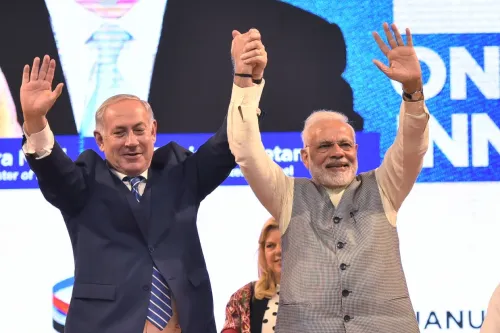
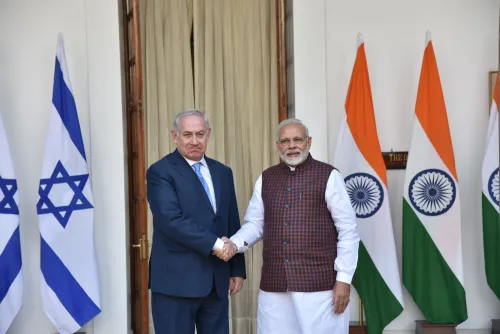
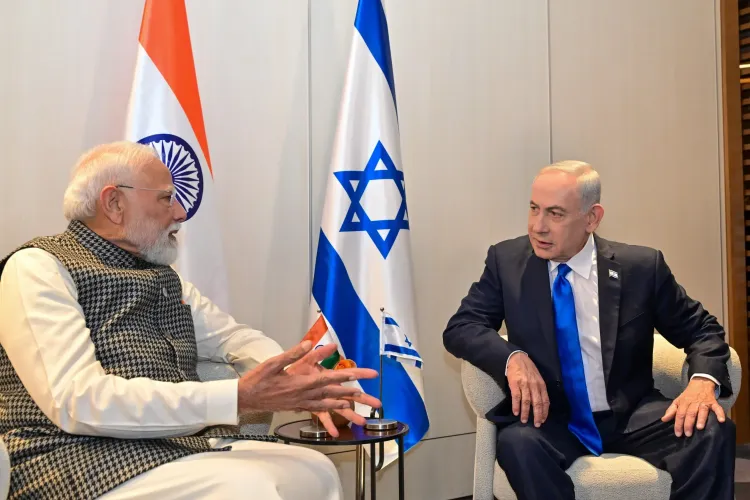
New Delhi, Feb 26 (NationPress) Prime Minister Narendra Modi and Israeli Prime Minister Benjamin Netanyahu convened in Jerusalem on Thursday to deliberate on enhancing bilateral collaboration in key domains such as technology, innovation, Artificial Intelligence (AI), critical minerals, defense, security, trade, economy, labor mobility, education, blue economy, agriculture, and health.
The leaders proclaimed an elevation of their diplomatic ties to the 'India-Israel Special Strategic Partnership for Peace, Innovation, and Prosperity.'
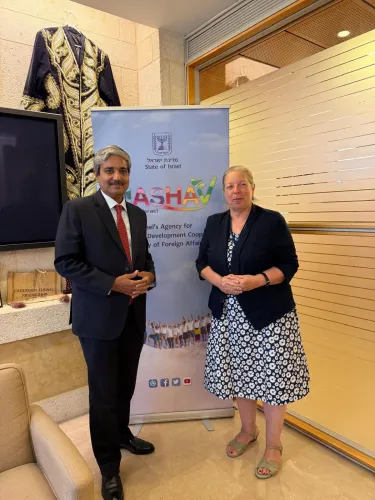
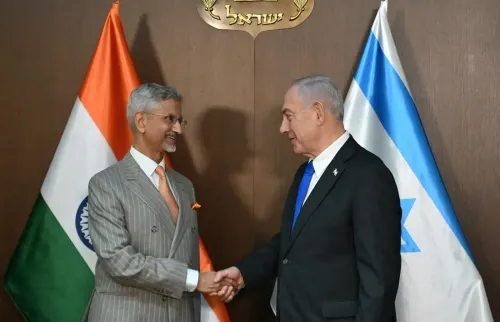
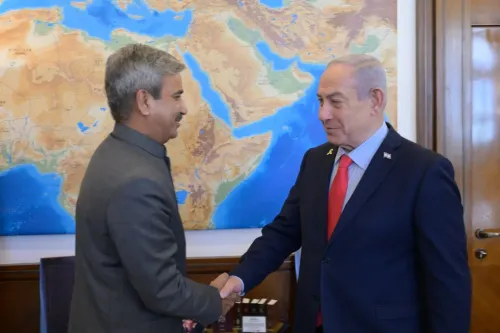
Among those in attendance were External Affairs Minister (EAM) S. Jaishankar, Foreign Secretary Vikram Misri, National Security Advisor (NSA) Ajit Doval, and other senior officials.
As stated by the Ministry of External Affairs (MEA), the two nations agreed to upgrade the Joint Committee Mechanism (JCM) on Science and Technology to a ministerial level, initiate a collaboration in Critical and Emerging Technologies spearheaded by National Security Advisors, and establish a financial dialogue. They also agreed on launching a tech-gateway initiative and instituting 20 Joint Fellowships in Agricultural Research.
Furthermore, both nations decided to boost their contributions to Joint Research Calls, increase the quota for up to 50,000 Indian workers over the next five years, convene an India-Israel Academic Cooperation Forum, and form an India-Israel Parliamentary Friendship Group.
"Towards a fortified and more expansive partnership! PM Modi engaged in thorough bilateral discussions with PM Netanyahu. The talks encompassed the full spectrum of the bilateral relationship, covering technology, innovation, AI, critical minerals, defense, security, trade, economy, labor mobility, education, blue economy, agriculture, and health. They also addressed regional and global issues," MEA spokesperson Randhir Jaiswal noted on X.
"In a pivotal development, both leaders declared the elevation of their relationship to the India-Israel Special Strategic Partnership for Peace, Innovation, and Prosperity. Numerous outcomes were finalized, including advancements in technology, science, trade, finance, AI, agriculture, blue economy, labor mobility, education, and culture," he added.
The two parties exchanged several Memoranda of Understanding (MoUs), including agreements for collaboration in geophysical exploration, the development of the National Maritime Heritage Complex (NMHC) in Lothal, Gujarat; a Cultural Exchange Programme for 2026-2029; and partnerships between NPCI International (NIPL) and MASAV Israel for implementing UPI, as well as between ICAR and MASHAV for establishing the India-Israel Innovation Centre for Agriculture (IINCA).
Additionally, India and Israel signed a Declaration of Intent on cooperation in Horizon Scanning; an MoU for Fisheries and Aquaculture cooperation; an MoU between the International Financial Services Centres Authority (IFSCA) and Israel Securities Authority (ISA); and various Implementation Protocols on Labor Mobility across several sectors, including Commerce, Manufacturing, and Restaurants.
There was also an MoU on cooperation in AI education, an agreement between the Israeli Institute of Commercial Arbitration (IICA) and the Indian Council of Arbitration (ICA); an MoU between Nalanda University and the Hebrew University of Jerusalem (HUJI); a Letter of Intent for establishing an Indo-Israel Cyber Centre of Excellence in India; and an MoU on AI cooperation.
Earlier in the day, PM Modi paid a visit to the Yad Vashem World Holocaust Remembrance Centre in Jerusalem, laying a wreath in honor of Holocaust victims.
Accompanied by PM Netanyahu and Yad Vashem Chairman Dani Dayan, he toured the Holocaust Memorial and Museum, which commemorates and documents the Holocaust. This included a visit to the Book of Names—a significant installation containing the names of 4.8 million Jewish victims of the Holocaust—and a memorial service in the Hall of Remembrance. Prime Minister Modi also signed the Yad Vashem guest book.
This marks PM Modi's second visit to Yad Vashem, having previously visited in July 2017 during his last trip to the country, where Netanyahu also accompanied him.
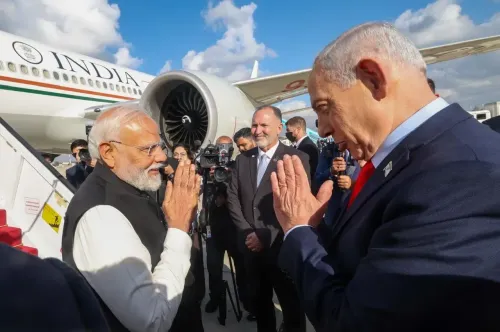
Currently, PM Modi is on a two-day State Visit to Israel, having received a grand welcome from Netanyahu and his wife, Sara Netanyahu, in Tel Aviv on Wednesday. Later, he delivered a Special Plenary address at the Knesset in Jerusalem—a historic first for an Indian Prime Minister at the Israeli parliament.
Point of View
Prime Ministers Modi and Netanyahu have laid the groundwork for a more robust partnership. The discussions covered a wide range of sectors, highlighting the importance of bilateral cooperation in technology, defense, and education. This meeting signifies a major step forward in diplomatic ties, emphasizing both nations' commitment to peace and prosperity.
NationPress
29 Sept 2026
Frequently Asked Questions
What was the main outcome of the Modi-Netanyahu meeting?
The primary outcome was the elevation of the diplomatic relationship to the 'India-Israel Special Strategic Partnership for Peace, Innovation, and Prosperity', emphasizing collaboration in various sectors.
What areas of cooperation were discussed?
Key areas included technology, innovation, Artificial Intelligence, defense, trade, labor mobility, agriculture, and health.
How many MoUs were signed during the meeting?
Several MoUs were signed, covering cooperation in fields such as fisheries, AI education, and labor mobility.
What was significant about PM Modi's visit to Yad Vashem?
PM Modi honored Holocaust victims by laying a wreath at Yad Vashem, marking his second visit to the memorial.
When did PM Modi last visit Israel?
PM Modi last visited Israel in July 2017, during which he also toured Yad Vashem.