Modi at NDA Conclave: India's 12-year leap from 'Hindu Growth Rate' to global leadership
Synopsis
Modi used the NDA Conclave not just to celebrate 12 years in power but to redefine the political narrative — recasting the 'Hindu Growth Rate' as a Congress failure, citing pandemic resilience and ₹12 lakh tax-free income as proof of delivery, and framing India's global rise as the NDA's unfinished mandate. The conclave's unanimous endorsement by alliance partners signals a united front ahead of future electoral cycles.
Key Takeaways
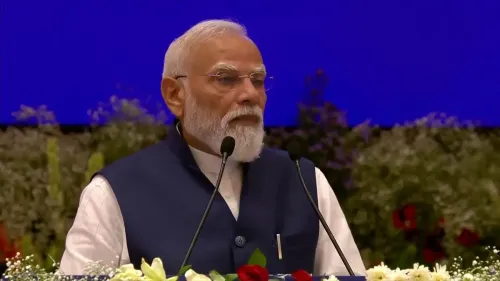
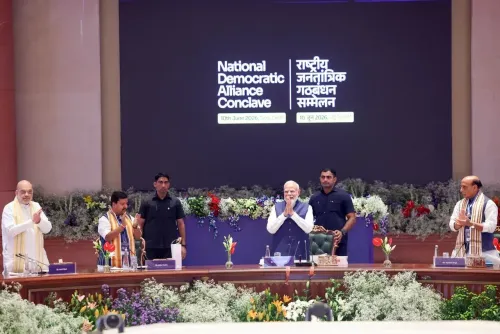
PM Modi addressed the NDA Conclave on 10 June in New Delhi , marking 12 years of NDA governance since 2014.
Modi argued the 'Hindu Growth Rate' label was a misnomer for Congress-era policy failures , not a reflection of India's people.
He highlighted income up to ₹12 lakh made tax-free and reduced costs of aspirational goods as middle-class relief measures.
Security milestones cited include surgical strikes , curbing of Naxalism, the women's reservation bill , and the ban on Triple Talaq .
The formal conclave proposal was moved by Andhra Pradesh CM Chandrababu Naidu and seconded by Nagaland CM Neiphiu Rio , with broad NDA endorsement.
Modi positioned 'Viksit Bharat' as the alliance's next-phase goal, urging India to measure itself by global standards.
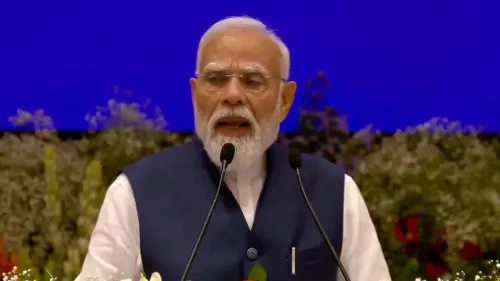
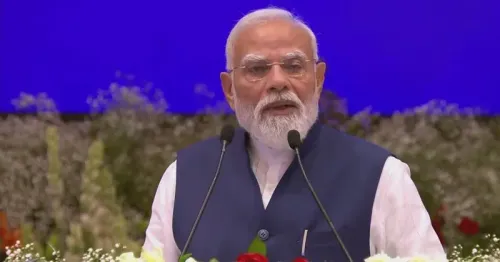
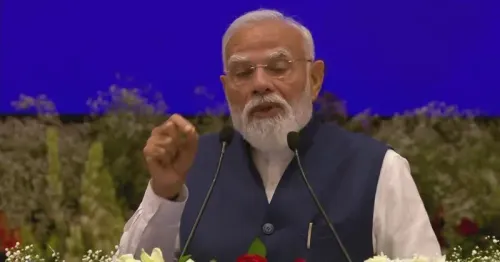
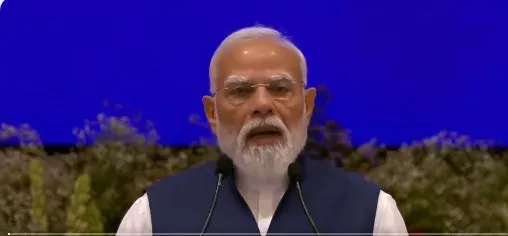
Prime Minister Narendra Modi on Wednesday, 10 June addressed the National Democratic Alliance (NDA) Conclave in New Delhi, drawing a pointed contrast between India's era of sluggish 3–4 per cent growth — historically labelled the 'Hindu Growth Rate' — and the accelerated trajectory the country has followed since the NDA came to power in 2014. The address served as both a political stocktaking and a forward-looking call to measure India by global benchmarks.
Reframing the 'Hindu Growth Rate'
Modi argued that the term 'Hindu Growth Rate' was a misnomer that unfairly stigmatised India's majority population. The sluggishness, he contended, was a product of Congress governance — its 'indecisiveness, policy failures, and absence of vision' — and should more accurately be called the 'Congress Growth Rate.' He credited the brief tenure of Atal Bihari Vajpayee as a moment that demonstrated faster development was possible, before what he described as the 'unfortunate' return of Congress in 2004 reversed that momentum.
The decade that followed, Modi said, was defined by 'massive scams worth thousands of crores' that eroded public trust and pulled the nation into a 'vortex of corruption.'
NDA's 12-Year Record: Key Claims
Modi positioned 2014 as a turning point, after which India shed what he called the baggage of stagnation. He highlighted the country's performance during the Covid-19 pandemic as evidence of resilience, noting that India recorded a 'satisfactory growth rate' even as major global economies faltered.
On economic relief, the Prime Minister pointed to the decision making income up to ₹12 lakh tax-free and the reduction in costs of aspirational goods as measures aimed at easing the burden on the middle class. He framed these as part of a broader effort to 'free the nation from uncertainty.'
'For us, the nation always comes first; when one works with a Nation First spirit, no decision is difficult,' Modi declared at the conclave.
Security, Social Reforms and Constitutional Implementation
Modi also cited decisive action on security and social policy as markers of NDA governance. He referenced surgical strikes against terrorists, efforts to curb Naxalism and Maoism, and landmark legislation including the women's reservation bill and the ban on Triple Talaq. These measures, he said, reflected a commitment to ensuring Constitutional implementation across India.
Alliance Support and the Formal Proposal
The conclave saw broad endorsement from NDA partners. The formal proposal was moved by Andhra Pradesh Chief Minister Chandrababu Naidu and seconded by Nagaland Chief Minister Neiphiu Rio. It received support from Union Home Minister Amit Shah, Union Defence Minister Rajnath Singh, Maharashtra Deputy Chief Minister Eknath Shinde, and Union Ministers including Jitan Ram Manjhi, H.D. Kumaraswamy, Chirag Paswan, Jayant Chaudhary, and Chhattisgarh Chief Minister Vishnu Deo Sai. The proposal was subsequently read out to the gathering by Minister of State for Health and Family Welfare Anupriya Patel.
India's Global Ambition: What Comes Next
Looking ahead, Modi urged the NDA to expand the speed and scale of progress achieved since 2014. 'The world seeks solutions from India. This is the time — the right time,' he asserted. He framed the alliance's 12-year record as the foundation for a 'Viksit Bharat' — a developed India — that competes and leads on the global stage. With India's share in the global economic landscape rising, the conclave signalled that the NDA intends to contest the next political cycle on a development and governance platform.
Point of View
But its benefit is concentrated in a narrow income band. The more consequential question the conclave did not address is whether 12 years of headline growth has translated into commensurate job creation and wage growth for the bottom half — the metrics by which 'Viksit Bharat' will ultimately be judged.
NationPress
26 Oct 2026
Frequently Asked Questions
What was the NDA Conclave on 10 June about?
The NDA Conclave held on 10 June in New Delhi was a gathering of National Democratic Alliance leaders where PM Modi reviewed 12 years of NDA governance since 2014 and outlined a vision for India's global leadership. A formal alliance proposal was moved, seconded, and endorsed by senior NDA partners.
What did PM Modi mean by the 'Hindu Growth Rate'?
The 'Hindu Growth Rate' is a term historically used to describe India's sluggish 3–4 per cent annual growth during the post-Independence decades. Modi argued at the conclave that this label unfairly blamed India's Hindu population and that the slow growth was in fact a product of Congress governance failures, which he said should be called the 'Congress Growth Rate.'
What economic measures did Modi highlight at the NDA Conclave?
Modi highlighted making income up to ₹12 lakh tax-free and reducing costs of aspirational goods as key middle-class relief measures. He also cited India's growth performance during the Covid-19 pandemic as evidence of economic resilience under NDA governance.
Which NDA leaders endorsed the conclave proposal?
The proposal was moved by Andhra Pradesh CM Chandrababu Naidu and seconded by Nagaland CM Neiphiu Rio. It was supported by Union Home Minister Amit Shah, Defence Minister Rajnath Singh, Maharashtra Deputy CM Eknath Shinde, and several Union Ministers including Chirag Paswan, H.D. Kumaraswamy, Jayant Chaudhary, and Jitan Ram Manjhi.
What is 'Viksit Bharat' and how does it relate to the NDA's agenda?
'Viksit Bharat' translates to 'Developed India' and is the NDA government's long-term vision for India to become a fully developed nation. At the conclave, Modi framed the 12-year NDA record as the foundation for this goal, urging the alliance to expand the pace and scale of progress so India can compete and lead globally.