Did Nehru Align with Jinnah Against Vande Mataram?
Synopsis
In a recent Lok Sabha discussion, Prime Minister Narendra Modi accused the Congress of betraying Vande Mataram by siding with Jinnah's objections. He emphasized the hymn's historical significance and urged for its legacy to be preserved for future generations, marking its 150th anniversary.
Key Takeaways
Modi's critique of Congress highlights historical political alignments.
Vande Mataram's legacy is tied to India's freedom struggle.
Preserving democratic values and cultural heritage is crucial.
Current political narratives reflect past decisions.
The hymn serves as a rallying cry for unity and patriotism.
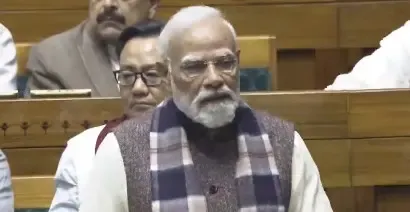
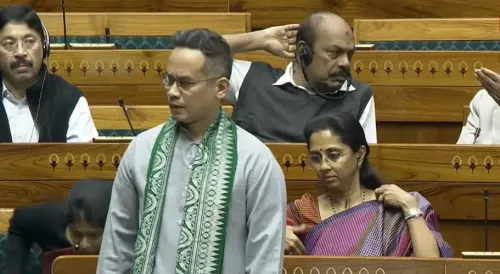
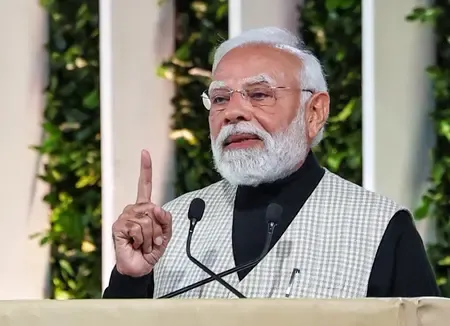
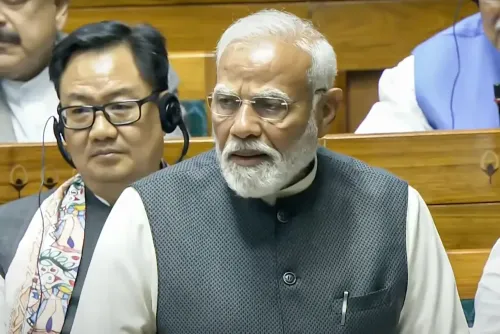
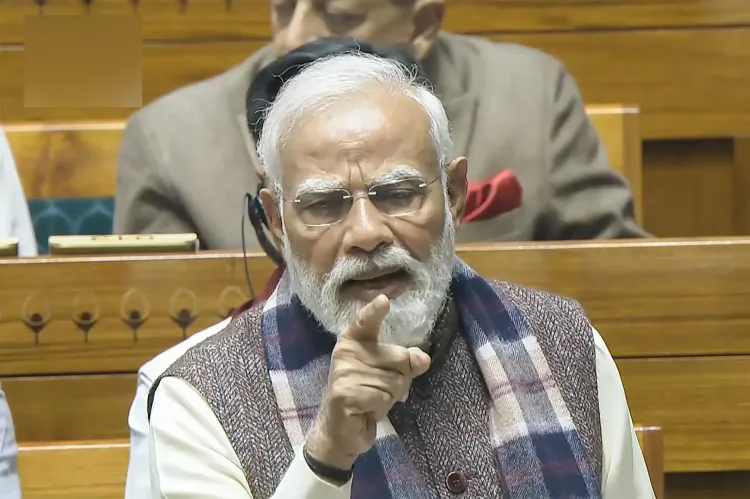
New Delhi, Dec 8 (NationPress) Prime Minister Narendra Modi delivered a powerful critique of the Congress party during a Lok Sabha session commemorating the 150th anniversary of Vande Mataram, accusing them of betraying the song by yielding to Mohammad Ali Jinnah’s objections.
Modi asserted that Jawaharlal Nehru, the nation’s inaugural Prime Minister, had taken cues from Jinnah in 1937, arguing that the hymn could “irritate Muslims” and thus undermined its significance.
He connected this act of appeasement to subsequent political choices, stating that the Congress not only divided Vande Mataram but also planted the seeds of discord in the country—an approach that he claimed continues to this day.
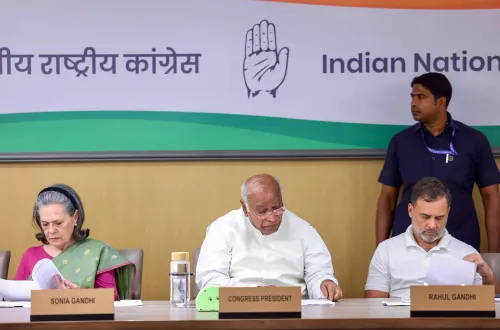
The BJP had already criticized the Congress party ahead of the debate, accusing them of yielding to a communal agenda during their 1937 session by watering down Vande Mataram due to pressure from the Muslim League.
PM Modi amplified this assertion, tying the hymn’s narrative to what he called Congress’ continual betrayals. “When Vande Mataram marked its centenary, the nation was embroiled in the Emergency. During that time, the Constitution was suppressed, and those who fought for patriotism were imprisoned,” he remarked, directly linking the curtailment of democratic rights under Indira Gandhi to the earlier sidelining of the song.
The Prime Minister lauded the hymn, created by Bankim Chandra Chatterjee in November 1875, as a source of inspiration for countless freedom fighters. “Now, at its 150-year mark, it is an excellent chance to revive the prestige of Vande Mataram… which secured our freedom in 1947,” he stated.
PM Modi situated the commemoration among significant national events. “We recently honored 75 years of our Constitution. The country celebrated the 150th birth anniversaries of Sardar Vallabhbhai Patel and Lord Birsa Munda. We are also observing the 350th martyrdom day of Guru Teg Bahadur ji. And today, we commemorate 150 years of Vande Mataram,” he addressed the House.
Referring to the hymn as a “mantra of sacrifice, unity, and resilience,” PM Modi urged Parliament to safeguard its legacy for future generations. “This is not merely a homage to history but also a reaffirmation of our democratic values. The insights from our past must continue to steer our future,” he concluded.
Point of View
I perceive this discourse surrounding Vande Mataram as a pivotal moment, revealing the intricate layers of India's political history. The ongoing debates about unity and division highlight the importance of revisiting our past to forge a cohesive future. It is essential for the nation to reflect on these themes and strive for a collective identity that honors our diverse heritage.
NationPress
6 Oct 2026
Frequently Asked Questions
What is the significance of Vande Mataram?
Vande Mataram is a national song that symbolizes India's struggle for independence and unity.
Why did Modi criticize the Congress party?
Modi accused the Congress of betraying Vande Mataram by aligning with Jinnah's objections during the 1937 session.
Who composed Vande Mataram?
Vande Mataram was composed by Bankim Chandra Chatterjee in November 1875.
What did Modi say about the legacy of Vande Mataram?
He urged Parliament to preserve the hymn's legacy, calling it a mantra of sacrifice and resilience.
How does this discussion relate to current politics?
Modi linked historical appeasement to ongoing political division, emphasizing the need for unity.