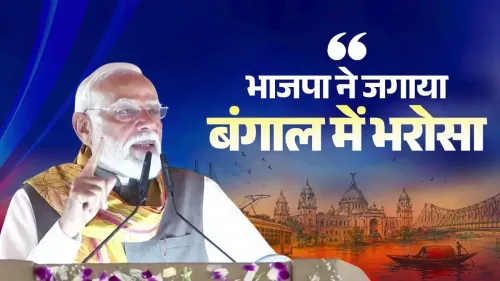
PM Modi at BJP rally: 'Poribartan hoi gaiche', guarantees Bengal development
Synopsis
At a victory rally in Delhi, PM Modi declared 'Poribartan hoi gaiche' — change has come to Bengal — and made it his personal guarantee. His first Cabinet meeting pledge: fast-track Ayushman Bharat for a state that had long refused it. The speech blends ideological legacy, governance promises, and a pointed call to end Bengal's cycle of political violence.
Key Takeaways
PM Narendra Modi declared "Poribartan hoi gaiche" (Change has come) as his personal guarantee for West Bengal at a victory rally on 4 May .
He dedicated the victory to families of BJP women workers who allegedly faced atrocities in West Bengal and Kerala.
Modi pledged that the first Cabinet meeting would approve the Ayushman Bharat scheme for West Bengal.
He promised strict action against infiltrators and economic measures to curb migration from the state.
BJP now holds power in 20 states , with additional wins noted in Assam , Puducherry , Rajasthan , and Gujarat .
Modi called on all parties to focus on "badlav" (reform) over "badla" (revenge) and credited the ECI for a violence-free election.
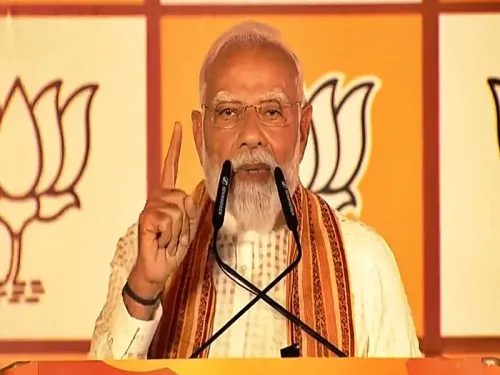
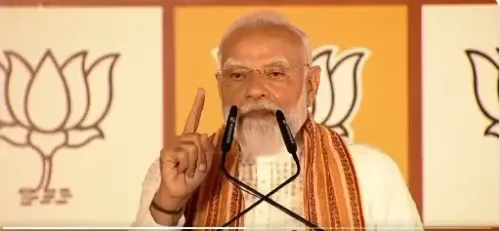
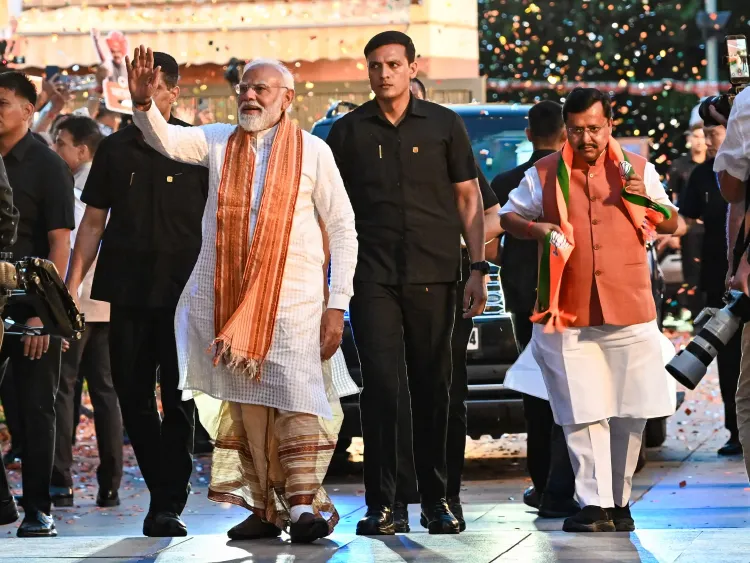
Prime Minister Narendra Modi on Monday, 4 May declared that a new era of development and freedom from fear has begun in West Bengal, announcing from the BJP headquarters in New Delhi that "Poribartan hoi gaiche" — Bengali for "Change has come about" — as his personal guarantee to the state's residents. The declaration came at a victory rally following the Bharatiya Janata Party's (BJP) performance in the recently concluded assembly elections.
Modi's Guarantee to Bengal
Addressing jubilant party workers, Modi said, "Today, the sun has risen in the holy land of Bengal." He dedicated the victory to the people of West Bengal and, specifically, to the families of women party workers who, he alleged, had faced atrocities and tyranny in the state. "The new dawn in Bengal is one which has been the dream of many generations," he said, adding that BJP workers had uprooted what he described as a politics of fear and violence.
Modi assured all Bengal residents — "without any discrimination" — that the BJP would work day and night for them, framing the victory as the beginning of a journey of "Vishwas aur Vikas" (Trust and Development).
Key Policy Announcements
Modi announced that the very first Cabinet meeting of the new government would ensure the Ayushman Bharat health scheme is approved for West Bengal — a scheme the state had previously not adopted. He also promised strict action against infiltrators and pledged economic growth measures aimed at curbing migration from the state.
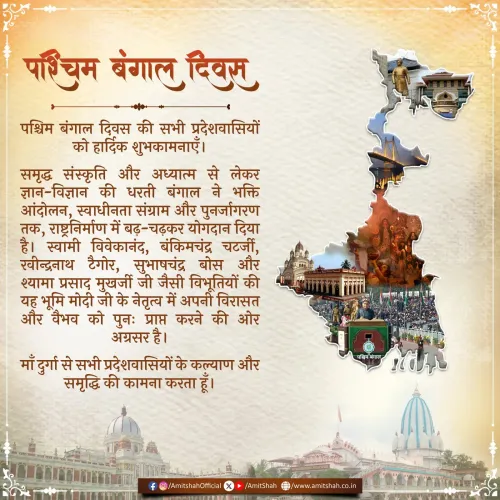
Invoking BJP founder Shyama Prasad Mukherjee, Modi said his soul must be relishing the victory, noting that Mukherjee had fought a historic battle to retain Bengal as part of India. This framing positions the BJP's electoral win as a fulfilment of an ideological legacy stretching back decades.
Wins Beyond Bengal
Modi also highlighted the BJP's broader electoral momentum. He noted a hat-trick victory in Assam over the past five years and the return of the National Democratic Alliance (NDA) government in Puducherry. He added that the BJP now holds power in 20 states, and pointed to historic wins in local body elections in Rajasthan and Gujarat as further evidence of the party's governance record.
"BJP has become synonymous with good governance and delivery of promises. This is the reason why the BJP is in power in 20 states," he said, reiterating the slogan "Nagrik Devo Bhava" (the citizen is God).
Call for Peace and Unity
Modi credited the Election Commission of India (ECI) for conducting what he described as a violence-free election in which, notably, not a single life was lost. "Instead of gunshots, the public's voice resonated in Bengal. Instead of fear, democracy has triumphed in the state," he said.
He urged all political parties in Bengal to abandon violent practices, saying the focus after the BJP's victory should be on "badlav" (change/reform) rather than "badla" (revenge). He called on parties to rise above petty politics and work collectively for the state's development. All eyes are now on how quickly the new government moves to implement Ayushman Bharat and the other development pledges Modi made from the BJP's national headquarters.
Point of View
Making its fast-track approval a direct rebuke to the previous dispensation. However, the gap between victory rally rhetoric and administrative delivery in a state with entrenched political networks will be the real test. The call for 'badlav not badla' sounds conciliatory, but history suggests post-election transitions in Bengal rarely unfold without friction.
NationPress
1 Oct 2026
Frequently Asked Questions
What did PM Modi mean by 'Poribartan hoi gaiche'?
'Poribartan hoi gaiche' is a Bengali phrase meaning 'Change has come about.' PM Modi used it at a BJP victory rally on 4 May to declare that a new era of development and freedom from fear has begun in West Bengal, calling it his personal guarantee to the state's residents.
What is the Ayushman Bharat scheme and why is its approval significant for West Bengal?
Ayushman Bharat is the Centre's flagship health insurance scheme providing coverage to economically vulnerable families. West Bengal had previously not adopted the scheme, so Modi's pledge to approve it in the very first Cabinet meeting represents a significant policy shift for the state's residents.
Which states did BJP win alongside West Bengal?
Modi highlighted a hat-trick victory in Assam and the return of the NDA government in Puducherry, in addition to the West Bengal result. He also pointed to historic wins in local body elections in Rajasthan and Gujarat, noting the BJP now governs 20 states.
What did Modi say about political violence in West Bengal?
Modi credited the Election Commission of India for a violence-free election in which no lives were lost, and urged all political parties to abandon violent practices. He called for focus on 'badlav' (reform) rather than 'badla' (revenge) following the BJP's victory.
Who is Shyama Prasad Mukherjee and why did Modi invoke him?
Shyama Prasad Mukherjee was the founder of the BJP's ideological predecessor and is credited with fighting to retain Bengal as part of India. Modi invoked him to frame the BJP's West Bengal victory as the fulfilment of a decades-old ideological mission.