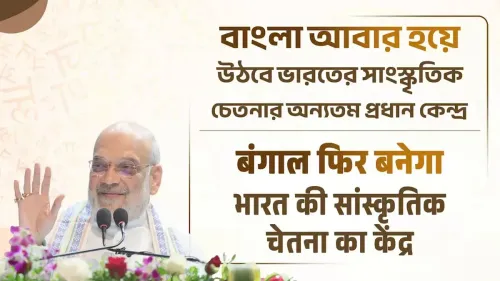
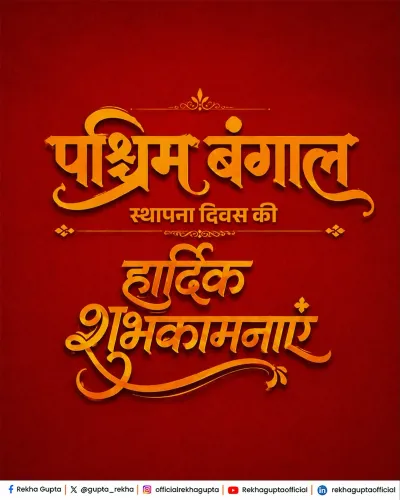
Amit Shah greets West Bengal on its foundation day
Synopsis
Union Home Minister Amit Shah marked West Bengal Divas on 20 June 2026 by honouring the state's cultural and nationalist legacy — citing Tagore, Bose, Vivekananda, and Mookerjee — and linking Bengal's future to PM Modi's leadership, ahead of the 2026 state assembly elections.
Key Takeaways
Amit Shah extended greetings on West Bengal Divas on 20 June 2026 via a Hindi post on X.
He named five historical figures: Swami Vivekananda, Bankim Chandra Chatterjee, Rabindranath Tagore, Subhas Chandra Bose , and Syama Prasad Mookerjee .
The post linked Bengal's heritage to the Bhakti movement, the independence struggle, and the Bengal Renaissance.
Shah asserted that Bengal is moving towards reclaiming its heritage under PM Narendra Modi 's leadership.
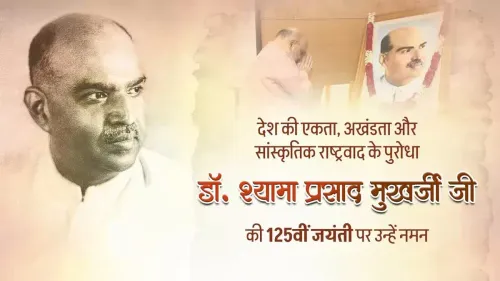
Syama Prasad Mookerjee , founder of the Bharatiya Jana Sangh in 1951 , is the BJP's key ideological ancestor from Bengal.
The message comes ahead of the 2026 West Bengal assembly elections , a state governed by the opposition Trinamool Congress.
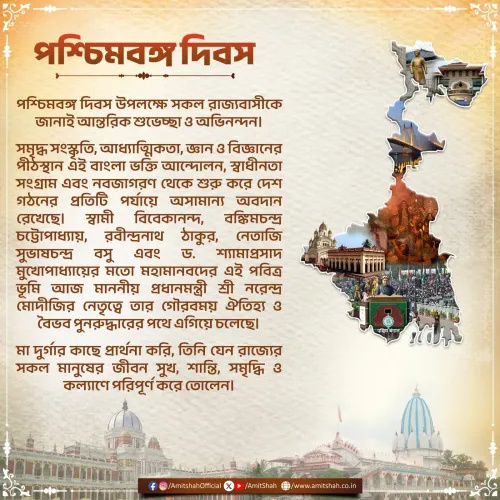
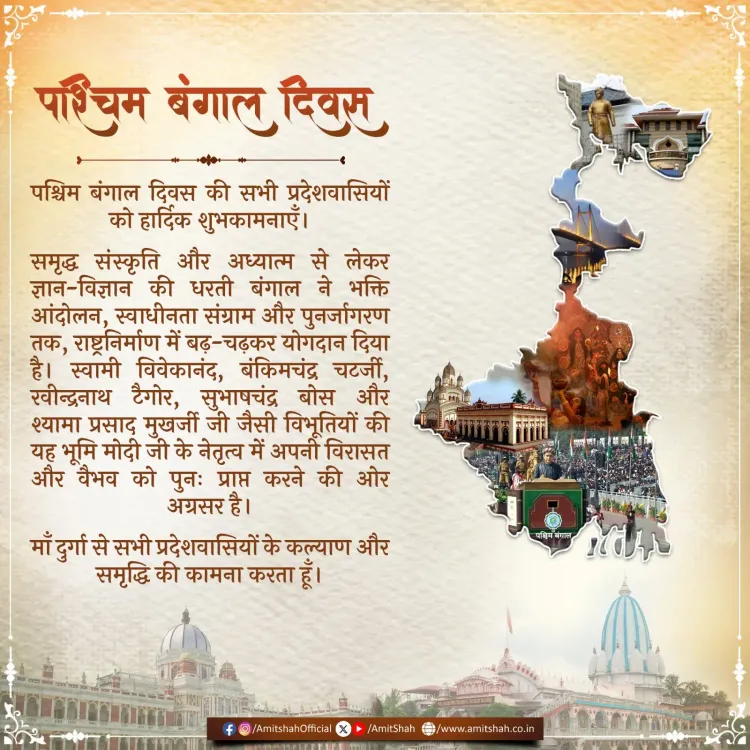
Union Home Minister Amit Shah on Saturday, 20 June 2026, extended greetings to the people of West Bengal on the occasion of West Bengal Divas, invoking the state's legacy of spiritual reform, the freedom struggle, and the Bengal Renaissance while asserting that the state is moving towards reclaiming its heritage under Prime Minister Narendra Modi's leadership.
Context
Posting in Hindi on X, Shah wrote: 'Paschim Bengal Divas ki sabhi pradeshvasiyon ko hardik shubhkamnaen' — 'Heartfelt greetings to all residents on West Bengal Day.' He described Bengal as the land of rich culture, spirituality, and knowledge, noting its contributions to the Bhakti movement, the independence struggle, and the Renaissance. He also offered a prayer to Maa Durga for the welfare and prosperity of the state's people.
Shah specifically named five luminaries: Swami Vivekananda, Bankim Chandra Chatterjee, Rabindranath Tagore, Subhas Chandra Bose, and Syama Prasad Mookerjee — spanning religious philosophy, literature, armed resistance, and political organisation.
Policy Backdrop
Rabindranath Tagore, awarded the Nobel Prize in Literature in 1913, gave India its national anthem and is a defining figure of the Bengal Renaissance. Subhas Chandra Bose led the Indian National Army and remains a potent symbol of anti-colonial armed resistance. Syama Prasad Mookerjee founded the Bharatiya Jana Sangh in 1951, the organisational predecessor of the BJP, making him a figure of particular ideological significance for the ruling party.
The central government's Ek Bharat Shreshtha Bharat programme, launched in 2015, has sought to foster cultural exchange and national integration across states, and public messaging around regional heritage days fits within that broader framework.
Stakeholders and Impact
West Bengal, governed by the opposition Trinamool Congress, has been a key electoral battleground for the BJP since the 2019 general elections. Shah's message, which links Bengal's celebrated icons to a narrative of cultural revival under the current central government, is directed at the state's electorate at a politically significant moment.
By invoking figures who span religious reform (Swami Vivekananda), literature (Tagore), nationalism (Bose), and the BJP's own ideological lineage (Mookerjee), the post draws a continuous thread between Bengal's historical glory and the present administration's stated goals.
What's Next
With West Bengal assembly elections in 2026, messaging around cultural heritage and regional pride is expected to intensify from all major parties. Central government announcements on heritage preservation or cultural tourism in eastern India could follow such public outreach. The BJP's effort to consolidate its position in the state will likely continue to lean on the legacy of figures like Syama Prasad Mookerjee and Subhas Chandra Bose as electoral touchstones.
Point of View
Expect such cultural messaging to escalate into a sustained campaign theme.
NationPress
19 Sept 2026
Frequently Asked Questions
What is West Bengal Divas?
West Bengal Divas marks the foundation day of the state of West Bengal. It is observed as a day to celebrate the state's history, culture, and contributions to India.
What did Amit Shah say on West Bengal Divas 2026?
Amit Shah posted greetings in Hindi on X, honouring Bengal's contributions to the Bhakti movement, the freedom struggle, and the Renaissance, and naming Swami Vivekananda, Bankim Chandra Chatterjee, Rabindranath Tagore, Subhas Chandra Bose, and Syama Prasad Mookerjee as the state's great luminaries.
Who was Syama Prasad Mookerjee?
Syama Prasad Mookerjee was a Bengali politician who founded the Bharatiya Jana Sangh in 1951, the organisational predecessor of the BJP. He is a figure of central ideological importance to the ruling party.
Why is West Bengal politically significant for the BJP?
West Bengal is governed by the opposition Trinamool Congress and has been a key electoral target for the BJP since 2019. The 2026 West Bengal assembly elections make the state a major political battleground.
What is the Ek Bharat Shreshtha Bharat programme?
Ek Bharat Shreshtha Bharat is a central government initiative launched in 2015 to promote cultural exchanges and national integration among India's states and union territories.