Modi's UAE visit: defence, energy, and Gulf stability on agenda
Synopsis
Modi's UAE visit is not routine diplomacy — it is a direct response to the West Asia crisis. With the Strait of Hormuz under threat, India's energy lifeline at risk, and a new Strategic Defence Partnership on the table, Abu Dhabi has quietly become one of New Delhi's most consequential partnerships — stretching from LNG contracts to counter-terrorism intelligence-sharing.
Key Takeaways
PM Narendra Modi is on an official visit to the UAE on 16 May 2025 , amid the ongoing West Asia crisis .
Talks with UAE President Sheikh Mohamed bin Zayed Al Nahyan are expected to cover defence , energy security , maritime stability , and trade resilience .
India and the UAE are set to advance a Strategic Defence Partnership framework , following a letter of intent signed earlier in 2025.
The UAE is India's third-largest trading partner and a top source of foreign direct investment .
More than 4.5 million Indians live in the UAE — the largest Indian expatriate community abroad — making diaspora welfare a key agenda item.
Energy discussions are expected to include long-term LNG contracts , crude supply assurances , and logistics alternatives amid Strait of Hormuz disruption risks.
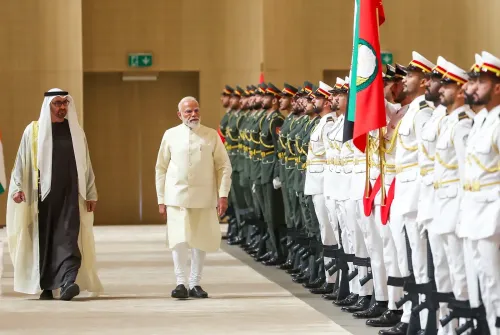
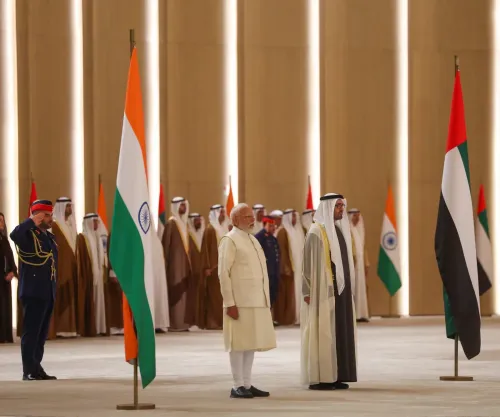
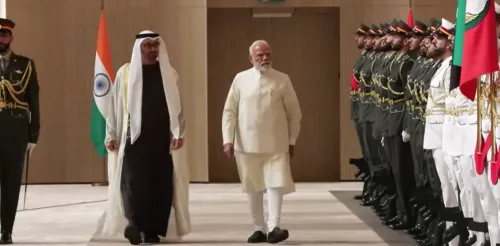
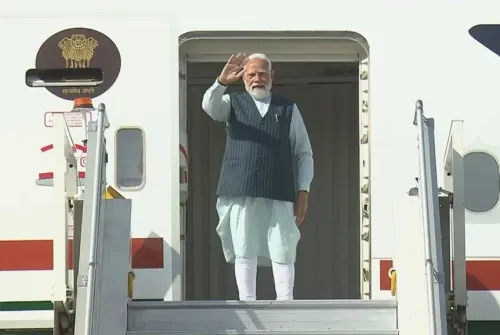
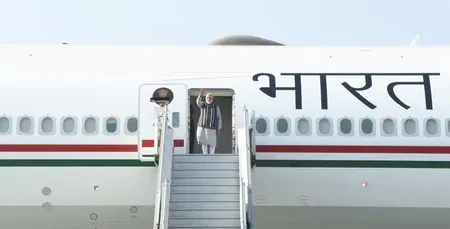
Prime Minister Narendra Modi arrived in the UAE on Friday, 16 May 2025, for a high-stakes official visit that places India's Gulf diplomacy squarely at the centre of its West Asia strategy. The trip, set against a backdrop of escalating regional tensions, is expected to advance cooperation across defence, energy security, maritime stability, and trade resilience, according to reports citing the Khaleej Times.
High-Level Talks with UAE Leadership
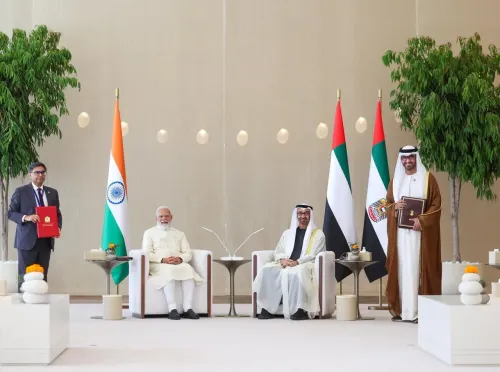
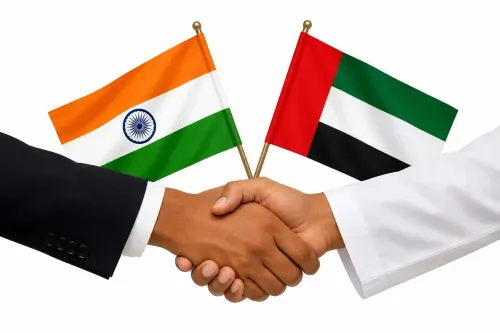
Modi is scheduled to hold substantive discussions with UAE President Sheikh Mohamed bin Zayed Al Nahyan as both nations look to deepen their Comprehensive Strategic Partnership. The timing carries particular weight: the Gulf is navigating heightened geopolitical uncertainty driven by the US-Iran confrontation, threats to critical shipping lanes, and mounting fears over prolonged disruptions in the Strait of Hormuz — a chokepoint through which a significant share of India's energy imports passes.
Energy Security at the Core
Energy cooperation is expected to dominate the economic agenda. Discussions are likely to cover long-term LNG contracts, crude supply assurances, upstream investment frameworks, and alternative logistics arrangements designed to cushion India against potential Gulf supply shocks. The UAE is already one of India's largest energy partners, supplying crude oil, LPG, and LNG, while also hosting major Indian stakes in strategic petroleum reserves and upstream projects.
Defence Ties Entering a New Phase
On the security front, India and the UAE are expected to advance negotiations on a Strategic Defence Partnership framework, building on a letter of intent signed earlier this year. The proposed agreement is reported to cover defence manufacturing, cybersecurity, maritime security, intelligence-sharing, counter-terrorism cooperation, and special operations. Analysts note that the UAE's strategic geographic position gives India an important foothold near critical global energy and shipping corridors at a time when competition for influence in West Asia is intensifying among major regional and global powers.
A Relationship Transformed Over a Decade
The visit underscores a broader evolution in India-UAE ties. What was once largely an oil-for-remittances relationship has matured into a multi-dimensional partnership spanning fintech, renewable energy, food security, artificial intelligence, logistics, infrastructure, and digital payments. The UAE is now India's third-largest trading partner and one of its biggest sources of foreign direct investment.
Diaspora and People-to-People Ties
The Indian diaspora is expected to feature prominently in the talks. The UAE hosts more than 4.5 million Indians — the largest Indian expatriate community in any single country — whose remittances, business activity, and professional contributions form a critical economic bridge between the two nations. Diaspora welfare, labour protections, and mobility frameworks are all on the agenda, particularly as the UAE continues to position itself as a global talent and investment hub.
The visit signals that New Delhi views Abu Dhabi not merely as an energy supplier but as a strategic anchor in a region where geopolitical fault lines are shifting rapidly.
Point of View
If concluded, would mark a qualitative shift: India has historically been cautious about formal defence entanglements in the Gulf. What mainstream coverage underplays is the Strait of Hormuz dimension — roughly a fifth of India's crude imports transit that chokepoint, and any sustained disruption would hit Indian inflation before any diplomatic fix could take effect. The diaspora angle, too, is underreported: 4.5 million Indians in the UAE are both a strategic asset and a vulnerability, and their welfare conditions are directly tied to bilateral goodwill.
NationPress
28 Sept 2026
Frequently Asked Questions
Why is PM Modi visiting the UAE in May 2025?
PM Modi is visiting the UAE on 16 May 2025 to strengthen the bilateral strategic partnership amid the ongoing West Asia crisis. The visit focuses on defence cooperation, energy security, maritime stability, and trade resilience as regional tensions — including the US-Iran confrontation and threats to the Strait of Hormuz — create risks for India's supply chains.
What is the Strategic Defence Partnership framework between India and the UAE?
It is a proposed formal defence agreement that India and the UAE are expected to advance during Modi's visit, building on a letter of intent signed earlier in 2025. The framework is reported to cover defence manufacturing, cybersecurity, maritime security, intelligence-sharing, counter-terrorism cooperation, and special operations.
Why does the Strait of Hormuz matter to India?
The Strait of Hormuz is a critical global shipping chokepoint through which a significant share of India's crude oil and LNG imports pass. Any prolonged disruption — linked to the US-Iran confrontation or regional instability — could directly threaten India's energy supply and drive up domestic fuel costs.
How important is the UAE as an economic partner for India?
The UAE is India's third-largest trading partner and one of its biggest sources of foreign direct investment. It supplies crude oil, LPG, and LNG to India, hosts major Indian investments in strategic petroleum reserves, and is home to more than 4.5 million Indians — the largest Indian expatriate community in any single country.
What role does the Indian diaspora play in India-UAE relations?
The more than 4.5 million Indians living in the UAE form a critical economic and cultural bridge between the two countries. Their remittances, business activity, and professional contributions are central to bilateral ties, and diaspora welfare, labour protections, and mobility issues are expected to feature prominently in Modi's talks with UAE leadership.