Modi's UAE visit seals defence pact, $5 billion investment and energy deals
Synopsis
Modi’s Abu Dhabi stop was more than diplomacy — it was a transaction. A $5 billion UAE investment, a bilateral strategic defence framework, LPG and petroleum reserve deals, and a ship repair cluster at Vadinar all landed in a single visit, as India accelerates its Gulf pivot at a moment of acute West Asian instability.
Key Takeaways
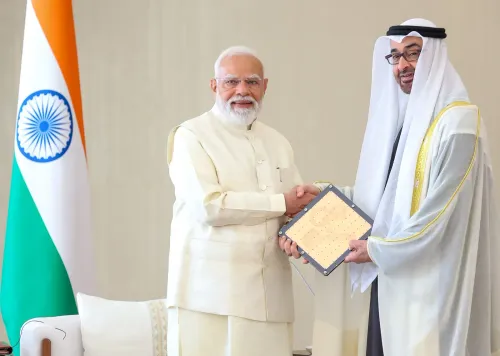
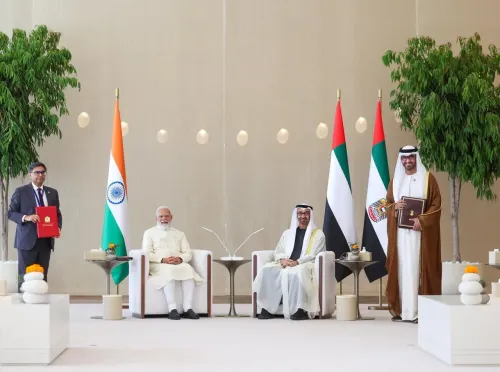
PM Modi signed multiple agreements with UAE President Mohamed bin Zayed Al Nahyan in Abu Dhabi on 15 May 2025 .
The UAE committed $5 billion in investment to Indian infrastructure, RBL Bank , and Samman Capital .
A framework for a bilateral strategic defence partnership was formalised between India and the UAE.
Energy agreements cover LPG supply and cooperation on strategic petroleum reserves .
An agreement was signed to establish a ship repair cluster at Vadinar , Gujarat.
The Abu Dhabi visit is the first leg of Modi’s five-nation tour (15–20 May) covering the UAE, Netherlands, Sweden, Norway, and Italy.
Prime Minister Narendra Modi on Friday, 15 May concluded high-stakes bilateral talks in Abu Dhabi with UAE President Mohamed bin Zayed Al Nahyan, signing a suite of agreements spanning defence, energy, and investment that signal a sharp deepening of the India-UAE Comprehensive Strategic Partnership. The deals include a $5 billion investment commitment into Indian infrastructure, RBL Bank, and Samman Capital, alongside frameworks covering LPG supply, strategic petroleum reserves, and a bilateral strategic defence partnership.
Key Agreements Signed
The two sides formalised a framework for a bilateral strategic defence partnership — a structural upgrade to security cooperation that goes beyond existing arrangements. On the energy front, agreements were reached for the supply of LPG and cooperation on strategic petroleum reserves, reinforcing India's energy security calculus at a time of heightened West Asian volatility.
A separate agreement was signed for the establishment of a ship repair cluster at Vadinar, in Gujarat's Devbhumi Dwarka district — a move that analysts say could position India as a regional maritime maintenance hub in the Arabian Sea corridor.
What Modi Said at Delegation Talks
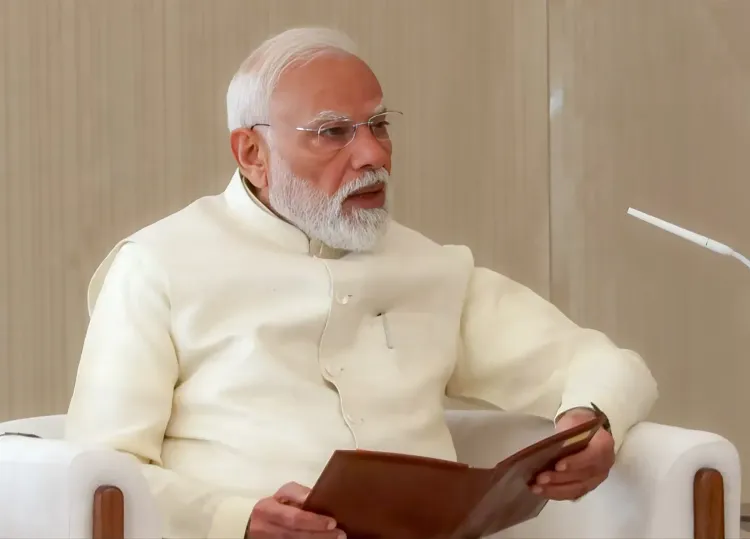
Speaking during delegation-level talks, Prime Minister Modi said, “India stands shoulder-to-shoulder with the UAE in every situation, and it will continue to do so. For the restoration of peace and stability, India will extend all possible cooperation.”
Modi stressed that the Strait of Hormuz must remain “free and open” and that international laws must be respected — remarks widely read as a calibrated signal amid ongoing regional tensions. He acknowledged the global impact of the West Asia conflict and underscored that “dialogue and diplomacy remain the best way to resolve issues.”
Modi also recalled the UAE President’s January visit to India, noting that both sides had then agreed to “qualitatively upgrade” relations. “Even in such a small duration, we have made significant progress in all matters,” he said, adding, “In the time to come, we will go ahead together in every area.”
Strategic and Economic Context
The UAE is India’s third-largest trading partner and a critical node in India’s energy supply chain. The $5 billion investment — directed at infrastructure and financial institutions — comes at a time when India is actively courting Gulf sovereign capital to fund its infrastructure build-out. Notably, this is not the first such Gulf investment pledge; earlier rounds of UAE capital commitments have had mixed disbursement records, making implementation timelines a key variable to watch.
The ship repair cluster at Vadinar dovetails with India’s broader maritime ambition under the Sagarmala programme and could generate skilled employment in the coastal economy. This is also the third Modi visit to the UAE since 2015, each producing a progressively denser web of institutional agreements.
The Five-Nation Tour
The Abu Dhabi leg is the opening stop of Prime Minister Modi’s five-nation tour from 15 to 20 May, which will subsequently take him to the Netherlands, Sweden, Norway, and Italy. The tour is designed to deepen India’s strategic and economic partnerships across energy, defence, technology, green transition, and trade — a diplomatic sprint that reflects New Delhi’s intent to diversify its global partnerships amid a fractured geopolitical landscape.
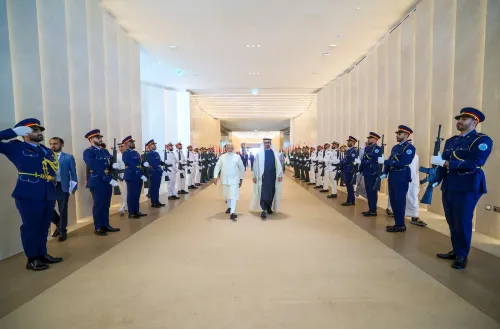
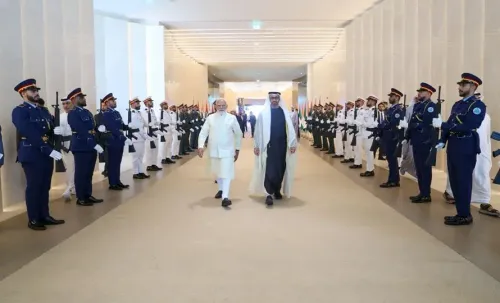
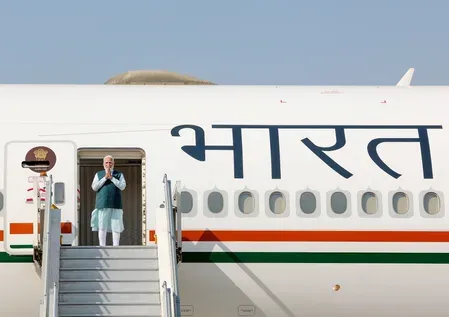
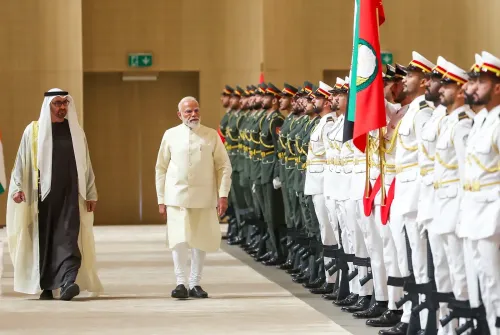
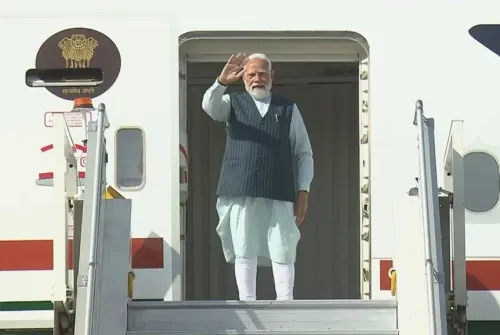
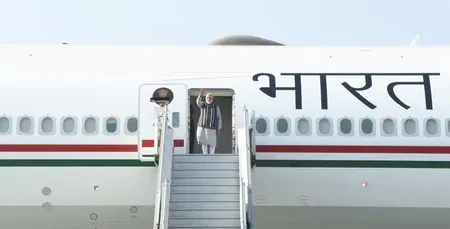
Modi received a ceremonial welcome on arrival in the UAE earlier in the day before proceeding to the bilateral summit with President Mohamed bin Zayed Al Nahyan. With the defence pact framework now signed, both governments are expected to operationalise the agreement through joint working groups in the coming months.
Point of View
But a bilateral strategic defence partnership is a qualitative step that could reshape Gulf security architecture, particularly if it involves intelligence-sharing or joint maritime protocols in the Strait of Hormuz. The $5 billion investment figure, meanwhile, should be tracked against disbursement: earlier Gulf capital pledges to India have not always translated into deployed funds on schedule. Modi’s pointed reference to the Strait of Hormuz being ‘free and open’ is also diplomatic shorthand aimed at multiple audiences — reassuring energy importers, signalling neutrality in the Iran-Gulf fault line, and positioning India as a stabilising actor. The Vadinar ship repair cluster is the quietly consequential piece: it locks in UAE maritime interest in India’s west coast in a way that outlasts any single government.
NationPress
28 Sept 2026
Frequently Asked Questions
What agreements did India and the UAE sign during PM Modi’s visit?
India and the UAE signed a framework for a bilateral strategic defence partnership, energy agreements on LPG supply and strategic petroleum reserves, and a deal for a ship repair cluster at Vadinar. The UAE also committed $5 billion in investment to Indian infrastructure, RBL Bank, and Samman Capital.
How much is the UAE investing in India and where will the money go?
The UAE has committed $5 billion in investment directed at Indian infrastructure projects, RBL Bank, and Samman Capital. The announcement was made during Prime Minister Modi’s bilateral talks with UAE President Mohamed bin Zayed Al Nahyan in Abu Dhabi on 15 May.
What is the Vadinar ship repair cluster agreement?
An agreement was signed to set up a ship repair cluster at Vadinar in Gujarat as part of the India-UAE bilateral deals. The cluster is expected to position India as a regional maritime maintenance hub along the Arabian Sea corridor.
Why did PM Modi stress that the Strait of Hormuz must remain open?
Modi’s remarks on the Strait of Hormuz being ‘free and open’ came amid ongoing West Asia conflict and regional tensions that have raised concerns about energy supply routes. The Strait is a critical chokepoint for India’s oil imports, making its security a direct national interest.
Which countries is PM Modi visiting on his five-nation tour?
Prime Minister Modi’s five-nation tour from 15 to 20 May covers the UAE, the Netherlands, Sweden, Norway, and Italy. The tour aims to deepen India’s strategic and economic partnerships in energy, defence, technology, green transition, and trade.