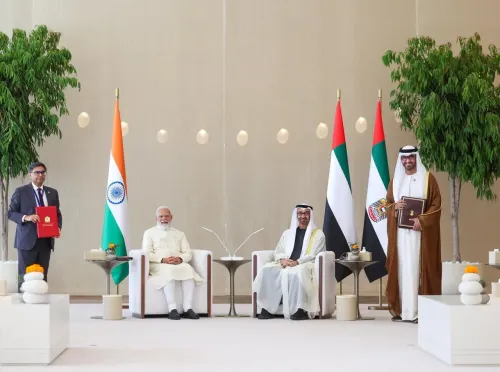
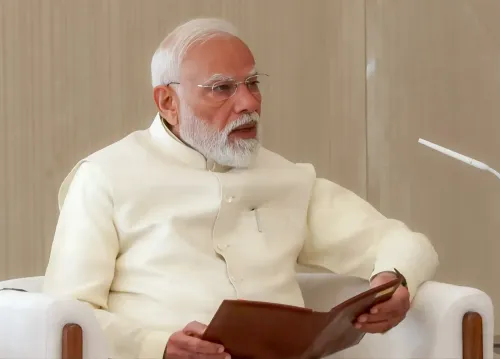
India-UAE deals span energy, defence and AI in Modi's Abu Dhabi visit

Synopsis
India and the UAE have moved well beyond a transactional energy relationship. The latest agreements — a $5 billion sovereign investment pact, a $3 billion decade-long LNG deal, crude storage outside the Strait of Hormuz, and an AI computing partnership — amount to a comprehensive strategic architecture, timed precisely as the UAE breaks free from OPEC quotas and gains room to deepen bilateral supply ties.
Key Takeaways
India and the UAE signed multiple agreements during PM Narendra Modi's Abu Dhabi visit covering energy, defence, and AI.
A $5 billion investment commitment was made jointly by NIIF (India) and ADIA (Abu Dhabi) for critical infrastructure sectors.
An arrangement was reached to store up to 30 million barrels of crude oil at Fujairah , outside the Strait of Hormuz, bolstering India's strategic petroleum reserves.
A $3 billion, ten-year LNG supply deal was signed between ADNOC Gas and HPCL , with scope for further expansion.
Cooperation on AI and high-performance computing is expected to support India's defence tech, climate modelling, cybersecurity, and large language model initiatives.
The agreements coincide with the UAE's exit from the OPEC quota system , giving it flexibility to expand bilateral oil supply to India.
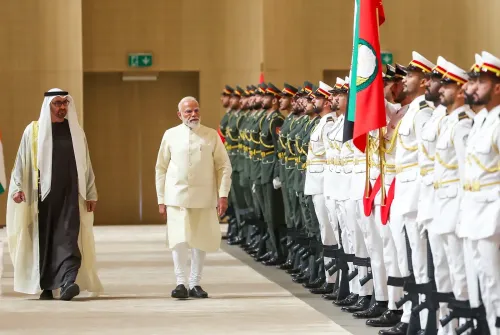
India and the United Arab Emirates have signed a series of agreements during Prime Minister Narendra Modi's visits that significantly deepen the bilateral strategic-economic partnership across energy storage, long-term fuel supplies, defence cooperation, and artificial intelligence, according to a report by India Narrative.
Key Agreements at a Glance
The deals include a $5 billion investment commitment jointly channelled through the National Investment and Infrastructure Fund (NIIF) of India and the Abu Dhabi Investment Authority (ADIA). Alongside this, an arrangement has been made to store up to 30 million barrels of crude oil — possibly at Fujairah — as part of India's strategic petroleum reserves.
Analysts noted that storing Indian strategic oil in Fujairah, which lies outside the Strait of Hormuz, reduces the risk of supply disruption and strengthens India's buffer against energy shocks, with direct implications for national security.
The LNG Deal and Energy Resilience
Both countries also finalised a $3 billion LNG agreement under which ADNOC Gas will supply liquefied natural gas to India's Hindustan Petroleum Corporation Limited (HPCL) over a ten-year period, with scope for further expansion. Such long-term supply commitments aim to stabilise India's fuel import pipeline and improve predictability at a time when regional instability has pushed up shipping costs and insurance premiums.
The India Narrative report noted that the $5 billion NIIF-ADIA commitment facilitates long-term capital accumulation in critical sectors requiring sustained investment. Strategically, it positions the UAE as a key stakeholder in India's economic stability, infrastructure expansion, and market growth by deepening Gulf sovereign wealth participation in India's development trajectory.
AI and High-Performance Computing
The agreements also cover technological cooperation, particularly in artificial intelligence (AI) and high-performance computing (HPC). According to the report, this collaboration could substantially strengthen India's AI ecosystem by supporting initiatives in defence technologies, climate and weather modelling, cybersecurity, large language models, and broader industrial innovation.
Context: UAE's OPEC Exit and India's Opportunity
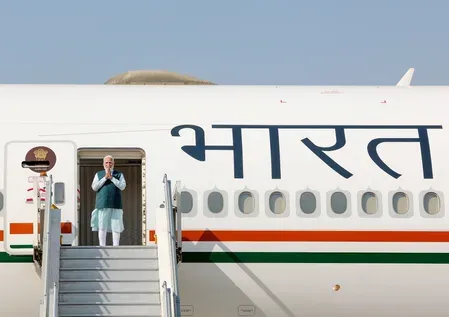
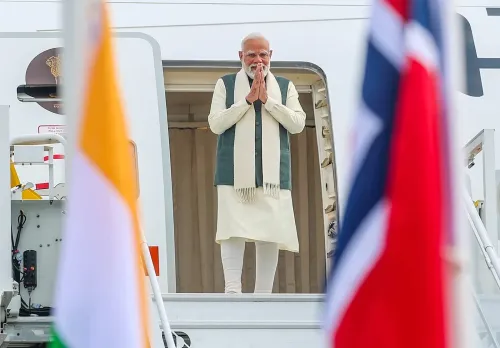
Modi's stop in Abu Dhabi, made en route to Europe, came against the backdrop of the UAE's recent decision to exit the Organisation of Petroleum Exporting Countries (OPEC) quota system. That move grants the Gulf nation greater flexibility to increase oil production and pursue bilateral supply agreements — a development that analysts say works directly in India's favour as a major energy partner.
This is not the first time India and the UAE have expanded their strategic ties; the two nations have progressively built a multi-sector partnership over the past decade. The latest agreements, however, mark a notable broadening into frontier technology and a more formalised energy-security architecture. How swiftly the investment and supply commitments translate into on-ground outcomes will determine the real depth of this partnership.
Point of View
But the real test lies in execution. Storing crude at Fujairah is a sound hedge against Hormuz risk, yet India's strategic petroleum reserve capacity has historically underutilised its potential. The NIIF-ADIA commitment is the third major sovereign wealth co-investment framework in recent years — the previous rounds have been slow to deploy capital at scale. On AI and HPC, the partnership is directionally correct but light on specifics; without defined milestones, it risks becoming another MoU that generates headlines rather than compute capacity. The UAE's OPEC exit is the understated variable here — it is the structural enabler that makes all the energy deals more credible and durable.
NationPress
24 Sept 2026
Frequently Asked Questions
What agreements did India and the UAE sign during PM Modi's Abu Dhabi visit?
India and the UAE signed several agreements covering a $5 billion joint investment by NIIF and ADIA, a $3 billion ten-year LNG supply deal between ADNOC Gas and HPCL, crude oil storage of up to 30 million barrels at Fujairah, and cooperation on AI and high-performance computing. The deals aim to deepen the bilateral strategic-economic partnership across energy, defence, and technology.
What is the significance of storing Indian crude oil at Fujairah?
Fujairah is located outside the Strait of Hormuz, a critical chokepoint through which a large share of global oil passes. Storing up to 30 million barrels there as part of India's strategic petroleum reserves reduces the risk of supply disruption in the event of regional conflict or blockade, strengthening India's energy security buffer.
What is the India-UAE LNG deal about?
ADNOC Gas of the UAE will supply liquefied natural gas to India's Hindustan Petroleum Corporation Limited (HPCL) under a $3 billion agreement spanning ten years, with scope for further expansion. The deal is designed to stabilise India's fuel imports and improve supply predictability amid elevated shipping costs and regional instability.
How does the UAE's exit from OPEC affect its energy deals with India?
The UAE's decision to exit the OPEC quota system gives it the flexibility to independently increase oil production and negotiate bilateral supply agreements without being constrained by cartel-wide output limits. This directly benefits India, one of the UAE's largest energy partners, by opening the door to larger and more flexible supply arrangements.
What does the India-UAE AI and high-performance computing cooperation involve?
The two countries have agreed to collaborate on artificial intelligence and high-performance computing infrastructure. According to the India Narrative report, this is expected to strengthen India's AI ecosystem by supporting applications in defence technologies, climate and weather modelling, cybersecurity, large language models, and industrial innovation.