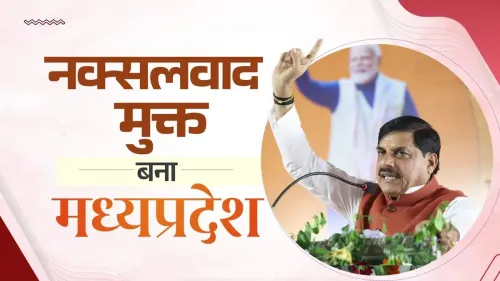
CM Mohan Yadav: MP now free from Naxal menace
Synopsis
Chief Minister Dr. Mohan Yadav declared on Diwali 2026 that Madhya Pradesh has been freed from Naxalism, crediting PM Modi and Home Minister Amit Shah, and highlighting Dindori, Mandla, and Balaghat as districts now on a development path.
Key Takeaways
Mohan Yadav declared Madhya Pradesh free from Naxalism on 8 November 2026 , coinciding with Diwali 2026 .
The districts of Dindori , Mandla , and Balaghat — all with tribal populations and histories of LWE incidents — were specifically cited as now advancing on a development path.
Credit was attributed to PM Narendra Modi and Union Home Minister Amit Shah for guiding the anti-Naxal strategy.
The Ministry of Home Affairs has coordinated Left-Wing Extremism policy through combined security and development operations since the mid-2000s, with intensity increasing post- 2014 .
All three districts border or sit near Chhattisgarh , a long-standing Naxal theatre, making cross-state coordination central to the security narrative.
Verification of the claim will hinge on updated MHA district classifications and measurable development outcomes in the named areas.
Districts that once appeared in security advisories as Naxal-influenced zones are now being held up as symbols of development — that is the declaration Chief Minister Dr. Mohan Yadav made on 8 November 2026, as Madhya Pradesh marked what his office called a landmark moment of liberation from Left-Wing Extremism.
What CM Yadav declared — and what it means for three key districts
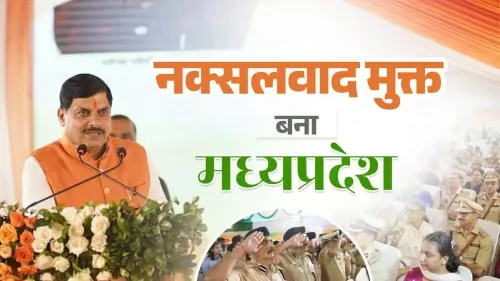
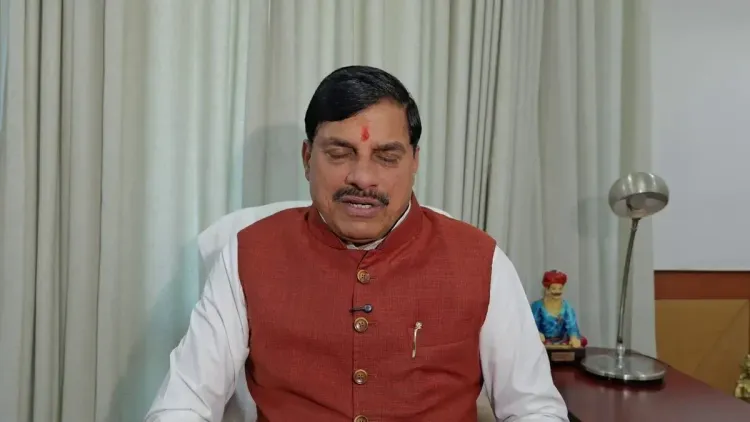
Speaking on the occasion of Diwali 2026, CM Dr. Mohan Yadav stated: 'Madhya Pradesh Naxalvad ke dansh se mukt hua hai' — Madhya Pradesh has been freed from the sting of Naxalism. He specifically named Dindori, Mandla, and Balaghat — three eastern districts with tribal-majority populations and histories of sporadic Naxal incidents — as areas now 'moving forward on the path of development.' He attributed the achievement to the guidance of Prime Minister Narendra Modi and Union Home Minister Amit Shah, calling it 'a great achievement and a moment of victory' for the state.
The timing matters. Diwali has become a recurring political stage for announcing security milestones, and framing this declaration on a festival of light carries unmistakable symbolic intent — darkness receding, development arriving.
The geography of the claim: Dindori, Mandla, and Balaghat
Balaghat sits along the border Madhya Pradesh shares with Chhattisgarh and Maharashtra — both long-standing Naxal theatres — making it historically the most operationally sensitive of the three. Mandla, which also borders Chhattisgarh, and the tribal belt district of Dindori in eastern MP complete the cluster that the state government has repeatedly cited in its security and welfare narratives.
The Ministry of Home Affairs has maintained and periodically revised its list of Left-Wing Extremism affected districts since the mid-2000s, intensifying coordinated security and development measures after 2014. The official approach has consistently combined police operations with infrastructure spending, road connectivity, and welfare delivery in LWE zones — a dual strategy the current central and state governments continue to claim credit for.
A pattern of attribution — and what officials will need to show next
The political framing here follows an established BJP template: local security gains attributed directly to national leadership, followed by a pivot to development as proof of durable change. CM Yadav, who took charge in December 2023, is deploying this narrative as the state consolidates its post-Naxal identity.
The credibility of the claim will now rest on tangible evidence — revised MHA district classifications, infrastructure project rollouts in Dindori, Mandla, and Balaghat, and the lived experience of tribal communities whose economic integration has long lagged behind the security headlines. Official declarations are the opening note; ground-level development indicators will write the full score.
Point of View
CM Yadav grounds the announcement in verifiable geography, raising the stakes for follow-through. The Diwali timing amplifies the symbolic payoff but also invites scrutiny: a 'freedom' declaration that is not corroborated by revised MHA classifications or measurable welfare gains risks becoming a liability in future election cycles. The broader pattern — attributing local gains to central leadership — reinforces the vertical integration of BJP's governance messaging across state and national tiers.
NationPress
8 Nov 2026
Frequently Asked Questions
Is Madhya Pradesh officially declared Naxal-free in 2026?
CM Dr. Mohan Yadav made a political declaration on 8 November 2026 that Madhya Pradesh is free from Naxalism, but an official reclassification by the Ministry of Home Affairs would be the formal benchmark for such a designation.
Which districts in Madhya Pradesh were affected by Naxalism?
Balaghat, Mandla, and Dindori in eastern Madhya Pradesh were among the districts historically linked to Left-Wing Extremism activity, owing to their tribal populations and proximity to Chhattisgarh.
What is the government's strategy to eliminate Naxalism?
The Ministry of Home Affairs has combined security operations with infrastructure development and welfare delivery in LWE-affected districts — an integrated approach intensified after 2014 under PM Narendra Modi and Home Minister Amit Shah.
Who is CM Mohan Yadav and when did he become Chief Minister of MP?
Dr. Mohan Yadav is the Chief Minister of Madhya Pradesh, having taken charge in December 2023 following the BJP's victory in the state assembly elections.
What comes next after the Naxal-free declaration in MP?
The key milestones to watch are updated MHA district classifications, development project rollouts in Dindori, Mandla, and Balaghat, and improved welfare and infrastructure indicators for tribal communities in these areas.