Modi at ASEAN Summit: India backs free, open Indo-Pacific, tables 10-point cooperation plan
Synopsis
At the 23rd ASEAN Summit in Manila, Modi didn't just reaffirm familiar platitudes — he tabled a sweeping 10-point cooperation package spanning maritime security, cyber forensics, nuclear energy exchanges, a space hackathon, critical minerals, and a free e-visa for ASEAN tourists. With 2027 marking 35 years of India-ASEAN ties, New Delhi is signalling it wants to be a co-creator of the region's future, not just a spectator.
Key Takeaways
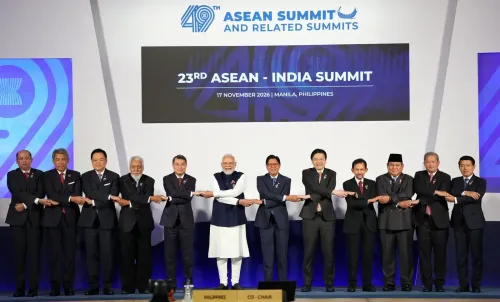
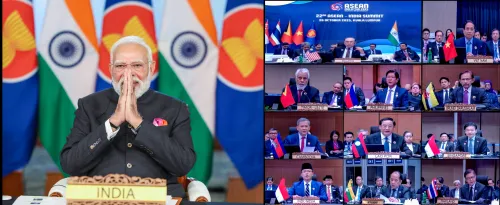
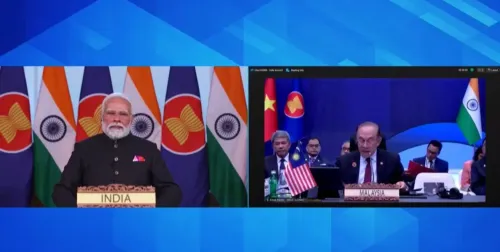
PM Narendra Modi addressed the 23rd ASEAN-India Summit in Manila on 17 November 2026 .
India called for a free, open, inclusive and rules-based Indo-Pacific , urging 'cooperation over competition.' Modi linked 'ASEAN Community Vision 2045' with 'VIKSIT BHARAT 2047' as complementary regional aspirations.
Proposals tabled include an ASEAN-India Maritime Cooperation Plan , cyber forensics training , Space Hackathon , nuclear energy exchanges , critical minerals cooperation, and a free e-visa for ASEAN tourists.
2027 will mark 35 years of India-ASEAN dialogue relations and 5 years of the Comprehensive Strategic Partnership.
Modi congratulated Philippine President Marcos Jr. on the chairship and conveyed good wishes to Singapore as incoming ASEAN Chair.
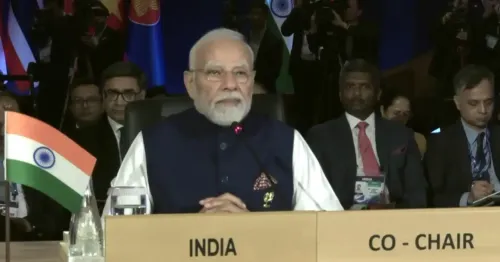
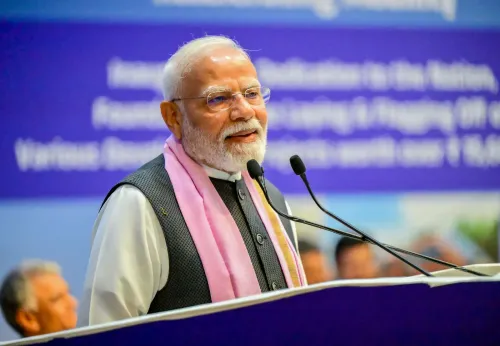
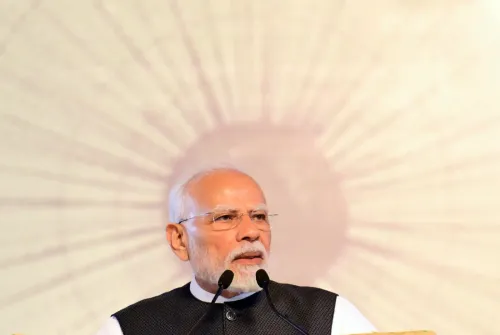
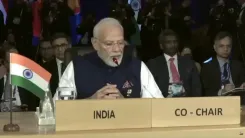
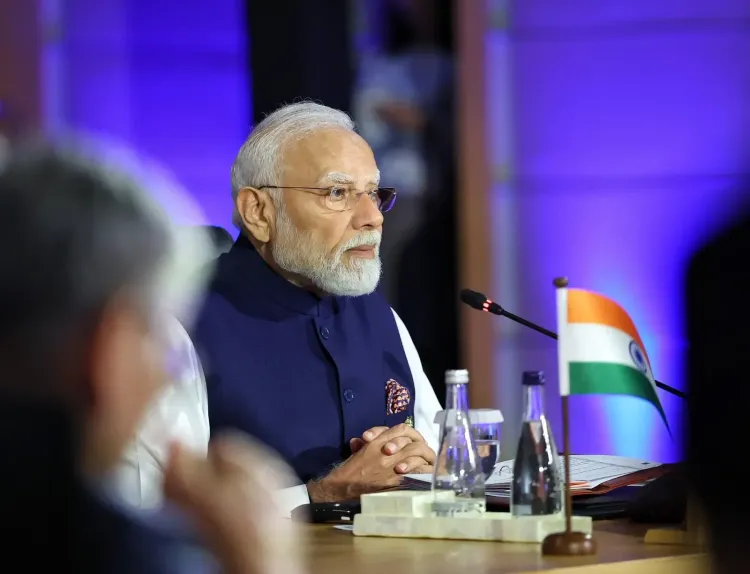
Prime Minister Narendra Modi on Tuesday, 17 November 2026, addressed the 23rd ASEAN-India Summit in Manila, calling for a free, open, inclusive and rules-based Indo-Pacific and urging that the region's future must rest on 'cooperation and not competition.' Modi reaffirmed India's unwavering commitment to ASEAN's unity and centrality while tabling a wide-ranging package of proposals to deepen the India-ASEAN Comprehensive Strategic Partnership.
Core Message: Rules, Stability, and Shared Values
At the heart of Modi's address was a pointed call for peace, stability and predictability in the Indo-Pacific — remarks widely seen as a signal to regional powers at a time of heightened maritime tensions. The Prime Minister argued that shared values, a common global outlook and deep cultural ties have given the India-ASEAN partnership a renewed strategic dimension. He also credited India's ACT EAST policy with injecting fresh momentum into the bilateral relationship over the past decade.
Notably, Modi drew a direct link between 'ASEAN Community Vision 2045' and India's own developmental roadmap, 'VIKSIT BHARAT 2047', saying the two frameworks together can meet the shared aspirations of over two billion people across the region.
Key Proposals Tabled by India
Modi placed a detailed set of initiatives before ASEAN leaders, spanning maritime security, technology, energy, and people-to-people ties. The centrepiece is a long-term ASEAN-India Maritime Cooperation Plan covering enhanced connectivity, scientific research, disaster management, Coast Guard cooperation, maritime domain awareness and seafarers' security.
On the technology front, India proposed a joint cyber forensics training programme for regional capacity building, an ASEAN-India Space Hackathon, and ASEAN-India Nuclear Energy Technical Exchanges. Cooperation in mining and critical minerals — an area of intensifying global competition — also featured prominently.
To ease travel and boost tourism, Modi proposed a free e-visa for tourists from all ASEAN member states visiting India. On people-to-people connectivity, the proposals included an ASEAN-India Youth Connect initiative through Youth Summits and Young Parliamentarian Exchanges, expanded scholarships at Nalanda University, Start-up Hackathons, and an ASEAN-India Creative Partnership Pavilion at 'WAVES 2027'.
2027: A Milestone Year for the Partnership
Modi underlined that 2027 will carry special significance as India and ASEAN mark 35 years of dialogue relations and 5 years of the Comprehensive Strategic Partnership. The convergence of both anniversaries is expected to anchor a fresh round of institutional and economic deliverables ahead of that milestone.
Diplomatic Courtesies and Incoming Chair
Modi thanked Philippine President Ferdinand Marcos Jr. for hosting the summit and praised the Philippines' chairship under the theme 'Navigating Our Future, Together.' He also conveyed good wishes to Singapore's Prime Minister as the incoming ASEAN Chair, signalling continuity in India's engagement with the bloc's rotating leadership.
As the region navigates a more contested geopolitical environment, the breadth of India's proposal package suggests New Delhi is intent on positioning itself as a constructive, capacity-building partner — not merely a counterweight — in Southeast Asia's evolving strategic architecture.
Point of View
Not just diplomacy. The sheer breadth of proposals — from critical minerals to nuclear energy exchanges to a free e-visa — reflects India's calculated push to deepen structural ties with ASEAN before the 2027 anniversary becomes a report card. The Indo-Pacific framing, with its implicit nod to China's assertiveness in the South China Sea, is carefully couched in inclusive language ('free, open, rules-based') that lets ASEAN states align without choosing sides explicitly. The question is delivery: India has announced ACT EAST milestones before without commensurate follow-through on connectivity and trade. Whether this package translates into binding institutional commitments or remains a summit communiqué list will define India's credibility as a regional anchor.
NationPress
17 Nov 2026
Frequently Asked Questions
What did PM Modi say at the 23rd ASEAN Summit in Manila?
PM Modi called for a free, open, inclusive and rules-based Indo-Pacific and said the region's future depends on 'cooperation and not competition.' He also tabled a wide-ranging package of proposals covering maritime security, cyber forensics, space, nuclear energy, critical minerals, tourism, and youth exchanges to deepen the India-ASEAN Comprehensive Strategic Partnership.
What is the ASEAN-India Maritime Cooperation Plan proposed by India?
It is a long-term plan proposed by PM Modi aimed at enhancing connectivity, scientific research, disaster management, Coast Guard cooperation, maritime domain awareness, and seafarers' security among India and ASEAN member states. The plan was one of several proposals tabled at the Manila summit on 17 November 2026.
Why is 2027 significant for India-ASEAN relations?
The year 2027 marks both 35 years of India-ASEAN dialogue relations and 5 years of the Comprehensive Strategic Partnership, making it a milestone year for the partnership. PM Modi indicated this convergence will anchor a fresh set of institutional and economic deliverables.
What is India's ACT EAST policy and how does it relate to ASEAN?
India's ACT EAST policy is a strategic framework that prioritises engagement with Southeast Asia and the broader Indo-Pacific region, replacing the earlier 'Look East' policy. PM Modi credited it with giving new momentum to India-ASEAN ties and signalled it remains the backbone of India's regional diplomatic outreach.
Who will chair ASEAN after the Philippines?
Singapore will take over as the incoming Chair of ASEAN, as confirmed when PM Modi conveyed his good wishes to Singapore's Prime Minister during the Manila summit. The Philippines held the chairship in 2026 under the theme 'Navigating Our Future, Together.'