PM Modi at Vijayadashami: Ramlila marks end of tyranny and terror
Synopsis
PM Modi used the Vijayadashami stage at Patparganj to blend spiritual symbolism with political messaging — calling Ramlila 'the life force of India,' flagging the return of 650 ancient artefacts, invoking Ramrajya as a template for Viksit Bharat, and urging citizens to confront those he described as 'enemies of India' who seek to divide society.
Key Takeaways
PM Modi attended Vijayadashami celebrations at DDA Utsav Ground, Patparganj on 20 October 2026 , organised by the Shri Ramlila Committee Indraprastha .
He described Ramlila as 'a proclamation of the end of tyranny and terror' and 'the life force of India.' Modi cited the repatriation of more than 650 ancient artefacts and idols over the past 12 years as evidence of cultural reclamation.
He referenced UNESCO 's recognition of Diwali as part of the Intangible Cultural Heritage of Humanity .
The Prime Minister invoked Ramrajya and the goals of Viksit Bharat and Atmanirbhar Bharat , calling for self-reliance and national unity.
He urged citizens to identify and confront those who seek to divide society, calling them 'enemies of India.'
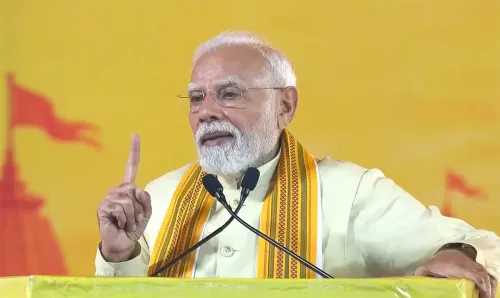
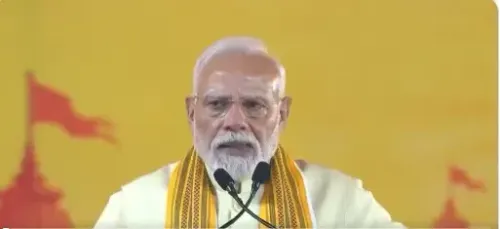
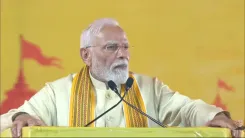
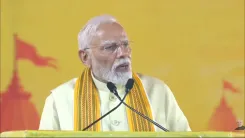
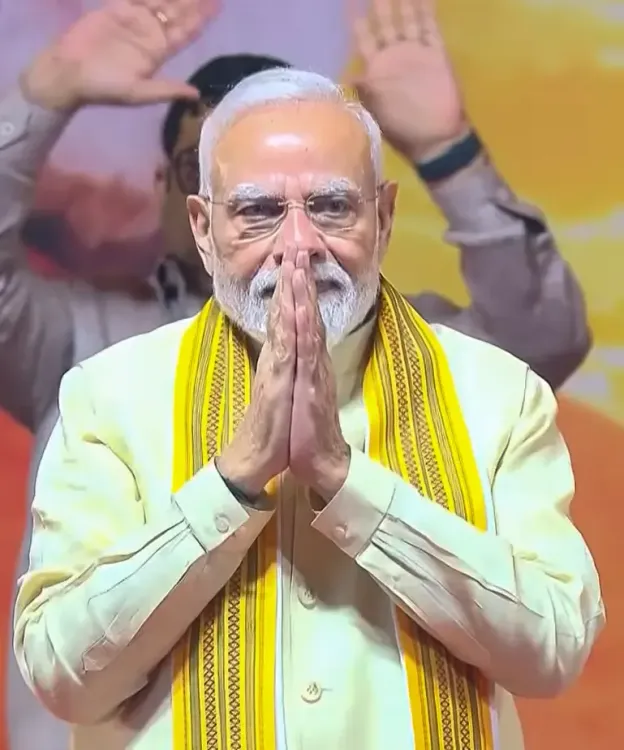
Prime Minister Narendra Modi on Tuesday, 20 October 2026, attended the Vijayadashami celebrations organised by the Shri Ramlila Committee Indraprastha at the DDA Utsav Ground in IP Extension, Patparganj, New Delhi, participating in the traditional Ravana dahan and delivering a wide-ranging address on India's civilisational values, national unity and the moral message of Ramlila.
PM Modi's Address: Culture as the Life Force of India
Opening his remarks with salutations to Lord Shri Ram, Mother Janaki and Bajrangbali, Prime Minister Modi extended Vijayadashami greetings to the nation. He described the pan-India staging of Ramlilas as a living tradition that keeps the ideals of Lord Ram vibrantly alive. 'Today, every corner of India is imbued with the spirit of Lord Ram — in every village and every city. The entire nation is immersed in the spirit of the Ramlila,' he said.
Modi characterised Ramlila not merely as a festival but as 'a proclamation of the end of tyranny and terror, and a testament to the belief in the triumph of eternal truth over falsehood.' He added, 'For us, this is not merely a festival. It is the life force of India,' underscoring its centrality to the country's civilisational identity.
Cultural Reclamation and UNESCO Recognition
The Prime Minister highlighted concrete steps taken to reclaim India's cultural heritage, noting that more than 650 ancient artefacts and idols have been repatriated to India over the past 12 years. He also pointed to recent UNESCO recognitions, including the inscription of Diwali as part of the Intangible Cultural Heritage of Humanity, as affirmations of India's global cultural standing. He linked these achievements to the idea that a nation advances only when it possesses self-respect rooted in its own heritage.
Call for Unity and Vigilance
In a pointed political passage, Modi called for unity of thought and purpose among institutions and political parties in the national interest. He urged citizens to identify and confront those who, in his characterisation, seek to harm the nation's honour, divide society, or harbour hatred for its culture — describing such actors as 'enemies of India.'
This comes amid a period of heightened political polarisation ahead of several state assembly cycles, giving the remarks a resonance beyond the ceremonial occasion. Notably, the Vijayadashami platform has historically been used by leaders across the political spectrum to articulate broad national themes.
Ramrajya, Viksit Bharat and Atmanirbhar Bharat
Drawing from the ideal of Ramrajya, the Prime Minister spoke of a system free from discrimination, where justice prevails, equal opportunities are ensured and the welfare of the poor and marginalised remains the highest priority. He stressed self-reliance, hard work and faith in one's own potential as the path toward Viksit Bharat and Atmanirbhar Bharat, effectively tying a classical moral framework to the government's contemporary policy vocabulary.
The Ravana Dahan and Crowd Response
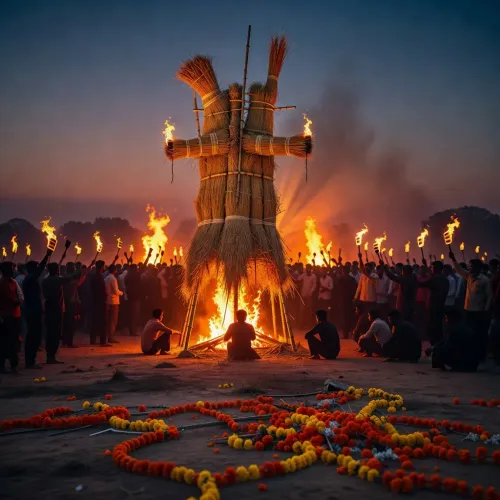
The event drew large crowds to the DDA Utsav Ground. The Prime Minister symbolically participated in the burning of the Ravana effigy, marking the traditional victory of dharma over adharma. The Shri Ramlila Committee Indraprastha is among Delhi's prominent organisers of the annual event, which draws audiences from across the capital.
The address reinforced a familiar Modi theme — framing cultural continuity as both a spiritual inheritance and a strategic national asset — and signals that the government intends to keep heritage politics at the centre of its public messaging going forward.
Point of View
However, sits uneasily alongside the call for political unity — critics will argue the two impulses are in tension. Whether the Ramrajya ideal of justice and equal opportunity for the marginalised translates into measurable policy outcomes, or remains rhetorical scaffolding, is the harder question mainstream coverage tends to skip.
NationPress
20 Oct 2026
Frequently Asked Questions
Where did PM Modi attend Vijayadashami 2026 celebrations?
PM Modi attended the Vijayadashami celebrations organised by the Shri Ramlila Committee Indraprastha at the DDA Utsav Ground in IP Extension, Patparganj, New Delhi, on 20 October 2026. He participated in the traditional Ravana dahan and delivered a public address at the event.
What did PM Modi say about Ramlila at the Vijayadashami event?
Modi called Ramlila 'a proclamation of the end of tyranny and terror' and described it as 'the life force of India.' He said the festival embodies the victory of eternal truth over falsehood and the triumph of good over evil, linking it to India's civilisational values.
How many artefacts has India repatriated in the past 12 years, according to PM Modi?
According to PM Modi's address, more than 650 ancient artefacts and idols have been brought back to India over the past 12 years. He cited this as an example of ongoing efforts to reclaim the country's cultural heritage.
What is the significance of UNESCO recognising Diwali, as mentioned by PM Modi?
PM Modi referenced UNESCO's recognition of Diwali as part of the Intangible Cultural Heritage of Humanity as an international affirmation of India's cultural standing. He used it to argue that self-respect rooted in heritage is a prerequisite for national progress.
What did PM Modi mean by invoking Ramrajya at the Vijayadashami event?
PM Modi used the concept of Ramrajya — a classical Indian ideal of a just, discrimination-free state — to describe the government's aspirational governance model. He linked it to the goals of Viksit Bharat and Atmanirbhar Bharat, emphasising welfare of the poor, equal opportunities and self-reliance as core priorities.