Mann Ki Baat: Modi Spotlights Tripura's Women-Led Bamboo Cottage Industry
Synopsis
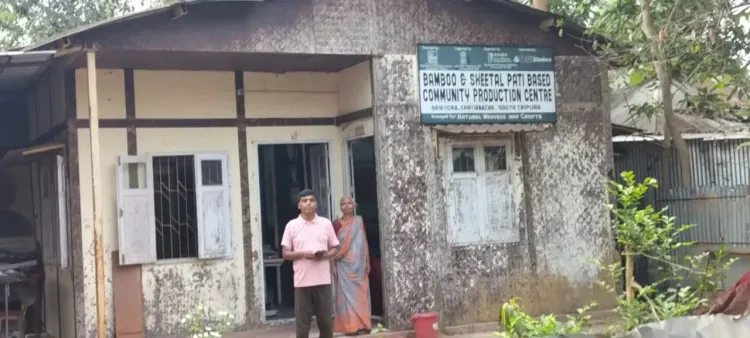
PM Modi named a 16-year-old bamboo cottage industry in South Tripura's East Charakbai village on Mann Ki Baat, spotlighting entrepreneur Pradeep Chakraborty whose unit employs 12 women exclusively. Built with a Rs 9 lakh loan and Tripura Bamboo Mission support, this micro-enterprise is now a national symbol of rural women's economic empowerment.
Key Takeaways
PM Narendra Modi named Pradeep Chakraborty's bamboo cottage industry in East Charakbai village, South Tripura on Mann Ki Baat in April 2025 .
The community production centre , established in 2008 , spans 1,500 square feet and has operated for over 16 years .
The unit employs 12 women workers exclusively , making it a grassroots model for women's economic empowerment in rural India.
Tripura Bamboo Mission provided machinery and technical support while Punjab National Bank extended a loan of Rs 9 lakh to fund the enterprise.
The recognition aligns with India's Vocal for Local and Atmanirbhar Bharat frameworks promoting micro and cottage industries in non-metro regions.
Tripura's bamboo-rich geography positions it as a potential model for bamboo-economy development across Mizoram, Assam, and Manipur .
Agartala, April 26: Prime Minister Narendra Modi shone a national spotlight on a grassroots bamboo-based cottage industry in South Tripura during his April 2025 edition of the monthly radio programme Mann Ki Baat, naming local entrepreneur Pradeep Chakraborty and his women-run production unit as a model of rural enterprise. The recognition has energised small-scale entrepreneurs across India's northeastern region and reignited conversations about the transformative power of government-backed rural livelihood missions.
The Cottage Industry That Caught the PM's Attention
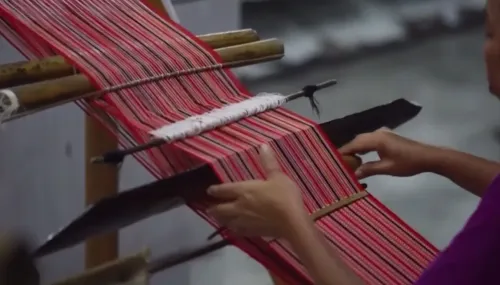
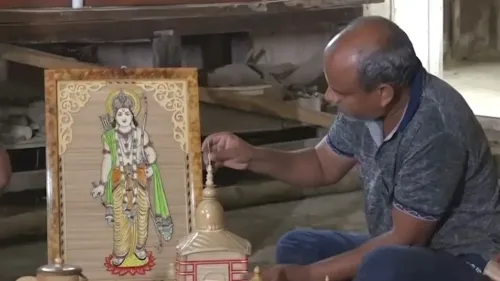
Pradeep Chakraborty operates a community production centre in East Charakbai village, located under the Shantir Bazar subdivision of South Tripura district. Established in 2008 at Nath Para, the facility spans approximately 1,500 square feet and has quietly sustained local livelihoods for over 16 years.
The unit currently employs 12 workers, all of whom are women, making it a tangible example of women's economic empowerment in rural India. Notably, even on a public holiday, one of the women workers continued production, a detail that underscores both the dedication of the workforce and the consistent market demand for the unit's bamboo-based products.
Chakraborty Reacts: A Moment of Immense Pride
Speaking to reporters after the broadcast, Chakraborty said, I would like to thank the Prime Minister for mentioning my small industry in his Mann Ki Baat. I am very grateful to him. The Tripura Bamboo Mission has also helped a lot. They provided machinery, and with their support, I took a loan of Rs 9 lakh.
He further added, Being mentioned in Mann Ki Baat by Prime Minister Narendra Modi is a moment of immense pride for me. I never imagined that a small cottage industry from our village in South Tripura would receive such national recognition. It feels like not just my achievement, but the recognition of every small entrepreneur working quietly in rural India.
Chakraborty also expressed gratitude to Punjab National Bank, which extended financial assistance that helped strengthen the unit's infrastructure and expand its production capacity.
Role of the Tripura Bamboo Mission
The Tripura Bamboo Mission has been central to the enterprise's growth. The state-run initiative, designed to promote bamboo-based industries and create rural employment, provided Chakraborty's unit with essential machinery and technical support, enabling it to scale operations well beyond what was initially possible with limited private capital.
Tripura is one of India's most bamboo-rich states, and successive governments have attempted to convert this natural abundance into an economic asset. The Tripura Bamboo Mission is aligned with the National Bamboo Mission, a centrally sponsored scheme that has disbursed funds across multiple northeastern and central Indian states to build bamboo value chains from cultivation to finished products.
Why This Recognition Matters Beyond One Village
The mention in Mann Ki Baat is more than symbolic. Historically, enterprises highlighted by PM Modi on the programme have seen a measurable uptick in orders, media coverage, and government facilitation. This pattern reflects the programme's unique reach, with an estimated listenership of over 100 million across India.
For South Tripura, a district that borders Bangladesh and has long grappled with limited industrial investment and outmigration of youth, the national attention on a home-grown, women-staffed enterprise could attract further investment, NGO partnerships, and government scheme linkages. It also reinforces the argument that bamboo-based micro-industries can serve as a viable alternative livelihood model in forest-fringe and tribal communities across the Northeast.
Broader Implications for Rural Enterprise in Northeast India
This development comes amid the Indian government's renewed push under its Vocal for Local and Atmanirbhar Bharat frameworks to elevate micro, small, and cottage industries as engines of employment in non-metro India. Tripura, with its dense bamboo forests and a significant tribal population engaged in traditional crafts, is increasingly being positioned as a model state for bamboo-economy development.
The story of Pradeep Chakraborty's unit, built on a Rs 9 lakh loan, powered by 12 women workers, and now nationally recognised, is likely to be cited in future policy discussions around scaling similar models to other districts in Tripura, Mizoram, Assam, and Manipur.
As Mann Ki Baat continues its monthly broadcast cycle, all eyes will be on whether the Tripura government follows up with enhanced support for Chakraborty's unit and similar enterprises, converting a moment of media recognition into sustained, ground-level policy action.
Point of View
Or will Chakraborty's story remain an isolated anecdote? The deeper irony is that Tripura's bamboo wealth, one of the richest in Asia, has historically been underleveraged due to poor value-chain infrastructure, and one cottage unit's success cannot mask that systemic gap.
NationPress
20 Sept 2026
Frequently Asked Questions
What did PM Modi say about Tripura in Mann Ki Baat April 2025?
PM Modi highlighted the bamboo-based cottage industry of entrepreneur Pradeep Chakraborty from East Charakbai village in South Tripura during his April 2025 Mann Ki Baat broadcast. He praised the enterprise as an example of grassroots rural entrepreneurship and women-led livelihoods in northeastern India.
Who is Pradeep Chakraborty from Tripura?
Pradeep Chakraborty is a rural entrepreneur from East Charakbai village under Shantir Bazar subdivision in South Tripura who runs a community production centre established in 2008. His unit, supported by the Tripura Bamboo Mission and a Rs 9 lakh Punjab National Bank loan, employs 12 women workers.
What is the Tripura Bamboo Mission and how did it help?
The Tripura Bamboo Mission is a state-run initiative to promote bamboo-based industries and rural employment in Tripura. It provided Chakraborty's unit with essential machinery and technical support, enabling the cottage industry to scale its production operations.
How many women are employed at Pradeep Chakraborty's cottage industry?
Pradeep Chakraborty's community production centre in South Tripura employs 12 workers, all of whom are women. The unit is cited as a model for women's economic empowerment and financial independence in rural northeastern India.
Why is Mann Ki Baat recognition important for small businesses in India?
A mention in PM Modi's Mann Ki Baat, which reaches an estimated 100 million listeners, historically leads to increased orders, media visibility, and government facilitation for the highlighted enterprise. For rural cottage industries, this recognition can unlock new market linkages, NGO partnerships, and expanded government scheme support.