Modi visits Afsluitdijk Dam, India-Netherlands ties elevated to Strategic Partnership
Synopsis
Modi's stop at the Afsluitdijk wasn't just a photo opportunity — it was a policy signal. By directly linking the 1932 Dutch dam to India's long-stalled Kalpasar Project in Gujarat, the visit frames water technology as the centrepiece of a newly minted India-Netherlands Strategic Partnership, one that also spans semiconductors, critical minerals, and the return of 11th-century Chola artefacts.
Key Takeaways
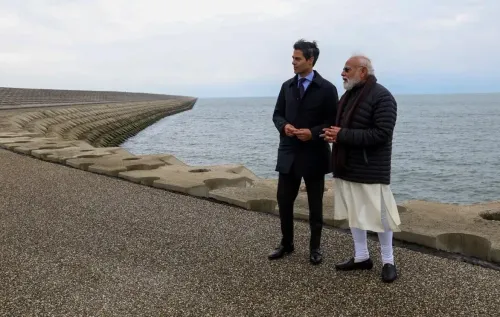
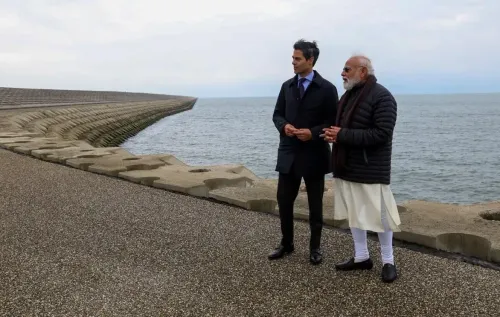
PM Narendra Modi visited the Afsluitdijk Dam in the Netherlands on 17 May alongside Dutch PM Rob Jetten .
Modi linked the visit to India's Kalpasar Project in Gujarat , a proposed dam and freshwater reservoir near the Gulf of Khambhat .
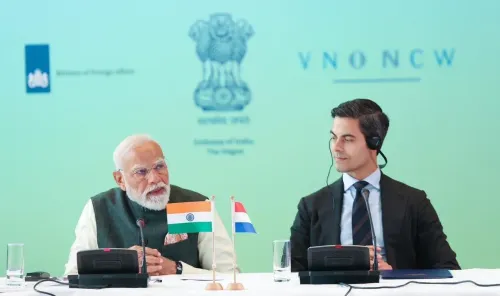
India and the Netherlands formally elevated bilateral ties to a Strategic Partnership after talks at Catshuis , The Hague, on 16 May .
A Roadmap for Strategic Partnership was adopted covering trade, defence, AI , semiconductors, renewable energy, and water.
The Netherlands facilitated the return of the 11th-century Chola plates ; Leiden University Library and the Archaeological Survey of India will collaborate on the artefacts.
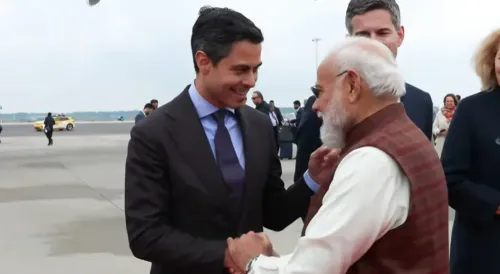
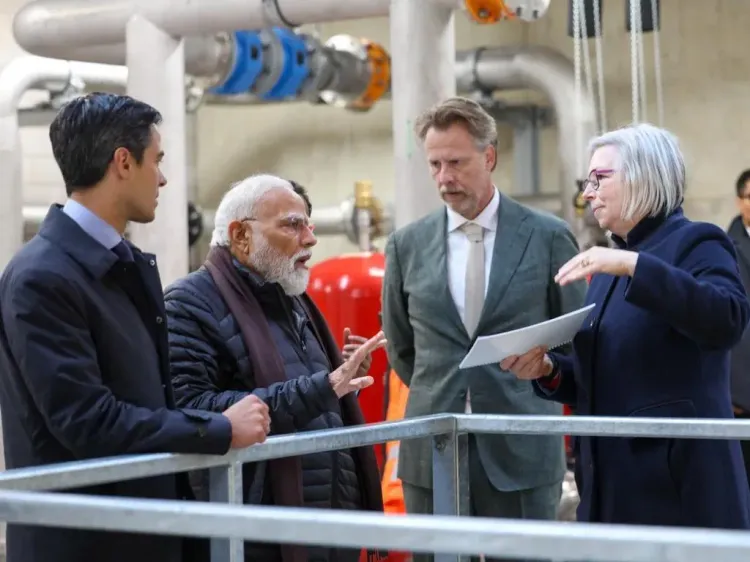
Prime Minister Narendra Modi on Sunday, 17 May visited the iconic Afsluitdijk Dam in the Netherlands alongside his Dutch counterpart Prime Minister Rob Jetten, drawing direct parallels between Dutch water management expertise and India's own infrastructure ambitions. The visit came a day after the two leaders formally elevated bilateral ties to a Strategic Partnership.
Modi's Takeaway from the Dam Visit
In a post on X, Prime Minister Modi called water resources an area where 'the Netherlands has done pioneering work,' adding that 'there is a lot the entire global community can learn from them.' He expressed gratitude to PM Rob Jetten for accompanying him and noted that India is actively working to bring modern technology to bear on irrigation, flood control, and the expansion of its inland waterway network.
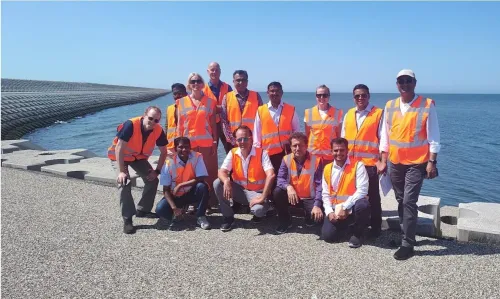
The Afsluitdijk — a 32-kilometre barrier dam separating the IJsselmeer from the Wadden Sea — is widely regarded as one of the 20th century's most ambitious feats of hydraulic engineering, completed in 1932. Its combination of flood protection, freshwater storage, and transport infrastructure makes it a natural reference point for large-scale water projects globally.
Relevance for India's Kalpasar Project
Ministry of External Affairs (MEA) spokesperson Randhir Jaiswal underscored the direct policy implication of the visit, noting in his own X post that it 'highlighted the relevance of Dutch expertise for India's Kalpasar Project in Gujarat.' The Kalpasar Project — a proposed dam and freshwater reservoir near the Gulf of Khambhat — has been in planning for decades and, if executed, would rank among the largest water infrastructure projects in South Asia. Jaiswal added that the visit 'underscored opportunities for deeper Indo-Dutch collaboration in climate resilience, water technology and sustainable infrastructure.'
Strategic Partnership: What Was Agreed
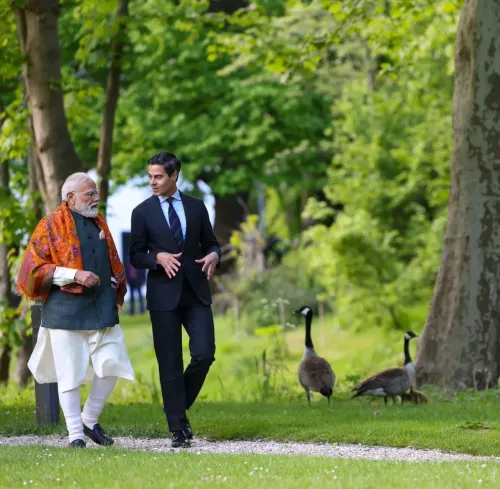
On Saturday, 16 May, Modi and Jetten held wide-ranging talks at the Dutch Prime Minister's official residence, Catshuis, in The Hague. The two leaders decided to elevate the bilateral relationship to a Strategic Partnership and adopted an ambitious Roadmap for Strategic Partnership covering trade and investment, defence and security, emerging and critical technologies, the maritime sector, renewable energy, and education, according to the MEA.
The leaders also agreed to intensify the Strategic Partnership on Water through collaboration on large-scale projects, and flagged cooperation in critical minerals as a means of supporting resilient supply chains. Collaboration in artificial intelligence and semiconductors was also on the agenda.
Cultural Dimension: Chola Plates Return
Beyond strategic and economic discussions, Prime Minister Modi thanked the Netherlands government for facilitating the return of the 11th-century Chola plates — a gesture that underlines the cultural dimension of the bilateral relationship. The two leaders also welcomed collaboration between Leiden University Library and the Archaeological Survey of India to advance scholarly understanding of the historic artefacts.
What Comes Next
With the Strategic Partnership now formalised, implementation of the roadmap across water, agriculture, health, digital infrastructure, and defence will be closely watched. Dutch companies are expected to find new openings in India's growth story, while India's large-scale infrastructure pipeline — from Kalpasar to inland waterways — stands to benefit from Dutch technical depth. The depth of follow-through on these commitments will determine whether this upgrade translates into tangible outcomes.
Point of View
Yet the real test lies in whether water collaboration moves from roadmaps to contracts. The addition of semiconductors and critical minerals to the agenda also reflects a broader hedging strategy as India diversifies its technology partnerships beyond the US and Japan.
NationPress
30 Sept 2026
Frequently Asked Questions
Why did PM Modi visit the Afsluitdijk Dam in the Netherlands?
PM Modi visited the Afsluitdijk Dam on 17 May to study Dutch water management techniques, with the MEA explicitly linking the visit to India's Kalpasar Project in Gujarat. The dam is a landmark example of flood protection, freshwater storage, and hydraulic engineering that India is looking to reference for its own large-scale water infrastructure.
What is India's Kalpasar Project and how does the Netherlands fit in?
The Kalpasar Project is a proposed dam and freshwater reservoir near the Gulf of Khambhat in Gujarat, one of India's largest planned water infrastructure schemes. The MEA stated that Dutch expertise from projects like the Afsluitdijk is directly relevant to Kalpasar's design and execution, and deeper Indo-Dutch collaboration in water technology is now part of the newly signed Strategic Partnership roadmap.
What is the India-Netherlands Strategic Partnership announced in May 2025?
The Strategic Partnership is a formal elevation of bilateral ties agreed upon by PM Modi and PM Rob Jetten during talks at Catshuis, The Hague, on 16 May. It is backed by a Roadmap covering trade and investment, defence and security, water, agriculture, health, AI, semiconductors, critical minerals, renewable energy, and education.
What are the Chola plates that the Netherlands returned to India?
The Chola plates are 11th-century historical artefacts that the Netherlands facilitated the return of to India. PM Modi thanked the Dutch government for the gesture during his visit. Leiden University Library and the Archaeological Survey of India will collaborate to advance scholarly research on the plates.
What sectors does the India-Netherlands Strategic Partnership cover?
The partnership roadmap spans trade and investment, defence and security, water and agriculture, healthcare research, digital health, food safety, AI, semiconductors, critical minerals, renewable energy, maritime cooperation, and education. Both sides also flagged that India's growth trajectory presents significant business opportunities for Dutch companies.