Kalpasar Project: India-Netherlands sign water pact after Modi's Afsluitdijk visit
Synopsis
India and the Netherlands have signed a Letter of Intent on the Kalpasar Project — Gujarat's ambitious plan to dam the Gulf of Khambhat and create a massive freshwater reservoir. The deal, sealed during PM Modi's visit to the iconic Afsluitdijk, brings over 90 years of Dutch hydraulic engineering expertise to one of India's most consequential water infrastructure projects.
Key Takeaways
India and the Netherlands signed a Letter of Intent (LoI) on technical cooperation for Gujarat's Kalpasar Project on 17 May 2025 .
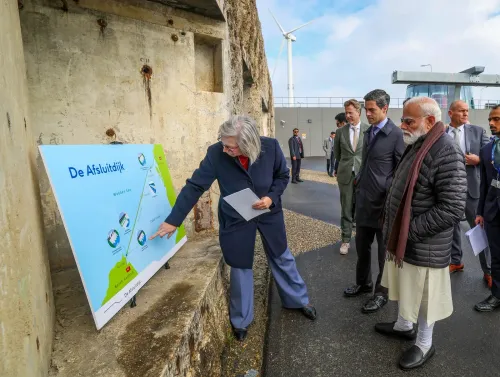
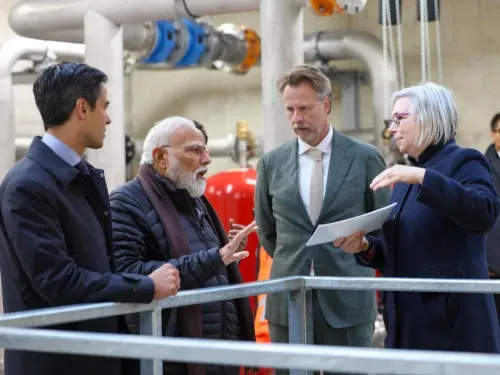
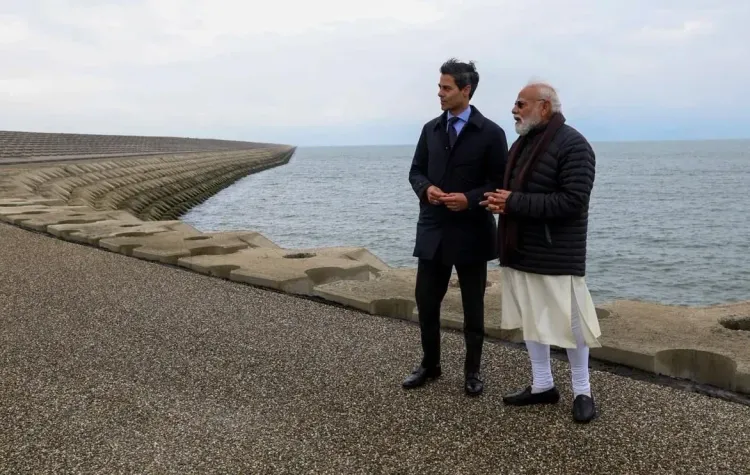
The agreement was reached during PM Narendra Modi 's visit to the Netherlands, where he reviewed the Afsluitdijk Dam with Dutch PM Rob Jetten .
The Kalpasar Project proposes a dam and freshwater reservoir across the Gulf of Khambhat , targeting irrigation, water security, tidal energy, and regional connectivity.
The Netherlands will contribute over 90 years of hydraulic engineering expertise from managing the 32-km Afsluitdijk .
An Indo-Dutch expert group is being planned; groundwork began with Netherlands Ambassador Marisa Gerards 's visit to Gujarat on 30 March 2025 .
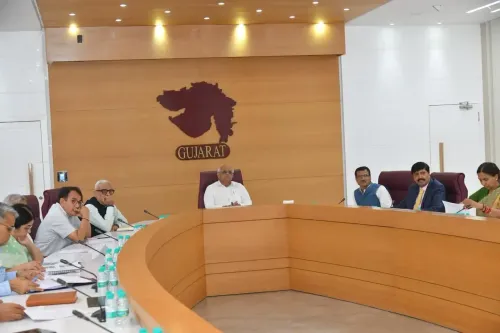
Gujarat Chief Minister Bhupendra Patel on Sunday, 17 May welcomed a technical cooperation agreement between India and the Netherlands on the Kalpasar Project, calling it a landmark step in advancing water security and climate-resilient infrastructure for Gujarat. The development follows Prime Minister Narendra Modi's visit to the Netherlands, during which he reviewed the iconic Afsluitdijk Dam alongside Dutch Prime Minister Rob Jetten.
The Agreement
India's Ministry of Jal Shakti and the Netherlands' Ministry of Infrastructure and Water Management exchanged a Letter of Intent (LoI) for technical cooperation on the Kalpasar Project during the bilateral visit. The LoI is designed to channel over 90 years of Dutch expertise in operating and maintaining the Afsluitdijk into the planning and execution of Gujarat's flagship water infrastructure initiative.
Chief Minister Patel described the agreement as opening 'new possibilities for advanced hydraulic engineering, freshwater conservation, flood management and integrated infrastructure development in Gujarat.'
What the Kalpasar Project Envisions
The Kalpasar Project proposes the construction of a large dam and freshwater reservoir across the Gulf of Khambhat, with far-reaching objectives: irrigation support, water security, tidal energy generation, and improved transport connectivity linking Saurashtra with South Gujarat. Officials described it as a long-term transformative initiative for regional growth.
The project draws conceptual parallels with the Afsluitdijk, the 32-km-long Dutch dam that converted a saline gulf into a massive freshwater reservoir — regarded globally as a benchmark in hydraulic engineering and long-range water planning.
The Dutch Model and Its Relevance
Government sources indicated that the Netherlands will extend technical expertise covering hydraulic engineering systems, flood control mechanisms, and innovative energy applications tied to large-scale water infrastructure. The Dutch model is considered particularly relevant given the structural and environmental similarities between the Afsluitdijk's original challenge and the conditions of the Gulf of Khambhat.
Notably, discussions on this collaboration had begun earlier this year. On 30 March, Netherlands Ambassador Marisa Gerards visited Gujarat and met Chief Minister Patel, with talks covering the Kalpasar scheme and the proposed formation of an Indo-Dutch expert group to strengthen government-to-government cooperation.
Political and Diplomatic Context
In a post on social media platform X, Chief Minister Patel said: 'PM Modi's visit to the iconic Afsluitdijk along with Dutch Prime Minister Rob Jetten marked an important step towards deepening India-Netherlands cooperation in water management, climate resilience and sustainable infrastructure.'
Patel also thanked Prime Minister Modi for 'continuously bringing global expertise, futuristic technologies and transformative partnerships to accelerate Bharat's development journey.' The agreement signals a broader diplomatic effort to leverage European water management experience as India grapples with growing freshwater stress and climate-linked flood risks.
What Comes Next
With the LoI in place, the next step is expected to be the formalisation of the Indo-Dutch expert group and the commencement of detailed technical studies. The Kalpasar Project, long in planning stages, could see renewed momentum as international expertise and bilateral commitment converge for the first time at this scale.
Point of View
And the Letter of Intent with the Netherlands is the most concrete international commitment it has attracted yet. The Dutch parallel is apt — the Afsluitdijk took decades of political will and engineering innovation to deliver — but India's challenge is compounded by scale, institutional coordination, and the pace of climate change. The real test will be whether this bilateral momentum translates into a funded, time-bound execution plan rather than another layer of expert-group deliberations. Gujarat's water security deficit is real; the political will to act is visible; what has historically been missing is the engineering and financial roadmap to match the ambition.
NationPress
16 Sept 2026
Frequently Asked Questions
What is the Kalpasar Project?
The Kalpasar Project is Gujarat's proposed large-scale infrastructure initiative to construct a dam and freshwater reservoir across the Gulf of Khambhat. It aims to address water security, support irrigation, generate tidal energy, and improve transport connectivity between Saurashtra and South Gujarat.
What did India and the Netherlands agree on regarding the Kalpasar Project?
India's Ministry of Jal Shakti and the Netherlands' Ministry of Infrastructure and Water Management exchanged a Letter of Intent (LoI) for technical cooperation on the Kalpasar Project. The agreement was signed during PM Narendra Modi's visit to the Netherlands on 17 May 2025.
Why is the Netherlands involved in India's Kalpasar Project?
The Netherlands brings over 90 years of expertise from operating the Afsluitdijk, a 32-km dam that transformed a saline gulf into a freshwater reservoir. Its hydraulic engineering, flood control, and water management experience is considered directly applicable to the Kalpasar Project's objectives.
What is the Afsluitdijk and why is it relevant?
The Afsluitdijk is a 32-km-long Dutch dam regarded globally as a benchmark in water engineering. It converted a saline sea inlet into a large freshwater lake through long-term planning and innovation — a model Gujarat hopes to replicate at the Gulf of Khambhat.
What are the next steps after the Letter of Intent?
The immediate next steps include formalising an Indo-Dutch expert group and beginning detailed technical studies on the Kalpasar Project. Discussions on the expert group formation began as early as 30 March 2025, when the Netherlands Ambassador Marisa Gerards met Gujarat CM Bhupendra Patel.