Gujarat BJP Celebrates PM Modi's Historic 8,931-Day Tenure
Synopsis
Prime Minister Narendra Modi marks a historic achievement as he completes 8,931 days in office, outpacing previous records. This milestone showcases his enduring commitment to public service and governance, reflecting the trust of the Indian populace.
Key Takeaways
8,931 days: Modi's tenure as the longest-serving leader in India.
Public Trust: A reflection of the people's unwavering support.
Key Initiatives: Programs that transformed various sectors, including healthcare and infrastructure.
Global Recognition: Modi's influence recognized worldwide.
Welfare Focus: Initiatives aimed at uplifting the underprivileged and farmers.
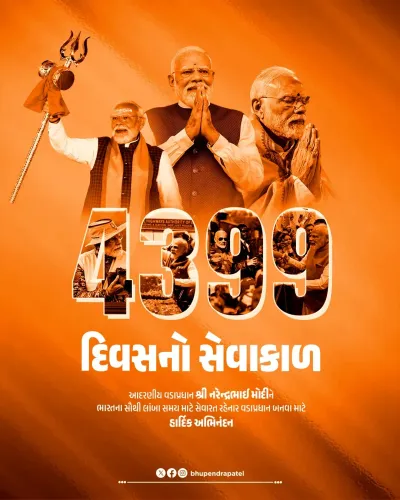
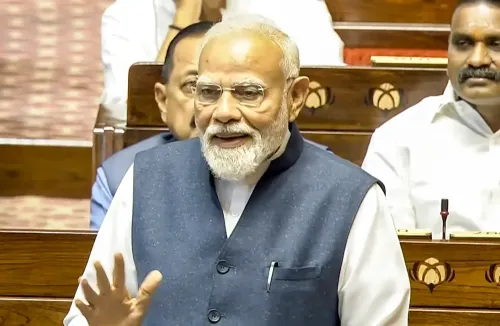
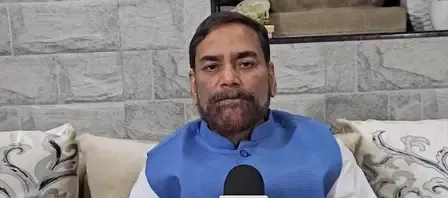
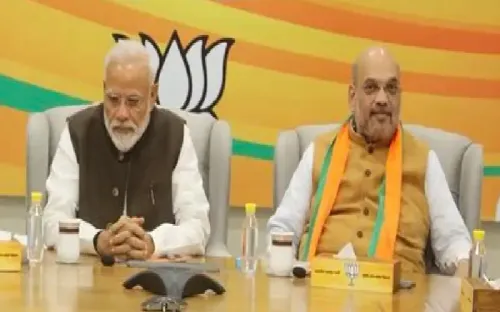
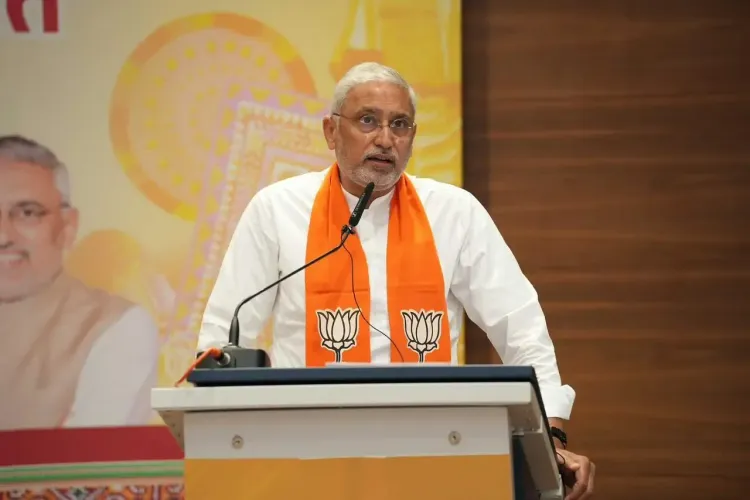
Gandhinagar, March 26 (NationPress) Prime Minister Narendra Modi has achieved a remarkable milestone by serving as the longest-standing leader of an elected government in India, totaling 8,931 days in office during his tenures as both Gujarat Chief Minister and Prime Minister, announced state BJP president Jagdish Vishwakarma on Thursday.
During a press conference held at the party’s headquarters in Gandhinagar, Vishwakarma emphasized that this achievement surpasses the previous record of 8,930 days held by former Sikkim Chief Minister Pawan Kumar Chamling.
He further noted that PM Modi has outlasted the tenure of the late Prime Minister Indira Gandhi, who served for 4,077 days, and maintains the title of Gujarat’s longest-serving chief minister.
Vishwakarma characterized this milestone as a testament to the unwavering support of the populace, stating, “This is not just a measure of time, but a reflection of the enduring trust that the people have placed in him.” He highlighted PM Modi’s public service over the last 24 years as marked by dedication and commitment.
“Modi has never viewed himself solely as a chief minister or prime minister; rather, he has dedicated himself to serving the nation,” he remarked.
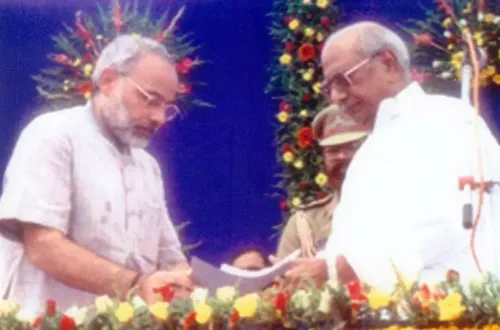
Vishwakarma recounted that when Modi took office in Gujarat in 2001, the state confronted numerous challenges, particularly the aftermath of the catastrophic earthquake in Kutch.
“The recovery and development of the region under Modi’s guidance have been commendable, despite initial skepticism about its revitalization,” he stated.
He also pointed to several policy initiatives introduced during Modi’s chief ministership, such as the Jyotigram scheme, which ensured round-the-clock electricity in rural areas, and the Vibrant Gujarat summit, aimed at attracting investors.
According to him, initiatives in healthcare, agriculture, and education have contributed to what he described as a “model of development.”
Reflecting on his time as Prime Minister since 2014, Vishwakarma highlighted programs like 'Make in India', 'Startup India', and 'Stand Up India' that have spurred investment and job creation.
Welfare initiatives such as 'Pradhan Mantri Awas Yojana', 'Ujjwala Yojana', 'Ayushman Bharat', and 'PM Kisan Samman Nidhi' have provided direct benefits to underprivileged communities and farmers, he noted.
He also emphasized the effectiveness of the Jan Dhan-Aadhaar-mobile framework in streamlining welfare delivery via Direct Benefit Transfers and highlighted the recent expansion of infrastructure in highways, airports, and Metro networks.
In the healthcare sector, he mentioned the establishment of 15 new AIIMS facilities, a significant increase compared to previous decades.
Discussing national security, Vishwakarma asserted that India has adopted a more robust stance in response to attacks, referencing surgical strikes and the Balakot airstrike following events in Uri and Pulwama.
He also acknowledged developments in cultural and religious infrastructure, including projects in Varanasi and Ujjain and the construction of the Ram temple, stating that these efforts represent a policy of harmonizing “development with heritage.”
“Modi has received accolades from over 29 nations and has addressed 19 foreign parliaments, showcasing India’s rising prominence on the global stage. During the Covid-19 pandemic, India conducted an extensive vaccination campaign and shared vaccines with various countries,” he observed.
He criticized opposition leaders for their personal attacks against PM Modi, asserting that “the public has responded with trust, votes, and support.”
“Prime Minister Narendra Modi transcends being just an individual; he embodies an idea and an institution,” Vishwakarma concluded.
Point of View
Emphasizing his accomplishments and the trust he has garnered from the populace. It reflects a national-first approach, showcasing how Modi's policies have shaped governance in India.
NationPress
26 Sept 2026
Frequently Asked Questions
How long has PM Modi served in office?
PM Modi has served for a total of 8,931 days in office, making him the longest-serving head of an elected government in India.
What were some key initiatives during Modi's tenure?
Key initiatives include 'Make in India', 'Startup India', and welfare programs like 'Pradhan Mantri Awas Yojana' and 'Ayushman Bharat'.
How has Modi's leadership impacted Gujarat?
Under Modi's leadership, Gujarat saw significant recovery and development, especially following the 2001 earthquake.
What is the significance of Modi's tenure?
His tenure reflects not only a record of time but also the trust and confidence the people have in his governance.
What are some accomplishments in healthcare during Modi's tenure?
During his tenure, 15 new AIIMS facilities were established, significantly improving healthcare infrastructure.