Modi's Europe tour yields semiconductor, defence and tech gains for India
Synopsis
Modi's European sweep was less a diplomatic tour and more a supply-chain offensive. Semiconductor access via ASML, an AI corridor with Sweden, critical minerals deals, and a Nordic summit together mark India's most structured European engagement in years — timed precisely to fill the vacuum left by US foreign policy turbulence under Trump.
Key Takeaways
PM Narendra Modi visited the Netherlands and Sweden as part of a wider European outreach covering Norway and Italy .
A key outcome of the Dutch leg was a major advance for a semiconductor fab project in Dholera, Gujarat , linked to collaboration with ASML .
India–Sweden ties were elevated to a Strategic Partnership , with the launch of Joint Innovation Partnership 2.0 and an India–Sweden Technology and AI Corridor .
Both sides set a target of doubling bilateral trade within five years .
Agreements also covered critical minerals , green hydrogen , maritime security , and water management .
The tour is framed as a response to shifting US foreign policy under President Donald Trump and Europe's effort to reduce dependence on China .
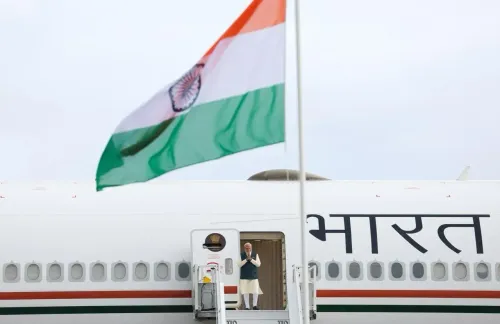
Prime Minister Narendra Modi's recent visits to the Netherlands and Sweden — part of a broader European outreach spanning Norway and Italy — have yielded concrete advances in semiconductors, defence, clean energy, and artificial intelligence, as New Delhi moves to deepen ties with key European partners amid a rapidly shifting global order. The tour comes at a moment when US foreign policy under President Donald Trump has unsettled traditional alliance structures, prompting both India and Europe to recalibrate their strategic relationships.
The Geopolitical Calculation
According to analysis published in India Narrative, the underlying logic of the tour is mutual and deliberate. Europe is seeking to reduce its economic exposure to China and manage the fallout of the Russia–Ukraine war, which has forced a fundamental rethink of energy security, supply chains, and defence arrangements. India, for its part, is working to diversify away from dependence on any single bloc, attract high-quality investment, and secure technology partnerships that can anchor its emergence as a global manufacturing and innovation hub.
Indian commentators have described the visits as 'reshaping India's strategic ties with Europe', with agreements in the Netherlands, investment discussions in Sweden, and a Nordic summit in Norway together projecting India as Europe's most trusted democratic partner in Asia. The emphasis on semiconductors, defence, clean energy, and long-term industrial collaboration signals that both sides are thinking well beyond transactional, short-term deals.
Netherlands: Semiconductors and Critical Minerals
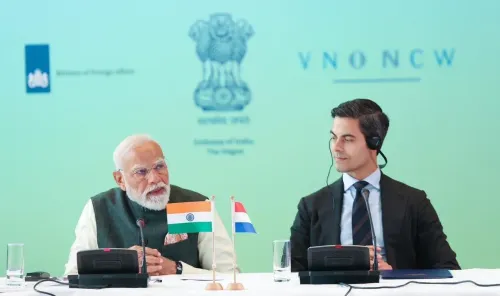
A centrepiece of the Dutch leg was the semiconductor sector. The Netherlands is home to ASML, the world's leading manufacturer of advanced lithography machines essential for producing cutting-edge chips. Indian officials regard collaboration with ASML as vital for the India Semiconductor Mission, and one of the visit's key outcomes was a significant step forward for a semiconductor fabrication project in Gujarat's Dholera — a direct link between high-level diplomacy and India's domestic manufacturing ambitions.
The strategic roadmap also covered critical minerals, seen as indispensable for clean energy technologies and advanced manufacturing. Securing these inputs — for batteries, electronics, and renewable-energy infrastructure — is increasingly a priority for New Delhi. Additional areas of cooperation include green hydrogen, maritime security, and a long-standing Strategic Partnership on Water, reflecting Dutch expertise in ports, water management, and climate-resilient infrastructure.
Sweden: Strategic Partnership and AI Corridor
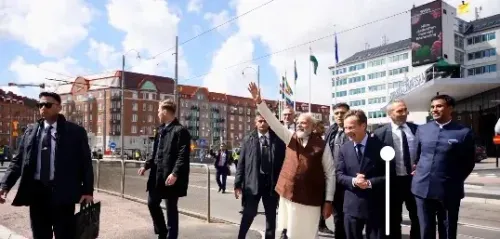
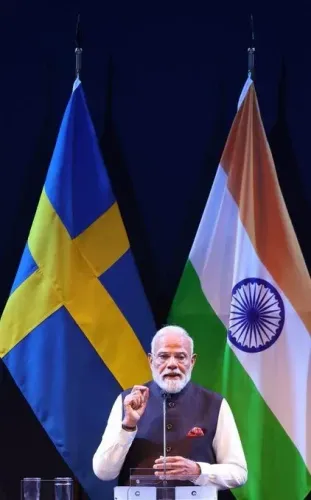
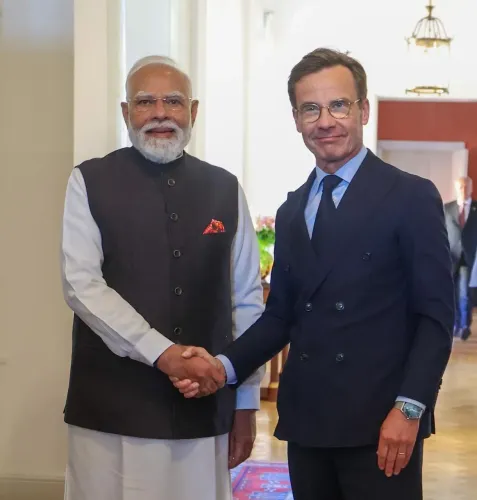
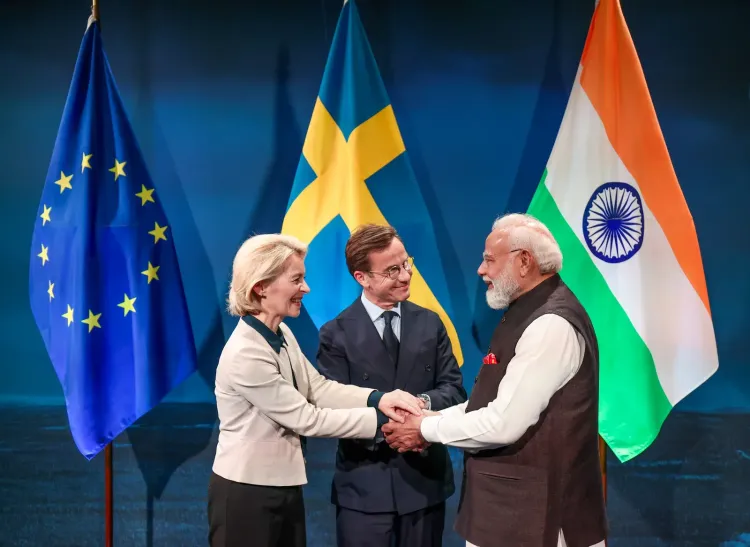
From the Netherlands, Prime Minister Modi travelled to Gothenburg, where he met Swedish Prime Minister Ulf Kristersson and European Commission President Ursula von der Leyen. The two prime ministers agreed to elevate India–Sweden ties to a full Strategic Partnership and launched a set of landmark initiatives: the Joint Innovation Partnership 2.0 and an India–Sweden Technology and Artificial Intelligence Corridor.
Both sides also set an ambitious target of doubling bilateral trade within the next five years. Indian officials characterised the visit as reflecting a deepening 'strategic convergence' across trade and investment, innovation-led growth, trusted supply chain partnerships, defence cooperation, and the green transition.
What the Tour Signals for India's Global Strategy
Taken together, the visits to the Netherlands and Sweden illustrate how India is using targeted bilateral partnerships to give concrete substance to its broader engagement with the European Union and the Nordic region. By weaving together high-tech collaboration, green transition commitments, defence ties, cultural diplomacy, and diaspora outreach, New Delhi is betting that deeper relationships with innovative, mid-sized European powers can amplify India's global influence while simultaneously supporting its domestic transformation. This is the clearest articulation yet of India's post-alignment foreign policy in action — selective, strategic, and squarely focused on economic and technological self-sufficiency.
Point of View
Not ceremonial. India is positioning itself as the democratic alternative to China in European supply chains — and Europe, burned by Russian energy dependence and wary of Beijing, is receptive. The ASML-Dholera thread is the sharpest signal: chip access is a sovereign priority, and India is willing to invest diplomatic capital to secure it. What remains to be seen is whether these frameworks translate into actual technology transfer or remain at the level of corridors and partnerships on paper. India's track record on converting high-profile bilateral agreements into factory-floor outcomes is uneven, and the EU's own export-control sensitivities around advanced semiconductors have not disappeared.
NationPress
20 Oct 2026
Frequently Asked Questions
Which countries did PM Modi visit during his recent European tour?
PM Modi visited the Netherlands and Sweden , with the broader European outreach also covering Norway and Italy . The visits focused on semiconductors, defence, clean energy, and artificial intelligence partnerships.
What was agreed during PM Modi's visit to the Netherlands?
Key outcomes included a significant step forward for a semiconductor fabrication project in Dholera, Gujarat linked to ASML , along with agreements on critical minerals, green hydrogen, maritime security, and a Strategic Partnership on Water.
What is the India–Sweden Technology and AI Corridor?
It is a new bilateral initiative launched during PM Modi's meeting with Swedish Prime Minister Ulf Kristersson in Gothenburg, aimed at deepening cooperation in technology and artificial intelligence. It forms part of the newly elevated India–Sweden Strategic Partnership.
Why is the ASML collaboration significant for India?
ASML is the world's leading maker of advanced lithography machines, which are essential for manufacturing cutting-edge semiconductors. Indian officials consider access to ASML technology critical for the India Semiconductor Mission and the country's broader chip manufacturing ambitions.
How does this tour fit into India's broader foreign policy?
The visits reflect India's strategy of diversifying away from dependence on any single global bloc, particularly as US foreign policy shifts under President Donald Trump . By building targeted partnerships with innovative European nations, India aims to secure technology, investment, and supply-chain resilience while positioning itself as Europe's preferred democratic partner in Asia.