Did Congress Surrender to the Muslim League by Fracturing Vande Mataram?
Synopsis
In a powerful address marking 150 years of Vande Mataram, Prime Minister Modi accused Congress of compromising the national anthem under Muslim League pressure. His remarks urge reflection on the true legacy of this patriotic song, emphasizing the need for unity and remembrance among future generations. Discover the historical context and implications of this significant moment.
Key Takeaways
Vande Mataram has been a symbol of Indian unity and resistance against colonial rule.
PM Modi's remarks emphasize the need to remember India's history.
The Congress party's decisions in the past continue to evoke debate.
Historical figures played crucial roles in the anthem's legacy.
Understanding the past is essential for shaping a united future.
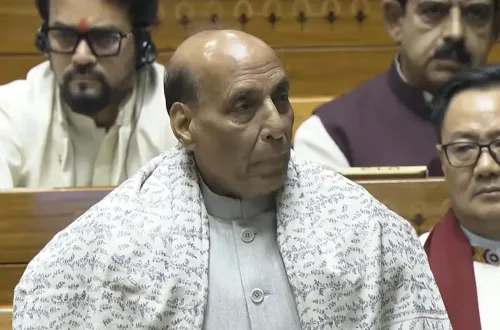
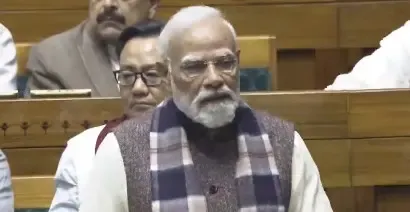
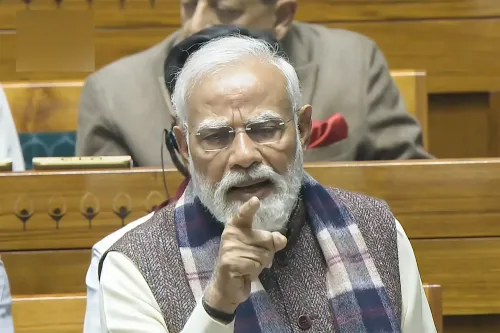
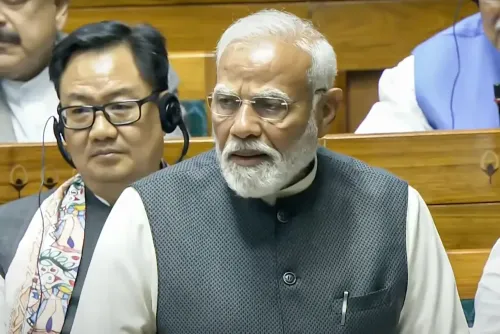
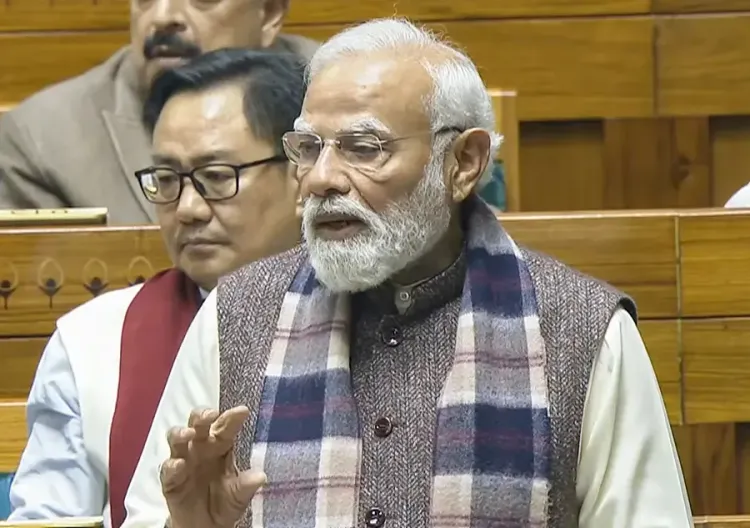
New Delhi, Dec 8 (NationPress) Prime Minister Narendra Modi, during the celebration of the 150th anniversary of Vande Mataram in the Lok Sabha, directed a strong critique at the Congress party, claiming that it once divided the national anthem under pressure from the Muslim League and 'bowed before them'.
PM Modi noted that the British had long employed a divide-and-rule strategy, with Bengal being their initial focus. 'This was a period when Bengal’s resilience inspired the entire nation. In 1905, upon the British splitting Bengal, Vande Mataram stood firm. The slogan 'Street to street' for Bengal’s unity continued to motivate,' he recounted.
Referencing Mahatma Gandhi’s writings from 1905 in 'Indian Opinion', PM Modi highlighted that Gandhi referred to Vande Mataram as 'our national anthem' and 'more harmonious than the songs of other nations'.
He questioned why such a cherished hymn was later subjected to 'injustice' and pushed aside.
'As we commemorate 150 years of Vande Mataram, we must inform younger generations of the truth—that the Congress party once fragmented this hymn, yielding to the Muslim League and its enduring policy of appeasement. This must never occur again,' PM Modi proclaimed, calling on Parliament to restore pride in the song that once unified the nation against colonial oppression.
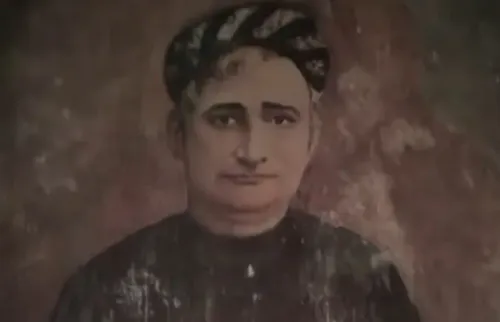
The Prime Minister emphasized how the hymn, penned by Bankim Chandra Chattopadhyay, became a challenge to colonial dominance, resonating throughout the nation despite bans and punishments for expressing Vande Mataram.
He acknowledged the bravery of women in Sindh and Barisal, including Sarojini Bose, who vowed not to wear bangles until the ban was lifted, alongside the courage of children who endured beatings for singing the song.
PM Modi honored revolutionaries such as Khudiram Bose, Madanlal Dhingra, Ashfaq Ullah Khan, Roshan Singh, and Rajendra Nath Lahiri, who accepted martyrdom while chanting Vande Mataram.
He remembered Master Surya Sen reciting the hymn before his execution in 1934, noting that the mantra of sacrifice and unity inspired movements from Chattogram to Nagpur. Tracing its international influence, PM Modi pointed out Veer Savarkar singing Vande Mataram at India House in London—the then center of the freedom struggle, Bipin Chandra Pal naming his newspaper after it, and Madam Bhikaji Cama publishing Vande Mataram abroad despite prohibitions.
He noted how the hymn became the mantra of Swadeshi, inscribed even on ships constructed by PO Chidambaram Pillai in 1907, and celebrated in the poetry of Tamil poet Subramania Bharati.
'What injustice was done to Vande Mataram?' PM Modi inquired. He recalled that after Mohammed Ali Jinnah raised concerns in 1937, Jawaharlal Nehru warned Subhas Chandra Bose that the song’s background could provoke anger among Muslims.
The Congress then held a meeting in Kolkata to reassess its usage. Despite nationwide protests, PM Modi stated, the party succumbed in October 1937, restricting the hymn to its first two stanzas under the pretext of secularism and communal harmony.
'History confirms that the Congress yielded to the Muslim League and acted under pressure. This was a politics of appeasement. Because Congress accepted the division of Vande Mataram, it ultimately accepted the division of India,' PM Modi remarked, asserting that the party continues its appeasement politics today.
Point of View
It's crucial to recognize the multifaceted nature of this discourse. While PM Modi's remarks highlight a historical grievance, the narrative of Vande Mataram encapsulates a broader struggle for national identity and unity. The challenge lies in fostering dialogue that honors our diverse heritage while encouraging a shared vision for the future.
NationPress
30 Sept 2026
Frequently Asked Questions
What did PM Modi say about Congress and Vande Mataram?
PM Modi accused Congress of compromising the national anthem Vande Mataram under pressure from the Muslim League, emphasizing the need to restore pride in the song.
Why is Vande Mataram significant?
Vande Mataram, composed by Bankim Chandra Chattopadhyay, became a rallying cry for India's freedom struggle, symbolizing unity against colonial rule.
What historical context did PM Modi provide?
PM Modi referenced the divide-and-rule policy of the British, the protests against the ban on Vande Mataram, and the sacrifices made by revolutionaries who embraced the hymn.
How did Congress respond to Jinnah's objections?
In 1937, Congress convened a meeting to reassess the use of Vande Mataram and later restricted it to its first two stanzas, citing communal harmony.
What is the contemporary relevance of Vande Mataram?
Vande Mataram continues to inspire discussions on national identity, unity, and the historical narratives surrounding India's freedom struggle.