How is PM Modi steering India's ascent as a global power?
Synopsis
Under the astute leadership of Prime Minister Modi, India is emerging as a dominant global player, leveraging its youthful population and economic momentum. This report delves into India's ambitious growth strategies and significant diplomatic relationships that aim to shape its future on the world stage.
Key Takeaways
India is on track to become the world's largest economy by 2040.
The Act East Policy enhances India's influence in the Indo-Pacific .
Strong ties exist between India and Malaysia, driven by cultural and economic links.
India's bilateral trade with Malaysia reached US$18.6 billion in 2025.
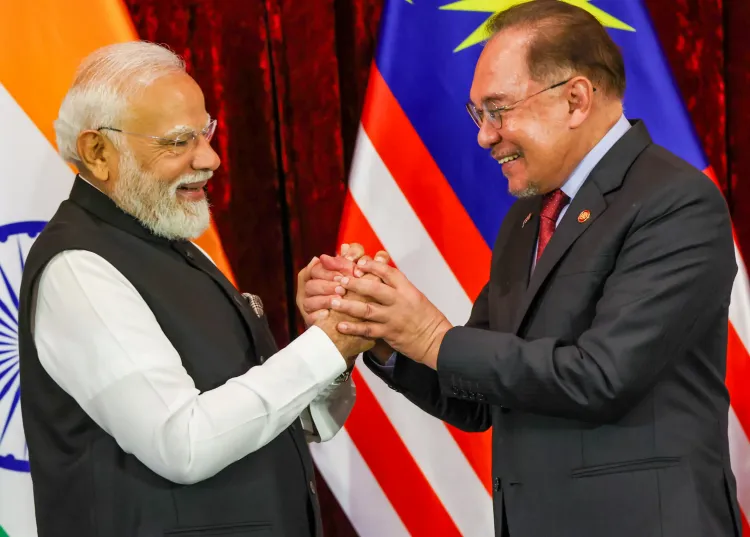
PM Modi’s friendships with leaders like Anwar Ibrahim foster diplomatic relations.
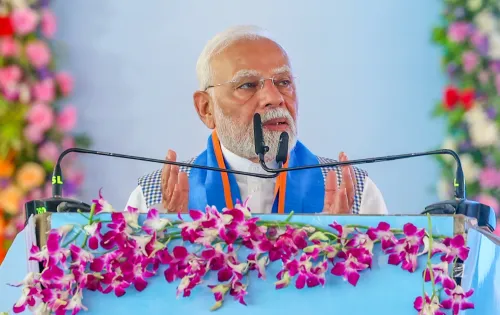
Singapore, Feb 14 (NationPress) Under the leadership of Prime Minister Narendra Modi, India has become a formidable global entity, buoyed by the world's largest population that is youthful, tech-savvy, and primarily middle-class, as highlighted in a recent report.
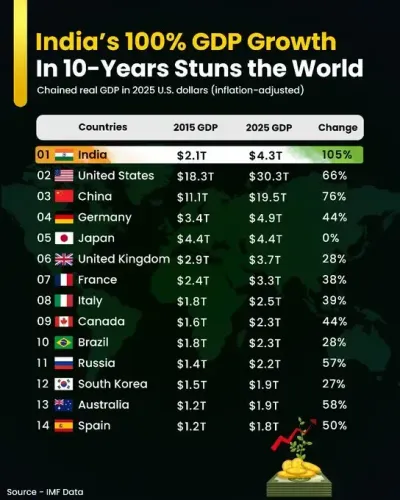
An opinion piece from Singapore's prominent news outlet, Channel News Asia (CNA), mentions that the International Monetary Fund (IMF) has recognized India as the fastest-growing major economy in recent years, with a real Gross Domestic Product (GDP) growth rate of 6.4 percent. With a nominal GDP surpassing US$4 trillion, India is on track to outpace Japan and Germany by 2030 and may become the world's largest economy in the next decade.
To facilitate this ambition, PM Modi launched the Act East Policy in 2014, aiming to position India as a significant force in the Indo-Pacific, which necessitates robust engagement with Southeast Asia.
According to political analyst James Chai in CNA, “The rapport between leaders significantly influences bilateral relations. The friendship between Indian Prime Minister Narendra Modi and Anwar Ibrahim before the latter's ascension to the role of Malaysian Prime Minister has been beneficial. Modi assured his ‘dear friend’ that he would visit Malaysia after missing the ASEAN summit in Kuala Lumpur in October 2025, making it his inaugural foreign visit in 2026.”
Chai further elaborates, “Anwar ensured Modi's warm reception with a ceremonial welcome that included a guard of honour from the First Battalion of the Royal Malay Regiment, students waving Indian flags, and cultural displays. Their mutual admiration for the Tamil language and actor MG Ramachandran helped strengthen their bond. Anwar has often expressed his affinity for Indian culture and literature, citing the profound influence of the Sanskrit epics Mahabharata and Ramayana during his imprisonment.”
The commentary states that Malaysia is home to approximately 3 million Indians, making it the third-largest Indian diaspora worldwide. The strong ties through tourism, education, and cultural exchanges have propelled bilateral trade to nearly US$18.6 billion in 2025.
Chai points out, “Malaysia offers substantial value; in recent years, India has emerged as the largest market for Malaysian palm oil exports, a vital commodity affecting food prices. Furthermore, India’s semiconductor initiative stands to gain from collaboration with Malaysia, which has a 50-year lead in backend manufacturing, supported by multinational firms established in the early 1970s.”
“These points were pivotal in the memorandums of understanding signed, reaffirming their comprehensive strategic partnership since 2024, encompassing defence, education, trade, and culture,” he concluded.
Point of View
India's ascent under PM Modi's leadership signifies a pivotal moment for the nation. The strategic initiatives aimed at enhancing bilateral relationships and economic growth reflect a commitment to not only sustain but amplify India's global presence. This is a transformative period that all Indians should rally behind.
NationPress
13 Sept 2026
Frequently Asked Questions
What is the Act East Policy?
The Act East Policy, introduced by PM Modi in 2014, aims to strengthen India's geopolitical relationships and enhance its influence in the Indo-Pacific region.
What does the IMF report about India’s economy?
The IMF has recognized India as the fastest-growing major economy with a real GDP growth of 6.4 percent and a nominal GDP exceeding US$4 trillion.
How significant is Malaysia to India's economy?
Malaysia is vital to India’s economy, being the largest market for Malaysian palm oil exports and a key partner in India's semiconductor mission.