Did Mohan Bhagwat Claim Western Nations Distorted India’s Education System?
Synopsis
In a thought-provoking address, RSS chief Mohan Bhagwat highlighted the manipulation of India's education system by Western powers during colonial rule. He emphasized the need for a return to traditional values and called for accessible education and healthcare for all. Discover his insights on the importance of research and the role of India in a global context.
Key Takeaways
Mohan Bhagwat highlights the manipulation of India's education by colonial powers.
Emphasizes the need for accessible education and healthcare .
Calls for unity and strength for India to become a world leader.
Encourages eco-friendly practices among citizens.
Stresses the importance of authentic research for national progress.
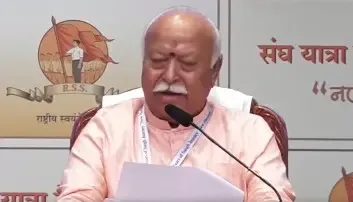
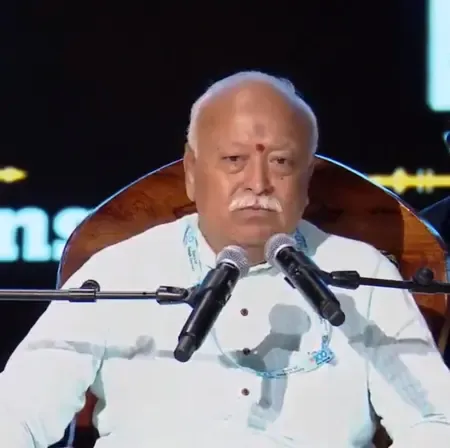
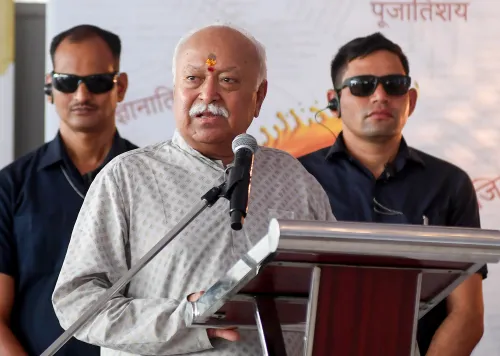
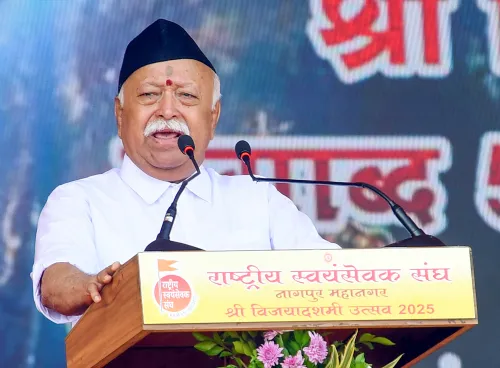
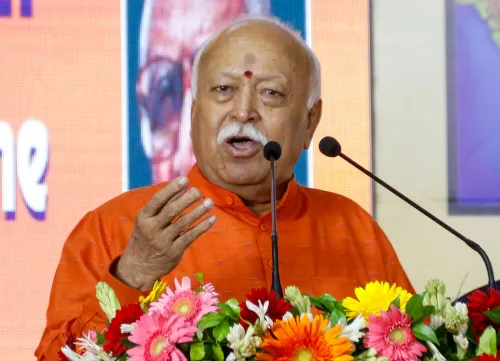
Lucknow, Feb 18 (NationPress) RSS chief Mohan Bhagwat stated that Western powers that governed India had manipulated the country's traditional education system, substituting it with their own framework to further colonial agendas.
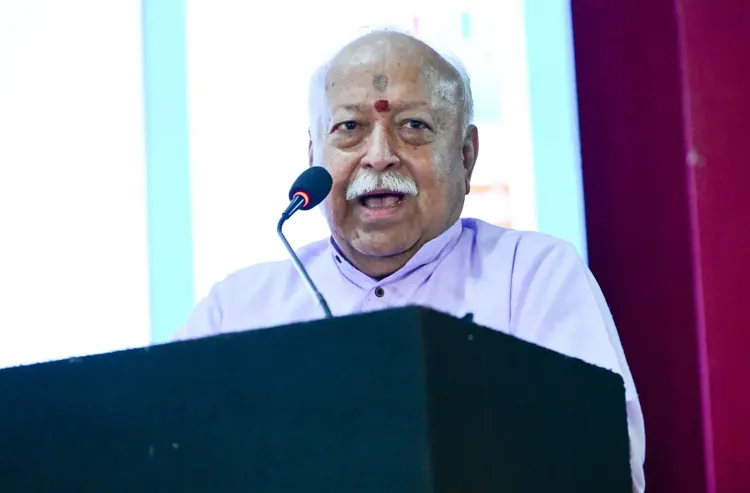
While addressing a gathering of research scholars at the Malviya Auditorium of the University of Lucknow, Bhagwat emphasized that the British transformed India's educational framework to forge a class of 'black Englishmen' who would cater to their administrative requirements. He underscored the necessity to rectify the harm caused during colonial rule.
He articulated that education and healthcare are essential human rights and should not be commodified. “Education and health must be accessible to all,” he asserted.
Highlighting the RSS's commitment to building a thriving and united nation, Bhagwat remarked that the organization prioritizes social cohesion over popularity or political influence.
“If you wish to comprehend the RSS, experience it from within. It cannot be understood merely through literature,” he mentioned, asserting that its fundamental goal is to unite Hindu society and fortify national character.
Emphasizing the significance of research in shaping India's trajectory, he urged scholars to engage in their endeavors with integrity and a sense of duty to the nation.
“Honest facts must be revealed. Ignorance obstructs our understanding of India,” he commented.
He also pointed out the “negative propaganda” against the Sangh and urged researchers to present facts impartially.
On the topic of globalization, Bhagwat expressed that it has increasingly become associated with commercialism and materialism, which he considers perilous.
Referencing the Indian philosophy of Vasudhaiva Kutumbakam (the world is one family), he stated that India champions collective well-being over consumerism. He contrasted this with Western materialistic perspectives, asserting that India holds solutions to global challenges.
“If we aspire to emerge as a world leader, we must exhibit strength in every domain. The world respects truth only when it is underpinned by power,” he stated.
Discussing dharma, Bhagwat defined it as an eternal principle governing life and the universe, promoting harmony and collective well-being.
“We are destined to coexist, not live in isolation,” he remarked, adding that while conduct may change with time and circumstances, core values remain steadfast.
He also called for environmental stewardship, encouraging citizens to adopt sustainable practices such as tree planting, conserving water, and reducing single-use plastics, while utilizing modern technology for sustainable progress.
Point of View
My perspective aligns with the need to critically evaluate historical narratives and their implications on contemporary society. The discourse surrounding education, healthcare, and national identity is essential for fostering a well-informed citizenry. The emphasis on research and authenticity is crucial to combat misinformation and promote genuine progress.
NationPress
19 Sept 2026
Frequently Asked Questions
What did Mohan Bhagwat say about India's education system?
Mohan Bhagwat stated that Western powers tampered with India's traditional education system during colonial rule and replaced it with their own framework.
What are the core values emphasized by Bhagwat?
He emphasized the importance of education and healthcare as fundamental necessities, advocating for their accessibility to all.
What does Bhagwat think about globalization?
Bhagwat views globalization as increasingly linked to commercialization and materialism, which he finds concerning.
What is the Indian philosophy mentioned by Bhagwat?
He referenced 'Vasudhaiva Kutumbakam', which means the world is one family, advocating for collective well-being over consumerism.
What environmental practices did Bhagwat encourage?
He urged citizens to adopt eco-friendly practices like tree plantation, water conservation, and reducing single-use plastics.