MP Assembly Monsoon Session opens amid Congress protest over fertiliser crisis
Synopsis
The Madhya Pradesh Assembly's Monsoon Session opened not with routine business but with Congress MLAs in symbolic masks of the Chief Minister and Agriculture Ministers — a pointed indictment of what the opposition calls a government-engineered fertiliser crisis leaving Kharif farmers without seeds and relief during the most critical weeks of the sowing calendar.
Key Takeaways
MP Assembly Monsoon Session began on Monday, 20 July in Bhopal amid a Congress protest inside the premises.
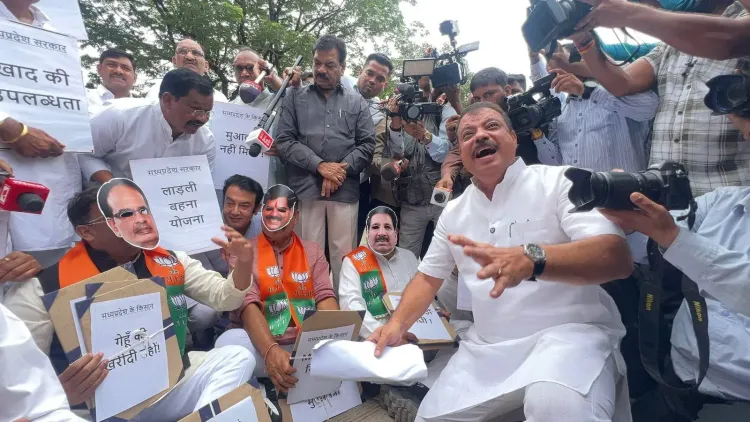
Opposition leader Umang Singhar led MLAs wearing masks of CM Mohan Yadav , Union Agriculture Minister Shivraj Singh Chouhan , and the state Agriculture Minister.
The protest centred on acute shortages of fertilisers and seeds for the Kharif season and inadequate drought relief measures.
Under Rule 139 , Singhar is formally scheduled to raise the fertiliser and drought crisis on the Assembly floor, compelling a government response.
The session agenda also covers tabling of annual reports, MLA petitions on local development, and welfare committee elections for 2026-27 .
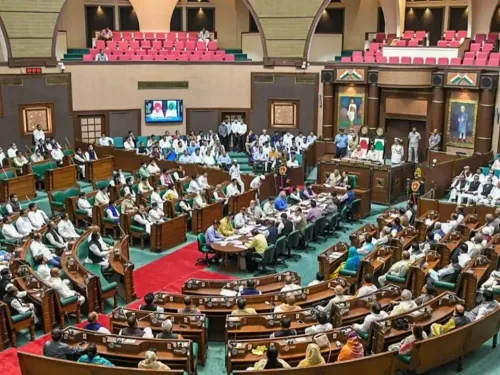
The Madhya Pradesh Assembly Monsoon Session commenced on Monday, 20 July with Congress legislators staging a demonstration inside the Assembly premises, demanding urgent government action on an acute shortage of fertilisers and seeds affecting farmers during the ongoing Kharif sowing season. The protest set a sharply contentious tone for the session's opening day in Bhopal.
Congress Demonstration Inside Assembly
Led by Leader of the Opposition Umang Singhar, Congress MLAs wore symbolic masks depicting Chief Minister Mohan Yadav, Union Agriculture Minister Shivraj Singh Chouhan, and the state Agriculture Minister — a theatrical rebuke of what the opposition termed 'anti-farmer policies'. The protest targeted the ruling Bharatiya Janata Party (BJP) government's alleged failure to ensure timely input availability and adequate drought relief measures for farmers.
Singhar accused the government of administrative lapses that have left farmers exposed during the critical planting window. He demanded swift procurement reforms, assured supply of fertilisers and seeds, and adequate compensation for drought-affected cultivators to prevent widespread crop failure.
Key Issue on the Assembly Floor
The Congress protest was not merely a symbolic act — it is directly mirrored in the session's formal agenda. Under Rule 139, which permits discussion on matters of urgent public importance, Singhar is scheduled to raise the issue of 'non-availability of fertilisers and seeds to farmers for the Kharif crop and the situation arising out of drought in the state.' This procedural move amplifies opposition demands and compels a formal government response on the floor.
The fertiliser and seed shortage, combined with inadequate drought relief, represents a compounding crisis for farmers already under stress from erratic monsoon patterns. Critics argue that delays in government procurement and compensation disbursement have worsened the situation.
Session Agenda: Reports and Petitions
Beyond the farmers' crisis, the day's agenda covers a wide legislative sweep. Multiple annual reports and accounts are tabled from entities including Shahpura Thermal Power Company, Banasagar Thermal Power Company, MP Plastic Park Development Corporation, and Barkatullah University.
Several ministers are scheduled to table documents under the Companies Act, including School Education Minister Uday Pratap Singh, Energy Minister Pradyuman Singh Tomar, and Micro, Small and Medium Enterprises Minister Chetan Kashyap. MLA petitions on local development — covering road construction, school buildings, water supply, and drainage works across districts such as Morena, Shivpuri, Gwalior, Khargone, and Narsinghpur — are also listed.
Elections to welfare committees for Scheduled Castes, Scheduled Tribes, and Backward Classes for 2026-27 are additionally on the schedule.
What Comes Next
The ruling BJP side is expected to respond to the opposition's charges during the session, which also features adjournment motions and short discussions. With farmers' distress dominating both the streets and the Assembly chamber, the Monsoon Session is poised for sustained friction between the government and the opposition over agricultural policy and drought relief.
Point of View
But the structural question it raises is more serious: if fertiliser and seed shortages are acute enough to trigger a Rule 139 discussion on the opening day of a session, it signals a procurement failure that predates the Kharif window — not a sudden crisis. The BJP government, which has positioned Shivraj Singh Chouhan's elevation to Union Agriculture Minister as a win for MP's farmers, now faces an uncomfortable optics problem: the state's own farmers are reportedly going without inputs during his watch. Whether the ruling side offers data-backed rebuttals or falls back on procedural deflection will define the session's credibility on agrarian accountability.
NationPress
20 Oct 2026
Frequently Asked Questions
Why did Congress MLAs protest at the MP Assembly Monsoon Session?
Congress MLAs protested on the opening day of the Madhya Pradesh Assembly Monsoon Session on 20 July to demand government action on a reported shortage of fertilisers and seeds for Kharif farmers and inadequate drought relief. Opposition leader Umang Singhar led the demonstration, accusing the BJP government of administrative lapses that have left farmers vulnerable during the critical sowing period.
What is Rule 139 and why is it significant here?
Rule 139 allows MPs or MLAs to raise matters of urgent public importance for immediate discussion on the Assembly floor. Umang Singhar's scheduled use of Rule 139 to raise the fertiliser and drought crisis means the government is formally obligated to respond, giving the issue legislative weight beyond a street protest.
Which entities' reports are being tabled in the MP Assembly session?
Annual reports and accounts from Shahpura Thermal Power Company, Banasagar Thermal Power Company, MP Plastic Park Development Corporation, and Barkatullah University, among others, are scheduled to be tabled. Several ministers are also tabling documents under the Companies Act.
Who are the key political figures involved in the MP Assembly controversy?
The central figures are Opposition leader Umang Singhar (Congress), Chief Minister Mohan Yadav (BJP), Union Agriculture Minister Shivraj Singh Chouhan, and the state Agriculture Minister — all targeted by the Congress protest over the alleged fertiliser and seed shortage.
Which districts in Madhya Pradesh are affected by the fertiliser and seed shortage?
While the shortage is described as state-wide, MLA petitions on local development issues have been filed from districts including Morena, Shivpuri, Gwalior, Khargone, and Narsinghpur, indicating widespread rural distress across the state.