Mudra Yojana funds Maharashtra woman's eatery dream in Sindhudurg
Synopsis
A homemaker from Sindhudurg turned a ₹3.60 lakh Mudra Yojana loan into a thriving railway-station eatery — 11 years after the scheme launched, Kavita Herekar's story puts a human face on one of India's largest micro-lending programmes and its quiet impact on women's economic independence in coastal Maharashtra.
Key Takeaways
Kavita Herekar of Sindhudurg district, Maharashtra , secured a ₹3.60 lakh loan under the Pradhan Mantri Mudra Yojana (PMMY) .
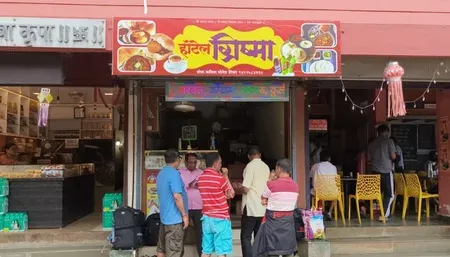
She used the loan to open a small eatery opposite the Kankavli railway station , targeting daily commuters.
The loan was sanctioned through the State Bank of India (SBI) branch in Kankavli .
The PMMY , launched in April 2015 , has completed 11 years and has recorded strong women-centric disbursal growth.
Women account for a majority of Mudra borrowers nationally, with the scheme particularly active in semi-urban and rural districts.
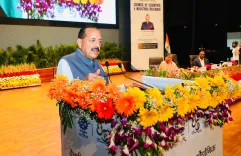
Kavita Herekar, a homemaker from Sindhudurg district in Maharashtra, used a ₹3.60 lakh loan under the Pradhan Mantri Mudra Yojana (PMMY) to launch a small eatery near the Kankavli railway station, transforming her culinary skills into a steady source of income. Her story has emerged as a grassroots example of how the scheme — now 11 years since its April 2015 launch — is reshaping women's economic participation at the district level.
From Homemaker to Entrepreneur
Herekar had long aspired to achieve financial independence but lacked the capital to act on her ambitions. With a passion for cooking and hands-on culinary experience, she identified the food business as her entry point into entrepreneurship. The primary obstacle, as it is for most first-generation entrepreneurs, was seed funding.
It was through the State Bank of India (SBI) branch in Kankavli that she first learned of the Mudra Yojana. After gathering information and completing the application process, she was sanctioned a loan of ₹3.60 lakh under the scheme's Kishor category, which covers loans between ₹50,000 and ₹5 lakh.
The Eatery and Its Early Success
Herekar set up her eatery directly opposite the Kankavli railway station — a location chosen strategically for its steady footfall of daily commuters and travellers. The outlet has since built a loyal customer base among passengers, generating what she describes as a 'handsome income' relative to her earlier household circumstances.
Notably, her venture is not just commercially viable — it represents a structural shift in her household's economic standing, moving her from financial dependence to active contributor. 'If a woman aspires to do something, receiving support at the right time is crucial,' Herekar said. 'In my case, the Mudra Yojana helped power my dreams.'
PMMY's Record on Women Borrowers
The Pradhan Mantri Mudra Yojana, launched in April 2015, has recorded consistent growth in women-centric disbursals over its 11-year run. According to government data, women account for a significant majority of Mudra borrowers nationally, with the scheme particularly active in semi-urban and rural districts where formal credit access has historically been limited.
This comes amid a broader Centre push to link welfare infrastructure to entrepreneurship outcomes — a shift from direct transfers toward asset-creation lending. Sindhudurg, a coastal district with limited large-scale industry, represents precisely the demographic the scheme was designed to reach.
What This Signals for Women's Entrepreneurship
Herekar's case illustrates a pattern that financial inclusion researchers have documented across PMMY beneficiaries: domestic skills — cooking, tailoring, handicrafts — are being monetised at scale when backed by formal credit. The challenge, critics argue, is that loan sizes under the scheme remain modest, limiting the scale at which micro-enterprises can grow beyond subsistence.
As the PMMY enters its second decade, the government's focus appears to be on deepening outreach in districts like Sindhudurg, where first-generation women entrepreneurs are still navigating the gap between aspiration and access. Herekar's eatery, modest in size but significant in symbolism, may be one of the cleaner illustrations of that gap closing.
Point of View
Not just a first-year boost. Micro-lending sceptics are right to ask whether loan sizes are large enough to move beneficiaries beyond subsistence-scale operations. The scheme's 11-year run offers enough data to answer that question rigorously — but the government has been slower to publish outcome tracking than disbursal figures. Herekar's eatery is a success story; what the programme needs now is a systematic audit of how many such stories actually hold five years on.
NationPress
27 Sept 2026
Frequently Asked Questions
What is the Pradhan Mantri Mudra Yojana (PMMY)?
The Pradhan Mantri Mudra Yojana is a central government scheme launched in April 2015 that provides collateral-free loans of up to ₹10 lakh to micro and small enterprises. It operates through three tiers — Shishu (up to ₹50,000), Kishor (₹50,000–₹5 lakh), and Tarun (₹5 lakh–₹10 lakh) — and is delivered via banks, NBFCs, and microfinance institutions.
How did Kavita Herekar use the Mudra Yojana loan?
Kavita Herekar, a homemaker from Sindhudurg district in Maharashtra, used a ₹3.60 lakh Mudra Yojana loan to open a small eatery opposite the Kankavli railway station. The outlet caters to commuters and travellers and has become a stable source of income for her family.
Which bank provided the Mudra loan to Kavita Herekar?
The loan was sanctioned through the State Bank of India (SBI) branch in Kankavli, Sindhudurg district. Herekar learned about the scheme through the same branch before applying.
How has the Mudra Yojana performed for women borrowers?
Women account for a significant majority of Mudra Yojana borrowers nationally, according to government data. The scheme has seen consistent growth in women-centric disbursals over its 11-year run, with particularly strong uptake in semi-urban and rural districts where formal credit access has historically been limited.
What are the eligibility criteria for a Mudra Yojana loan?
The Mudra Yojana is open to non-farm micro and small enterprises — including shopkeepers, vendors, artisans, and food-business operators — seeking loans up to ₹10 lakh. No collateral is required, and applications can be made through scheduled commercial banks, regional rural banks, and microfinance institutions empanelled under the scheme.