Is Mumbai Facing a 'Silent Demographic and Cultural Invasion'?
Synopsis
In a bold statement during the BMC elections, Ameet Satam warns of a silent invasion affecting Mumbai's demographic balance. He raises critical questions about political complicity and the implications for the city’s security and cultural identity.
Key Takeaways
Ameet Satam raises alarms over demographic shifts.
Concerns about illegal encroachments and their implications.
Political representation and community identity are at stake.
Data from TISS shows significant demographic changes since 1951.
Calls for action to preserve Mumbai's cultural essence.
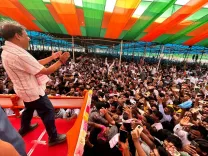
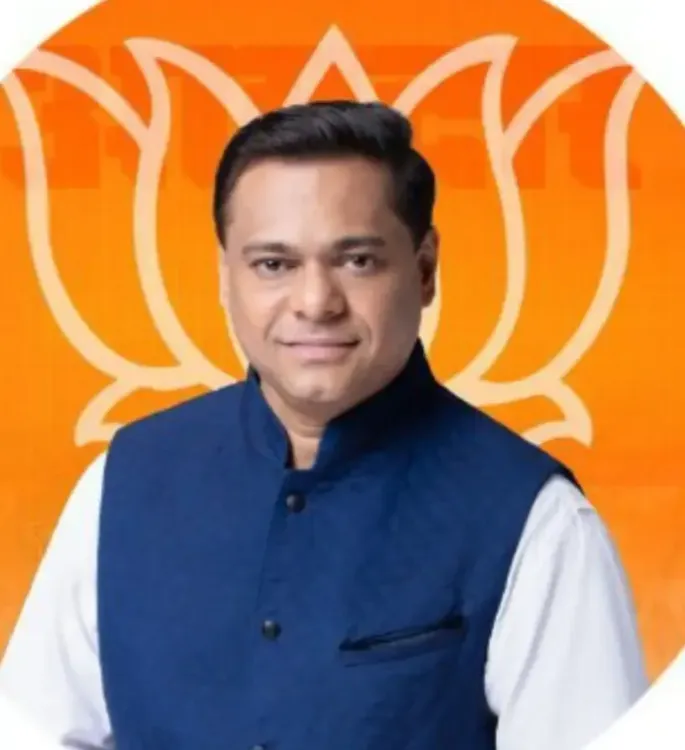
Mumbai, Jan 7 (NationPress) During the ongoing BMC elections, Mumbai BJP president Ameet Satam expressed alarm over a certain community's 'silent demographic and cultural invasion' in the city, labeling it a systematic approach characterized by illegal encroachments, infiltration, and vote-bank politics.
He specifically targeted Shiv Sena-UBT chief Uddhav Thackeray, questioning how many Bangladeshis and Rohingya infiltrators have been settled in Mumbai by a minister from Uddhav's cabinet.
'Demography is destiny. We will not allow the colour of Mumbai to change, and we will not permit the Mamdanisation of Mumbai. Only a safe Mumbai can be a developed Mumbai,' Satam asserted.
Drawing a comparison to the recent mass shooting at Australia's Bondi Beach, Satam cautioned that if the current situation persists, similar events could take place at Mumbai's Girgaum Chowpatty.
'What occurred at Bondi Beach today could happen at Girgaum Chowpatty tomorrow,' he warned.
Satam claimed that public land in various parts of Mumbai is being systematically encroached upon, followed by the illegal construction of structures where alleged Bangladeshi and Rohingya infiltrators are settled. These groups are reportedly assisted in acquiring documents such as Aadhaar cards, PAN cards, and voter IDs, thereby being included in the electoral rolls and involved in 'vote jihad,' he stated.
Referencing a report from the Tata Institute of Social Sciences (TISS), Satam highlighted shifts in Mumbai's demographic makeup over the decades.
'According to the TISS report, Hindus made up 88 percent of Mumbai's population in 1951, which decreased to 66 percent by 2011, while the Muslim population rose from 8 percent to 21 percent during that timeframe,' he noted.
Satam further alleged that a specific community has formed pressure groups and is now seeking not just participation but a 'share in political power.
'This represents a long-term, deliberate, and calculated international conspiracy,' he added.
Continuing his critique of Uddhav Thackeray, Satam questioned how many Bangladeshis and Rohingya infiltrators have been settled in Mumbai with the help of a minister from Uddhav Thackeray's cabinet. Areas like Malvani, Malad, Mankhurd, Deonar, and Kurla have witnessed the rise of numerous illegal slums 'with political backing,' he remarked.
'How did the voter numbers in wards such as Malvani, Malad–Madh, Kurla, and Chandivali surge by nearly 50 percent compared to 2017, while South Mumbai saw a drop? Who owns the approximately 10,000 illegal buildings in Malvani? Who resides there? And who enabled these individuals to become voters?' questioned Satam.
He also linked the infiltration to an uptick in crime and substance abuse in the city. Referring to a recent case where Bengaluru Police apprehended a foreign woman on a student visa for drug-related offences, he questioned how she was able to stay in areas like Ghatkopar and Nalasopara, and who provided her with shelter.
Citing data from Mumbai Police, which reported the seizure of narcotics worth Rs 800 crore in 2025 up to December 21, Satam asked, 'Which local gangs are operating the drug trade, and which political factions are protecting them?'
He revealed that over 1,000 Bangladeshi nationals were deported by Mumbai Police in 2025 alone, with the numbers increasing each year.
'The organized rackets involving political elements are facilitating the settlement of illegal immigrants, posing a significant threat to Mumbai's security,' he remarked.
Satam also accused unnamed groups of destroying mangroves to create room for illegal settlements, labeling it both an environmental and national security concern.
Point of View
It is vital to report on the concerns raised by political leaders regarding demographic shifts and their potential implications. This discourse highlights the delicate balance between political representation and community dynamics in Mumbai, and fosters an important conversation about identity, governance, and security in urban environments.
NationPress
1 Oct 2026
Frequently Asked Questions
What is the 'silent demographic and cultural invasion'?
It refers to the perceived gradual changes in demographic composition and cultural identity within Mumbai, as highlighted by political leaders.
What are the implications of illegal encroachments?
Illegal encroachments can lead to significant changes in local demographics, governance issues, and potential security concerns.
Why is this issue politically significant?
Demographic changes can affect electoral outcomes and political representation, making it a vital issue during elections.
What solutions are proposed to address these concerns?
Political leaders are calling for stronger enforcement of laws against illegal encroachments and greater awareness of demographic shifts.