Chandrababu Naidu seeks Central funds for cyclone-resilient coastal Andhra infrastructure

Synopsis
Cyclone Murasu has left a ₹2,484-crore scar across coastal Andhra Pradesh — from 1,43,617 hectares of flattened crops to 1,385 km of broken roads and nearly 18,000 damaged power structures. Chief Minister Chandrababu Naidu is now pressing the Centre not just for relief cheques but for a structural fix: permanent cyclone-resilient infrastructure along a coastline that has been struck twice in rapid succession.
Key Takeaways
Andhra Pradesh CM N.
Chandrababu Naidu met a seven-member Central team on 15 November 2026 to present damage caused by Cyclone Murasu .
Total estimated damage from Cyclone Murasu stands at ₹2,484.43 crore , according to the state government's report.
Crops across 1,43,617 hectares were damaged, affecting 1,86,063 farmers ; losses estimated at ₹874.97 crore .
1,385 km of roads and 369 irrigation sources were damaged; 10,192 high-tension electricity poles brought down.
The state spent ₹37 crore on emergency relief; Naidu urged the Centre to release funds and submit the team's report within 10 days .
Many farmers lacked crop insurance due to high premiums on commercial crops such as cotton, the Central team noted.
Andhra Pradesh Chief Minister N. Chandrababu Naidu on Sunday, 15 November 2026, appealed to the Centre for financial assistance to build stronger, more resilient infrastructure along the state's cyclone-prone coastal belt, arguing that durable structural upgrades — not repeated relief cycles — are the permanent answer to recurring storm damage. The appeal came during a virtual meeting with a seven-member Central assessment team that visited the state to evaluate damage caused by Cyclone Murasu.
Central Team's Field Assessment
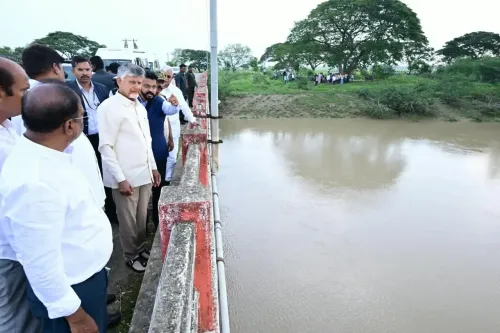
The team, led by Chittaranjan Das, Joint Secretary in the Union Home Ministry, split into two groups and conducted field inspections across Bapatla, Palnadu, Eluru, and East Godavari districts, covering nearly 60 locations. Inspectors documented damage to agricultural fields, irrigation canals, rural roads, and housing. The team subsequently held a virtual meeting with Chief Minister Naidu after completing ground surveys.
Scale of Cyclone Murasu Damage
According to the state government's report submitted to the Central team, Cyclone Murasu caused total estimated damage of ₹2,484.43 crore. The breakdown is extensive:
Roads and connectivity: 1,385 km of roads were damaged, along with breaches at 36 locations and 65 culverts, resulting in losses of ₹888.84 crore. An additional 114 rural roads spanning 220 km were damaged in flash floods.
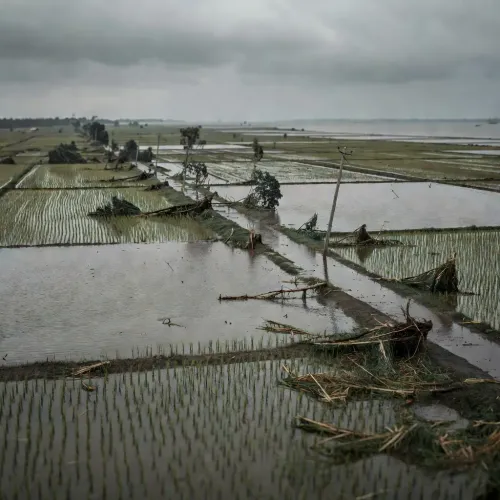
Agriculture: Crops across 1,43,617 hectares suffered losses worth ₹874.97 crore, affecting 1,86,063 farmers. Horticultural crops across 6,756 hectares sustained damage estimated at ₹337.10 crore, impacting 12,605 farmers.
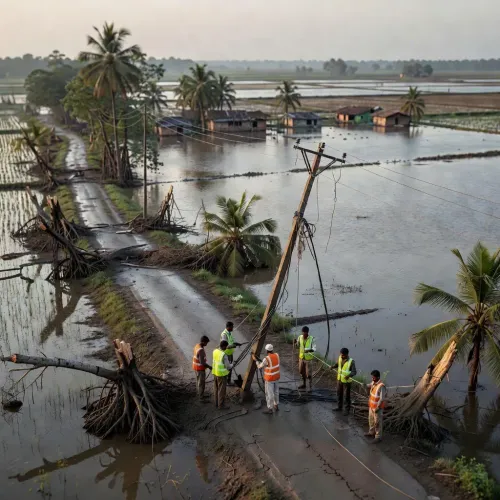
Power infrastructure: 10,192 high-tension poles, 6,442 low-tension poles, and 1,448 distribution transformers were damaged.
Irrigation: 369 irrigation sources were affected, with breaches at 509 locations.
Housing: 3,859 houses, including 645 huts, were damaged. Damage was also recorded in the medical, fisheries, municipal administration, women and child welfare, rural development, drinking water, school education, animal husbandry and handloom sectors. The state government spent ₹37 crore on emergency response and relief.
What the Government Said
Chief Minister Naidu told the Central team that the compounding impact of El Niño, together with two cyclones striking the state within a short span, had led to extensive and widespread damage. He stressed that the state had anticipated the storm's trajectory and initiated precautionary measures well in advance, with relief and restoration operations launched on a 'war footing' post-landfall.
'Road connectivity, electricity supply and mobile network services were restored within 24 hours. Normalcy was restored in cyclone-affected areas. Steps were being taken to ensure that farmers who suffered crop losses received insurance assistance at the earliest. Additional ration supplies were also distributed in cyclone-affected areas,' Naidu said.
He urged the Central team to submit its damage report to the Centre within 10 days and called for the immediate release of financial assistance for relief and rehabilitation.
Key Concerns and Recommendations
The Central team flagged that rural roads bore the worst of the damage, particularly due to flash flooding. It noted that many farmers had not enrolled in crop insurance schemes, citing high premium rates for commercial crops such as cotton — leaving them without a financial safety net. The team suggested exploring the possibility of distributing rations three times within 30 days in affected areas, providing pre-school uniforms to children in government schools, and extending special assistance to Particularly Vulnerable Tribal Groups (PVTGs) severely impacted by the storm. It also recommended higher compensation for farmers who lost organic and natural-farming produce.
Notably, advance desilting of canals and streams by the state government is credited with limiting a portion of the damage that might otherwise have been worse.
What Comes Next
The Central team's report to the Union government is expected within ten days, after which the Centre will determine the quantum of disaster relief funding to be released under the National Disaster Response Fund (NDRF) or related mechanisms. With two cyclones having struck coastal Andhra in quick succession, Naidu's push for permanent cyclone-resilient infrastructure signals that the state may seek a longer-term funding arrangement beyond standard post-disaster relief.
Point of View
But it surfaces a structural gap: coastal Andhra has faced recurring cyclone damage for decades, and the response has almost always been reactive relief rather than proactive hardening of roads, drainage, and power grids. The statistic that many farmers skipped crop insurance due to unaffordable cotton premiums is particularly pointed — it means private risk transfer has failed precisely where it is most needed. The Central team's ten-day report deadline is tight, but the larger question is whether disaster assessments will finally feed into capital expenditure plans rather than one-off relief disbursements.
NationPress
15 Nov 2026
Frequently Asked Questions
What is Cyclone Murasu and how much damage did it cause in Andhra Pradesh?
Cyclone Murasu is a storm that struck coastal Andhra Pradesh, causing total estimated damage of ₹2,484.43 crore according to the state government's report. It damaged crops across 1,43,617 hectares, destroyed 1,385 km of roads, and downed over 10,000 electricity poles, among other losses.
What has CM Chandrababu Naidu requested from the Centre?
Chief Minister N. Chandrababu Naidu has requested immediate financial assistance from the Centre for cyclone relief and rehabilitation, and has also appealed for long-term Central funding to build cyclone-resilient infrastructure along Andhra Pradesh's cyclone-prone coastline. He asked the Central assessment team to submit its damage report within 10 days.
Which districts were inspected by the Central team?
The seven-member Central team, led by Union Home Ministry Joint Secretary Chittaranjan Das, inspected Bapatla, Palnadu, Eluru, and East Godavari districts, visiting nearly 60 locations to assess damage to farms, canals, roads, and houses.
How many farmers were affected by Cyclone Murasu?
According to the state government's report, 1,86,063 farmers suffered crop losses across 1,43,617 hectares, with damages estimated at ₹874.97 crore. An additional 12,605 farmers were affected by horticultural crop damage across 6,756 hectares, estimated at ₹337.10 crore.
Why were many farmers not covered by crop insurance during Cyclone Murasu?
The Central team noted that a significant number of farmers had not enrolled in crop insurance schemes due to high premium rates for commercial crops such as cotton. This left them without a financial safety net when the cyclone struck, compounding the economic impact of the storm.