Why is Nizam's Grandson Condemning BJP MP's Remarks on Renaming Nizamabad?
Synopsis
On January 11, Nawab Najaf Ali Khan, grandson of the seventh Nizam, condemned BJP MP D. Arvind's remarks on renaming Nizamabad to Indur. His statements highlight the historical significance of the Nizam and the implications of altering historical names. Dive into the deeper narrative surrounding this controversy.
Key Takeaways
Nawab Najaf Ali Khan defends the legacy of Nizam VII against controversial remarks.
The renaming of Nizamabad to Indur raises historical and cultural concerns.
Nizam VII’s contributions to society are recognized and celebrated.
The community's respect for Nizam VII was evident at his funeral in 1967.
Political discussions around names can evoke strong historical sentiments.
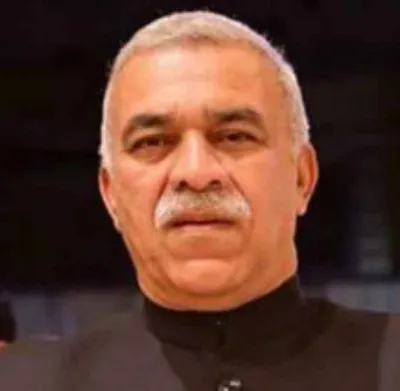
Hyderabad, Jan 11 (NationPress) Nawab Najaf Ali Khan, a descendant of the seventh Nizam, Mir Osman Ali Khan, expressed his outrage on Sunday regarding the purportedly defamatory comments made by BJP MP D. Arvind about the last monarch of the Hyderabad State while advocating for the renaming of Nizamabad district to Indur.
Nawab Najaf Ali Khan labeled the remarks from the Nizamabad MP as 'extremely objectionable, condemnable, and inappropriate for someone in a constitutional role'.
He stated, 'The suggestion to rename Nizamabad as Indur is an administrative matter in itself. Involving the name of Nizam VII, who passed away 58 years ago, in this discussion reveals either a lack of historical knowledge or intentional malice, both of which are intolerable.'
He continued, 'This type of rhetoric represents a reckless misrepresentation of history and serves as an affront not only to an individual but also to the collective memory of our Nation.'
Najaf Ali Khan noted that the contributions of Nizam VII to humanity, governance, infrastructure, education, health, and social harmony are well-documented and recognized globally.
He served all communities impartially, regardless of caste or religion, and is remembered as one of the most secular rulers in Indian history, he remarked.
'These assertions are not mere opinions; they are historical truths. His reign from 1911 to 1947 is regarded as a golden era that remains alive in public memory. The harmonious coexistence of communities during this time, referred to as 'Ganga-Jamuna Tehzeeb', starkly contrasts with today’s divisive narratives. It must be noted that Nizam VII did not rule with oppression or arbitrary cruelty,' he added.
He recalled that when Mir Osman Ali Khan passed away on February 27, 1967, the state government issued an Extra-Ordinary Gazette, and hundreds of thousands of individuals from various faiths attended his funeral, a clear indication of the respect he earned across society.
'Under his rule, the Nizamabad region evolved into a significant agricultural and industrial hub. The Nizam Sagar Dam, the largest of its time, was built across the Manjira River, irrigating extensive areas. The Nizam Sugar Factory, the largest sugar factory then, provided jobs and economic stability. A railway system was established to connect Nizamabad with major cities,' he elaborated.
'If any of these assets have deteriorated or become underutilized, the blame rests solely with succeeding governments that failed to maintain them. Historical benefactors should not be scapegoated for current administrative shortcomings,' he concluded.
BJP MP Arvind stated on January 9 that if the BJP assumes power in the state, they would rename Nizamabad district to Indur.
He further mentioned that a resolution to change the district's name would be proposed in the first general body meeting of the Nizamabad Municipal Corporation before being forwarded to the office of the Telangana Chief Minister.
He expressed confidence that the BJP would gain a majority in the upcoming civic body elections in Nizamabad and would secure the Mayor's position.
BJP MP Arvind claimed that the original name of Nizamabad is Indur, which was altered due to a political decision.
Point of View
It is crucial to recognize the historical context behind the comments made by both Nawab Najaf Ali Khan and BJP MP D. Arvind. This issue transcends mere nomenclature and delves into deeper societal implications and historical narratives. As always, we stand for an informed and respectful dialogue.
NationPress
24 Sept 2026
Frequently Asked Questions
Who is Nawab Najaf Ali Khan?
Nawab Najaf Ali Khan is the grandson of the seventh Nizam, Mir Osman Ali Khan, and he actively engages in discussions regarding the legacy and history of the Nizams.
What did BJP MP D. Arvind propose?
BJP MP D. Arvind proposed renaming Nizamabad district to Indur, claiming it was the original name before a political decision changed it.
Why is the renaming controversial?
The renaming is controversial because it involves historical figures and could be perceived as an attempt to erase or alter important cultural and historical narratives.
What contributions did Nizam VII make?
Nizam VII contributed to governance, infrastructure, education, health, and social harmony, and is remembered for his secular leadership.
What was the response from the community during Nizam VII's funeral?
Upon his passing in 1967, hundreds of thousands from various faiths attended his funeral, showcasing the respect he commanded across communities.