NCW chief Vijaya Rahatkar: Justice for women a shared constitutional duty
Synopsis
At a rare convergence of the Supreme Court, High Court of Karnataka, and NCW in Bengaluru, NCW Chairperson Vijaya Rahatkar called for courts to treat women's justice as a constitutional obligation — not a procedural formality. Her offer to position the NCW as amicus curiae in women's rights cases signals a shift toward institutional activism that could reshape how gender-sensitive litigation is handled across India.
Key Takeaways
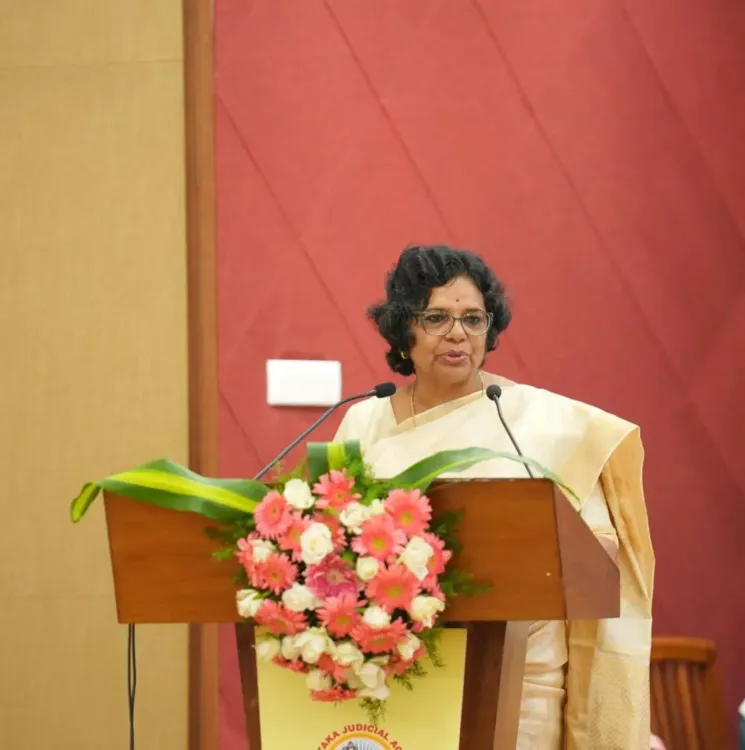
NCW Chairperson Vijaya Rahatkar addressed the first South Zone Regional Conference on 'Justice for Women' in Bengaluru on 9 August .
Rahatkar called justice for women a shared constitutional responsibility and stressed it must inspire public trust, not just be timely.
She urged that heinous offences against women must never be subjected to settlement or compromise .
The NCW offered to serve as amicus curiae in appropriate matters concerning women's rights and justice.
Nagarathna observed that harm suffered by women is 'fundamentally distinct' from that suffered by men.
Two books on women's rights and domestic violence law were released at the conference, co-organised by the Supreme Court of India , High Court of Karnataka , and Karnataka Judicial Academy .
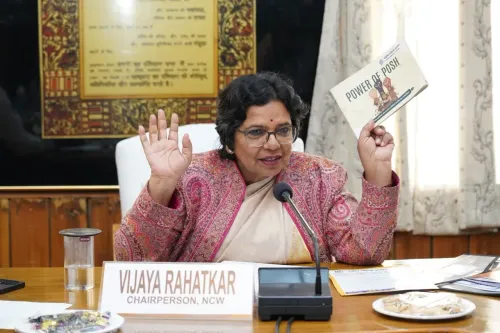
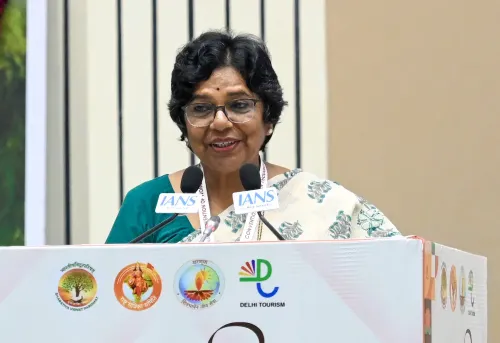
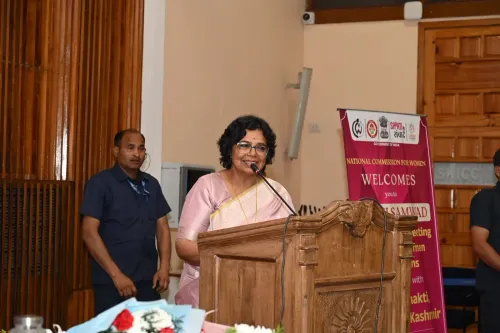
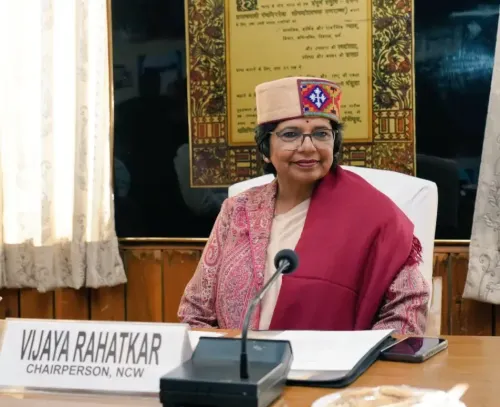
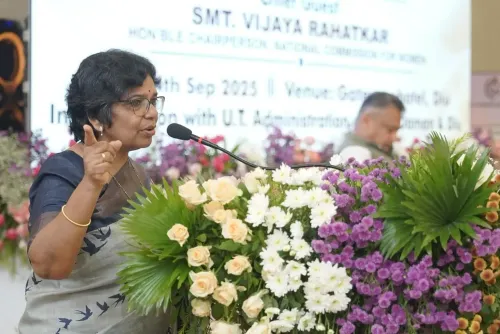
National Commission for Women (NCW) Chairperson Vijaya Rahatkar on Sunday, 9 August declared that justice for women is a shared constitutional responsibility — one that must be not only timely but also capable of inspiring genuine public trust. She was speaking at the conclusion of the first South Zone Regional Conference on 'Justice for Women' held in Bengaluru, organised jointly by the NCW, the Supreme Court of India, the High Court of Karnataka, and the Karnataka Judicial Academy.
Key Remarks by the NCW Chairperson
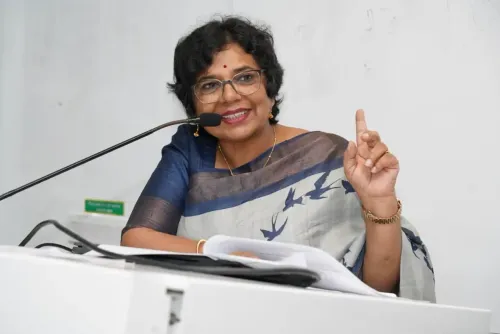
Rahatkar stressed that delivering justice is important, but ensuring that every citizen believes justice has truly been delivered is equally critical. She called for greater judicial sensitivity in the pronouncement of judgments and urged that judicial language and terminology be used with care to prevent secondary traumatisation of survivors of sexual assault.
She also emphasised that heinous offences against women must not be subjected to settlement or compromise under any circumstances. In a significant offer, Rahatkar said the NCW is willing to serve as amicus curiae in appropriate matters concerning women's rights and justice.
Quoting the constitutional framework directly, she said: 'The Supreme Court, as the custodian of the Constitution, is entrusted with protecting the rights promised by it. The Right to Life also includes the Right to live a dignified life. Therefore, the judiciary is also the custodian of women's dignity and rights.'
What the Conference Covered
The two-day conference, which concluded on Sunday, brought together judges of the Supreme Court, High Courts, and District Courts from across the southern region for focused deliberations on women's access to justice, safety, dignity, and the effective implementation of legal safeguards.
The event was inaugurated on Saturday by Justice B.V. Nagarathna of the Supreme Court, in the presence of Rahatkar, Chief Justice Vibhu Bakhru of the High Court of Karnataka, and other judges of the High Court. Justice Nagarathna highlighted the distinct nature of harm suffered by women, observing: 'The harm suffered by women is fundamentally distinct from the harm suffered by men.' She also noted that perpetrators are often not strangers but individuals upon whom women may be financially or socially dependent.
Books Released and Judicial Language in Focus
The inaugural session saw the release of two significant publications. The digital version of 'We the Women of India' was released by Justice Jayant Banerji, Judge of the High Court of Karnataka and President of the Karnataka Judicial Academy. The book 'Breaking the Silence – A Complete Guide to Domestic Violence and the Law' was released by Justice S.G. Pandit, Judge of the High Court of Karnataka and President of the Karnataka Mediation Centre.
Justice V. Mohana of the Supreme Court underscored the profound impact of language in judicial decisions, observing that words used in judgments shape legal culture, institutional behaviour, and public attitudes toward equality. She stressed that the constitutional commitment to dignity requires not only fair outcomes but also a fair process — so that justice is experienced with dignity, not merely delivered.
Broader Significance
This conference marks a notable institutional convergence: the judiciary, a statutory women's rights body, and a state judicial academy coming together to address systemic gaps in how women experience the justice system. Rahatkar's offer to position the NCW as amicus curiae signals a shift toward more proactive institutional engagement in women's rights litigation. With gender-sensitive judicial training gaining urgency in the wake of high-profile cases of sexual violence, the deliberations in Bengaluru could set a template for similar regional consultations across the country.
Point of View
High Court judges, district judiciary, and the NCW, all at the same table. That institutional convergence is rare and points to a growing acknowledgment that gender-blind judicial processes are a structural problem, not an individual failing. Rahatkar's offer to serve as amicus curiae is an assertive move; if operationalised, it could give the NCW a direct voice in shaping case outcomes rather than merely issuing advisories. The harder question is whether these deliberations produce binding training mandates or remain aspirational.
NationPress
24 Sept 2026
Frequently Asked Questions
What was the South Zone Regional Conference on Justice for Women?
It was a two-day judicial conference held in Bengaluru on 8-9 August, organised by the NCW in association with the Supreme Court of India, High Court of Karnataka, and Karnataka Judicial Academy. It brought together judges from the Supreme Court, High Courts, and District Courts across southern India to deliberate on women's access to justice, safety, and dignity.
What did NCW Chairperson Vijaya Rahatkar say at the conference?
Rahatkar declared that justice for women is a shared constitutional responsibility and must inspire public trust, not just be timely. She urged that heinous offences against women never be settled or compromised, called for sensitive judicial language to prevent secondary traumatisation of survivors, and offered to position the NCW as amicus curiae in women's rights cases.
What did Justice B.V. Nagarathna say about harm to women?
Justice Nagarathna, who inaugurated the conference, observed that the harm suffered by women is fundamentally distinct from that suffered by men, and noted that perpetrators are often individuals on whom women are financially or socially dependent — not faceless strangers.
Why does judicial language matter in cases involving women?
Justice V. Mohana of the Supreme Court emphasised that words used in judgments shape legal culture, institutional behaviour, and public attitudes toward equality. Insensitive language in court rulings can cause secondary traumatisation for survivors and reinforce harmful social norms, which is why the conference stressed that constitutional dignity requires a fair process, not just a fair outcome.
What books were released at the conference?
Two books were released: the digital version of 'We the Women of India' by Justice Jayant Banerji, and 'Breaking the Silence – A Complete Guide to Domestic Violence and the Law' by Justice S.G. Pandit, both judges of the High Court of Karnataka.