NDA defends UCC in Maharashtra, accuses Owaisi of misreading Article 44

Synopsis
The UCC debate has reignited in Maharashtra, with NDA leaders directly accusing AIMIM chief Owaisi of distorting the constitutional record on Article 44. BJP's Ram Kadam and Shiv Sena's Shaina NC are framing the UCC not as a communal imposition but as a 70-year-overdue constitutional obligation — and a tool for Muslim women's equality.
Key Takeaways
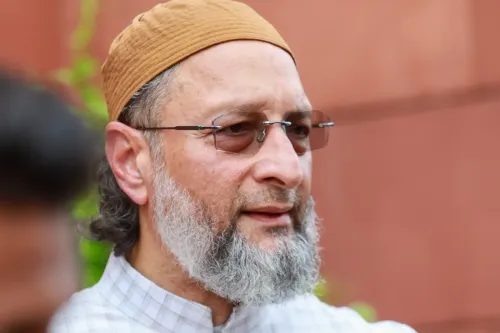
NDA leaders in Maharashtra on 11 November publicly defended the Uniform Civil Code (UCC) , hitting back at AIMIM chief Asaduddin Owaisi .
BJP MLA Ram Kadam accused Owaisi of ignoring Article 44 of the Constitution, which directs the State to secure a UCC for all citizens.
Kadam alleged previous governments avoided implementing the 70-year-old constitutional directive to secure electoral support from specific communities.
Owaisi alleged the Maharashtra government's UCC push targeted Muslims and amounted to imposing a 'Hindu Civil Code' on non-Hindu communities.
Shiv Sena spokesperson Shaina NC framed the UCC as a measure to empower Muslim women , invoking the legacies of Dr B.R.
Ambedkar and Balasaheb Thackeray .
Article 44 is part of the Directive Principles of State Policy — constitutionally recognised but non-justiciable, leaving implementation to legislative discretion.
National Democratic Alliance (NDA) leaders in Maharashtra on Wednesday, 11 November mounted a sharp defence of the Uniform Civil Code (UCC), accusing All India Majlis-e-Ittehadul Muslimeen (AIMIM) chief Asaduddin Owaisi of deliberately misrepresenting the constitutional basis of the proposed law. The NDA leaders argued that a common civil framework would promote equality and, in particular, empower Muslim women.
BJP's Response to Owaisi
Bharatiya Janata Party (BJP) MLA Ram Kadam said Owaisi cannot selectively invoke the Constitution while ignoring Article 44, which directs the State to endeavour to secure a UCC for all citizens. 'Asaduddin Owaisi is lying. On one hand, he is always touting the Constitution, saying that one must respect its principles. But he has forgotten the principles that were written by Dr Ambedkar in Article 44, that is, every citizen of the country will be under the same law, meaning the law is equal for all, and that is what a Uniform Civil Code is,' Kadam said.
Kadam also pushed back against the suggestion that the UCC amounts to a new political intervention, arguing that the provision was embedded in the Constitution over 70 years ago but had not been implemented by successive governments. 'This is not a new invention. This is a constituent of the Constitution that Baba Saheb Ambedkar wrote more than 70 years ago. It has not been implemented in the last 70 years by the previous governments,' he said. He alleged those governments had sidestepped the provision to secure electoral support from particular communities.
Owaisi's Allegation and the Maharashtra Context
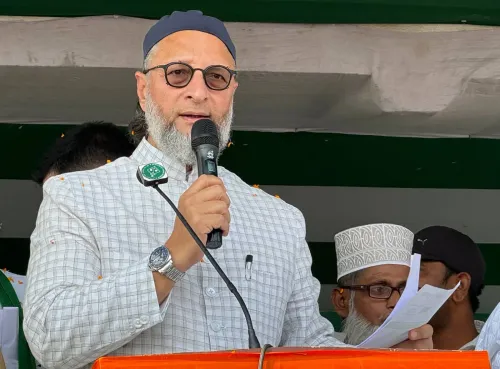
At a press conference earlier, Owaisi alleged that the Maharashtra government's push to implement the UCC in the state was targeted at Muslims and amounted to imposing what he described as the 'Hindu Civil Code' on non-Hindu communities. The AIMIM chief's remarks set off the chain of rebuttals from NDA lawmakers.
Kadam rejected the Hindu Code Bill comparison outright, saying the two were legally distinct. 'This law is not an imposition on one's religious faith. Why are you trying to misguide people? The Hindu Code Bill you are speaking about is different. You are trying to impose your own politics; that is why you are lying to people,' he said.
Shiv Sena Frames UCC as Women's Empowerment
Shiv Sena National Spokesperson Shaina NC sought to shift the framing of the debate, presenting the UCC as a measure of gender justice rather than a communal intervention. 'The UCC will empower Muslim women. One vote, one passport, one flag, and that is what the Uniform Civil Code stands for. For you (Owaisi), it's oppression of Muslims, against the Muslims, but to us, it is about empowering Muslim women,' she said.
Shaina NC invoked the legacies of Dr B.R. Ambedkar and Shiv Sena founder Balasaheb Thackeray to buttress her argument. 'One Nation, One Law was Baba Saheb Ambedkar's dream, and Hindu Hriday Samrat, Balasaheb Thackeray, Shiv Sena founder, always said — We cannot fight based on caste, creed and religion; we must fight based on equality and for equality,' she said.
What Article 44 Actually Says
Article 44 of the Indian Constitution falls under the Directive Principles of State Policy — a set of non-justiciable but constitutionally recognised goals — and asks the State to endeavour to secure a UCC for citizens throughout India. Because it is a directive principle and not a fundamental right, its implementation has historically been left to legislative discretion, making it a recurring flashpoint in Indian political discourse. Notably, Uttarakhand became the first state to enact a UCC in 2024, adding fresh momentum to the debate.
What Comes Next
The exchange underscores growing political pressure on the Maharashtra government to either advance or shelve its UCC plans ahead of a shifting legislative calendar. With the NDA having recently retained power in Maharashtra, the UCC is expected to remain a live issue in the state assembly. How the government translates the political rhetoric into legislative action — and whether a bill is introduced in the upcoming session — will be closely watched.
Point of View
Making it harder for opponents to dismiss as majoritarian overreach. But the constitutional argument cuts both ways: Article 44 is a directive principle, not a mandate, precisely because the framers recognised the complexity of legislating personal law across a diverse polity. Owaisi's 'Hindu Civil Code' framing is contested, but it reflects a genuine anxietythat UCC implementation could disproportionately disrupt Muslim personal law while leaving Hindu practices comparatively undisturbed. The real test will come in the drafting stage — whether Maharashtra's proposed code is genuinely neutral across communities or selectively reformist. That question, conspicuously, was not answered on Wednesday.
NationPress
11 Nov 2026
Frequently Asked Questions
What is the Uniform Civil Code (UCC) debate in Maharashtra about?
The UCC debate in Maharashtra centres on the state government's reported move to implement a common civil law for all citizens regardless of religion. NDA leaders argue it fulfils a constitutional directive under Article 44, while AIMIM chief Owaisi alleges it is aimed at targeting Muslims and imposing a Hindu civil framework on non-Hindu communities.
What does Article 44 of the Indian Constitution say?
Article 44 is part of the Directive Principles of State Policy and directs the State to endeavour to secure a Uniform Civil Code for citizens throughout India. It is a non-justiciable directive, meaning it cannot be enforced in court, but it carries constitutional weight as a guiding principle for legislation.
Why did BJP MLA Ram Kadam accuse Owaisi of lying?
Ram Kadam accused Owaisi of selectively invoking the Constitution to oppose the UCC while ignoring Article 44, which explicitly envisions a common civil law. Kadam argued that Owaisi's framing of the UCC as a 'Hindu Civil Code' was misleading, as the provision was written into the Constitution by Dr B.R. Ambedkar over 70 years ago.
How does the UCC relate to Muslim women, according to NDA leaders?
NDA leaders, particularly Shiv Sena spokesperson Shaina NC, argue the UCC would empower Muslim women by bringing them under the same civil protections as women of other communities. They contend Owaisi's opposition to the code effectively defends a status quo that disadvantages Muslim women.
Has any Indian state already implemented the UCC?
Yes. Uttarakhand became the first Indian state to enact a Uniform Civil Code in 2024, adding political momentum to demands for similar legislation in other states, including Maharashtra. The Uttarakhand precedent is frequently cited by UCC proponents as evidence of feasibility.