CM Dhami: Goat Valley and Poultry Valley link 11,500 to self-employment
Synopsis
Uttarakhand CM Pushkar Singh Dhami says Goat Valley and Poultry Valley initiatives have connected over 11,500 people to self-employment, framing animal husbandry as a core tool to strengthen the state's rural economy and curb out-migration.
Key Takeaways
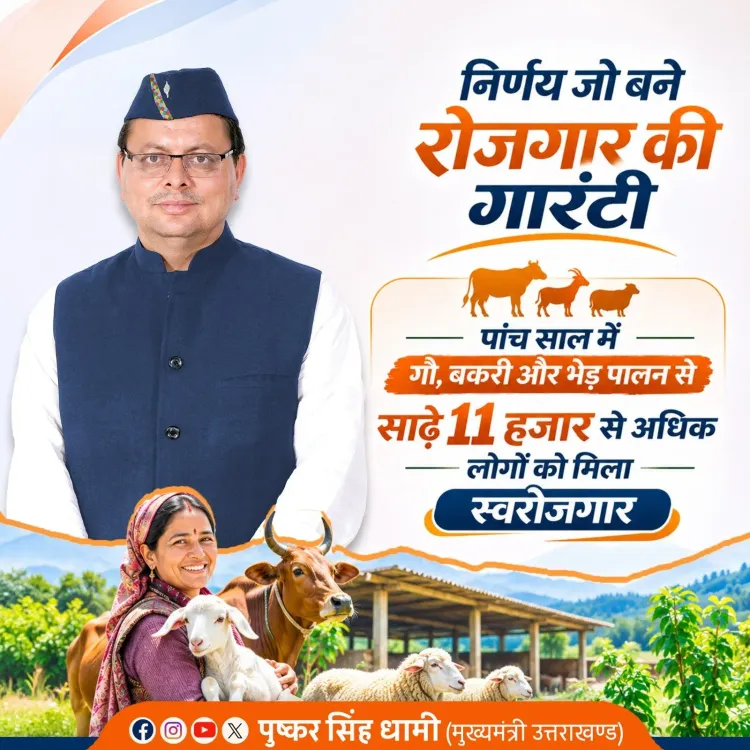
CM Pushkar Singh Dhami announced on 11 November 2026 that Uttarakhand's animal husbandry initiatives have linked more than 11,500 people to self-employment.
The Goat Valley and Poultry Valley schemes use a cluster-development model to make livestock farming more viable in Uttarakhand's hill terrain.
The government frames both schemes as aligned with the national Aatmanirbhar Bharat (self-reliant India) framework.
Rural youth and traditional animal rearers ( pashupalaks ) are the stated primary beneficiaries of the initiative.
Animal husbandry has been a recurring policy lever in Uttarakhand to counter chronic out-migration from hill districts.
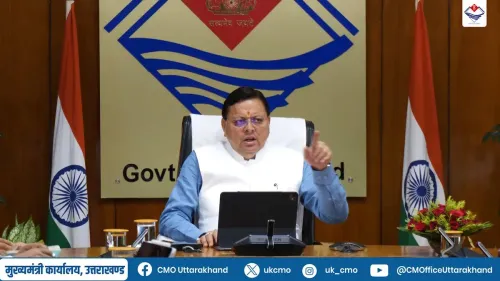
In the hills of Uttarakhand, where out-migration has long hollowed out villages, Chief Minister Pushkar Singh Dhami is pointing to animal husbandry as the state's answer to rural joblessness — and on Wednesday, 11 November 2026, he took that message to X.
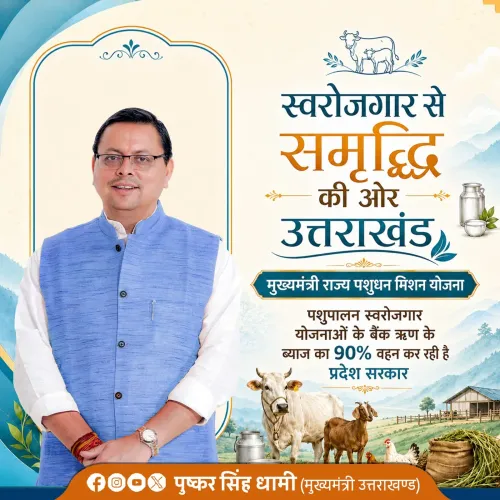
Posting in Hindi, CM Dhami said his government has connected more than 11,500 people to self-employment through initiatives such as Goat Valley and Poultry Valley, strengthening livelihoods in the process. 'हमारा संकल्प ग्रामीण अर्थव्यवस्था को सशक्त बनाते हुए प्रदेश के युवाओं और पशुपालकों के लिए रोजगार के नए अवसर सृजित करना है' — 'Our resolve is to strengthen the rural economy while creating new employment opportunities for the youth and animal rearers of the state,' he wrote.
Goat Valley and Poultry Valley: cluster-based livelihoods in the hills
The two named initiatives follow a cluster-development logic — concentrating goat rearing and poultry farming in designated belts to improve access to veterinary support, feed supply chains, and market linkages. Uttarakhand's terrain makes dispersed farming expensive and fragile; a valley-cluster model is designed to fix that by bringing density to an otherwise scattered sector. The state government has positioned both schemes as vehicles for self-reliance, aligning them with the broader national Aatmanirbhar Bharat framework.
Animal husbandry as Uttarakhand's migration counter-strategy
Uttarakhand has grappled for decades with the steady drain of working-age residents from its hill districts to the plains and cities. Animal husbandry — requiring relatively low capital, utilising existing land, and generating year-round income — has been a recurring policy lever for successive administrations trying to reverse that tide. CM Dhami's BJP government, which has been in office since 2021, has framed livestock-based self-employment as integral to its rural-economy agenda, sitting alongside allied-sector programmes and state-budget allocations targeting agrarian communities.
Rural youth and animal rearers at the centre of the push
The Chief Minister specifically named two constituencies — the state's youth and its pashupalaks (animal rearers) — as the intended beneficiaries. That framing matters: Uttarakhand's youth unemployment in hill districts is structurally high, and traditional herding communities have historically been among the most economically marginalised. By bundling both groups into a single policy narrative, the government is signalling an intent to make livestock not just a subsistence fallback but a scalable livelihood pathway. What will sharpen that claim is the release of independent beneficiary data and performance audits — something to watch for in the next assembly session or state budget.
Point of View
Making a welfare claim concrete rather than abstract. For a state historically defined by out-migration, projecting animal husbandry as a scalable self-employment engine is both a policy bet and a political signal to rural constituencies ahead of future electoral cycles. The cluster-based Goat Valley and Poultry Valley model represents a structural departure from ad-hoc subsidy-driven approaches, though independent verification of the 11,500 figure will determine whether the narrative holds. The post also slots neatly into BJP's national Aatmanirbhar framework, reinforcing Dhami's alignment with central government priorities.
NationPress
11 Nov 2026
Frequently Asked Questions
What are Goat Valley and Poultry Valley in Uttarakhand?
Goat Valley and Poultry Valley are Uttarakhand government initiatives that concentrate goat rearing and poultry farming in designated cluster zones, improving access to veterinary services, supply chains, and markets for rural communities.
How many people have benefited from Uttarakhand's animal husbandry schemes?
Chief Minister Pushkar Singh Dhami has stated that over 11,500 people have been connected to self-employment through these initiatives, though independent verification of this figure is pending.
Why is animal husbandry important for Uttarakhand's economy?
Uttarakhand faces significant out-migration from its hill districts due to limited employment opportunities. Animal husbandry requires low capital, uses available land, and provides year-round income, making it a viable livelihood option for rural residents.
Who are the main beneficiaries of Dhami's rural employment push?
The initiatives specifically target rural youth and traditional animal rearers ( pashupalaks ) in Uttarakhand's hill districts, who face structurally high unemployment and limited economic mobility.
What is CM Dhami's broader goal for Uttarakhand's rural economy?
CM Dhami has stated his government's resolve is to strengthen the rural economy and create new employment opportunities for the state's youth and livestock farmers, framing animal husbandry as a pillar of self-reliance aligned with the national Aatmanirbhar Bharat framework.